WASHINGTON – U.S. Citizenship and Immigration Services on Friday announced a new policy memorandum that directs officers to treat adjustment of status applications as an “extraordinary” and discretionary form of relief, signaling heightened scrutiny on green card applications filed from inside the United States, including the Commonwealth of the Northern Mariana Islands.
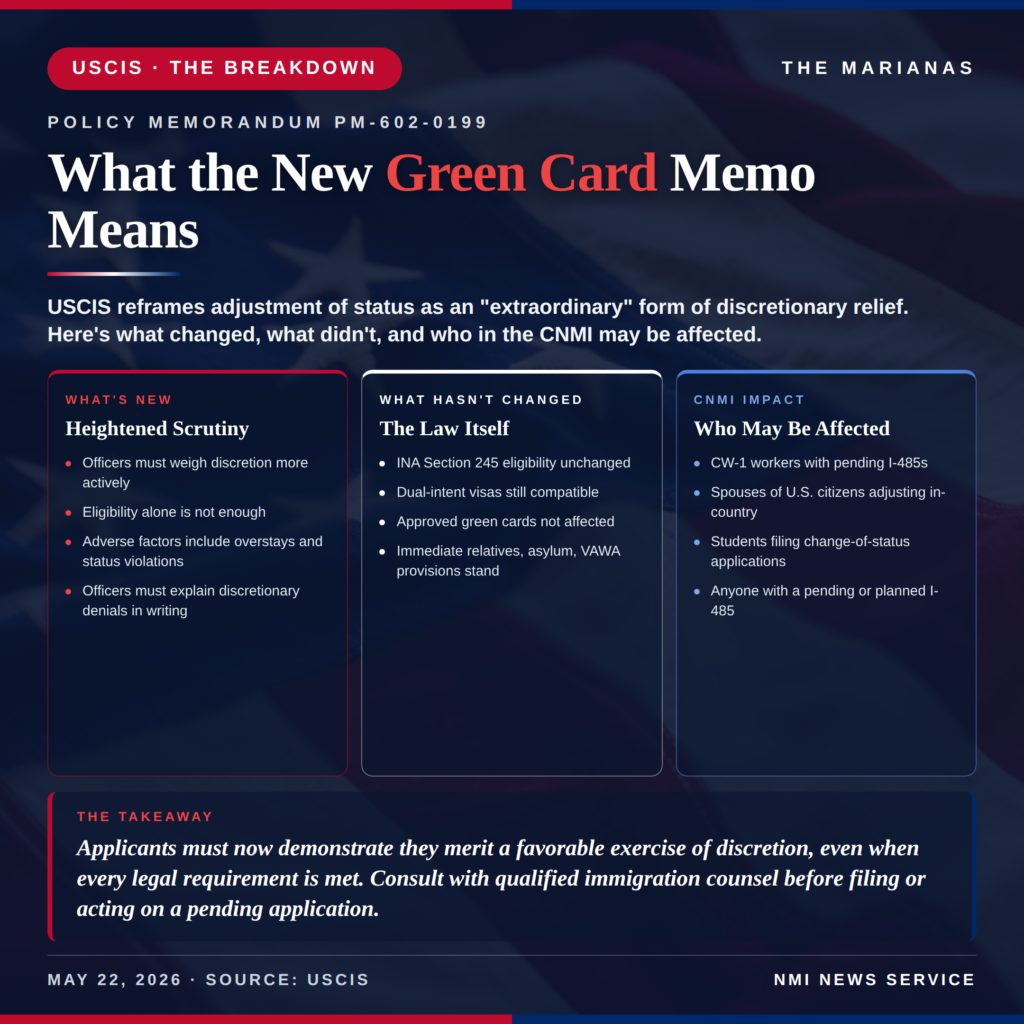
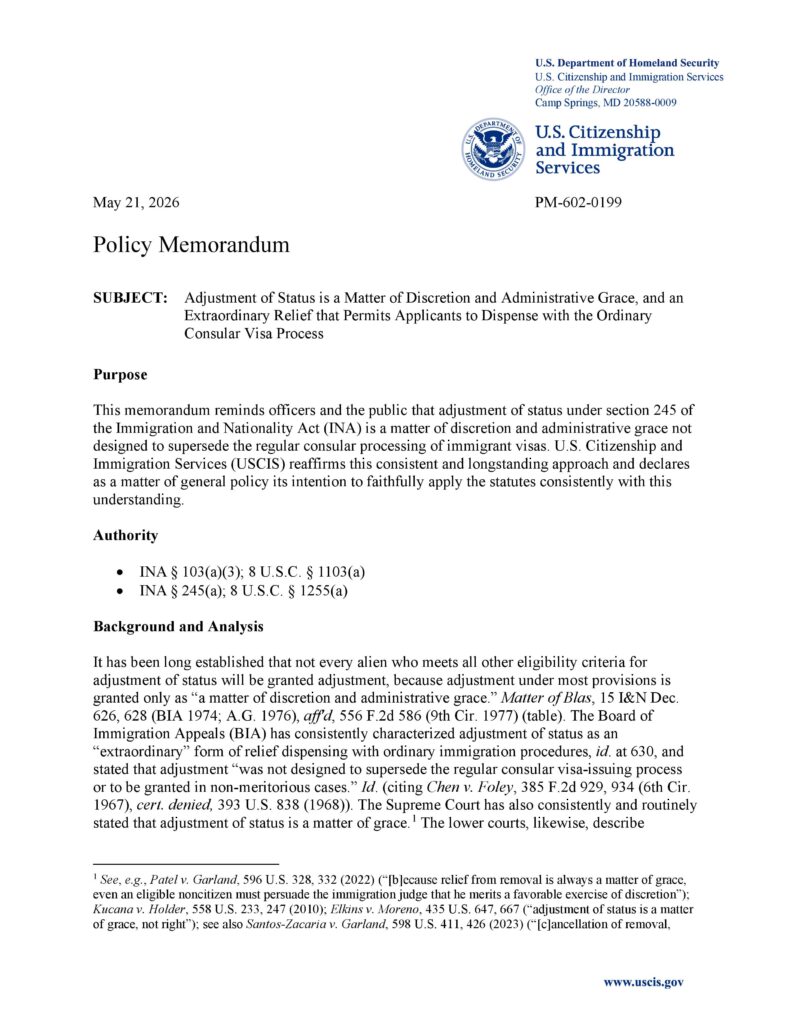
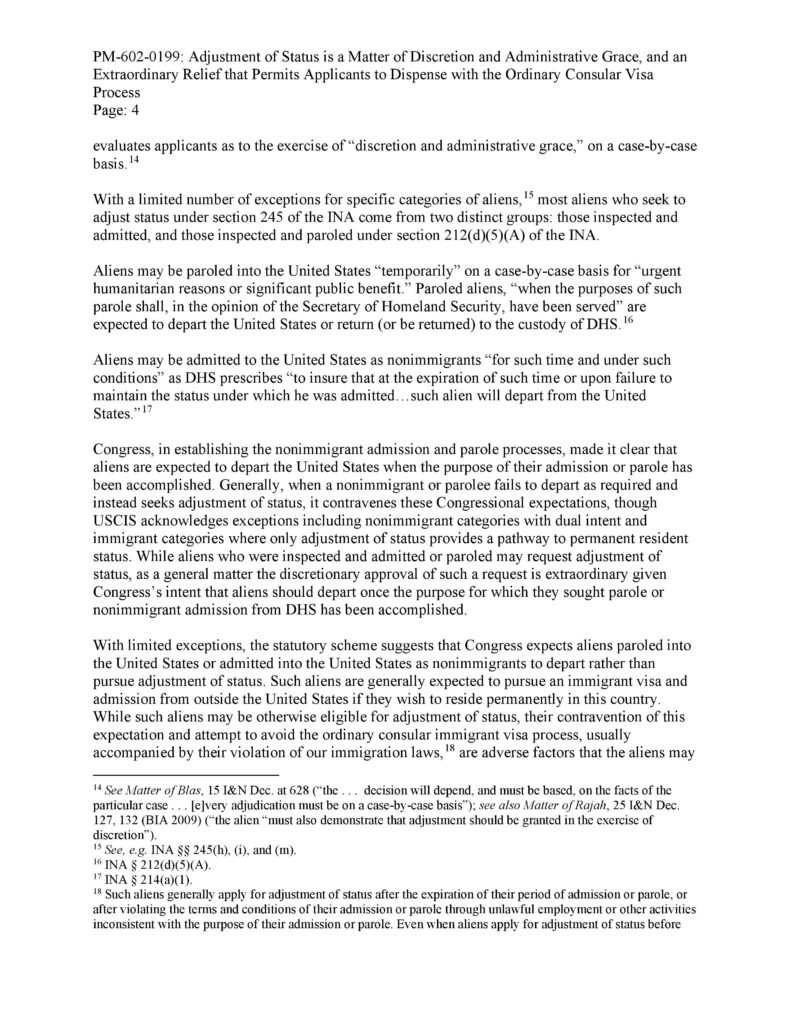
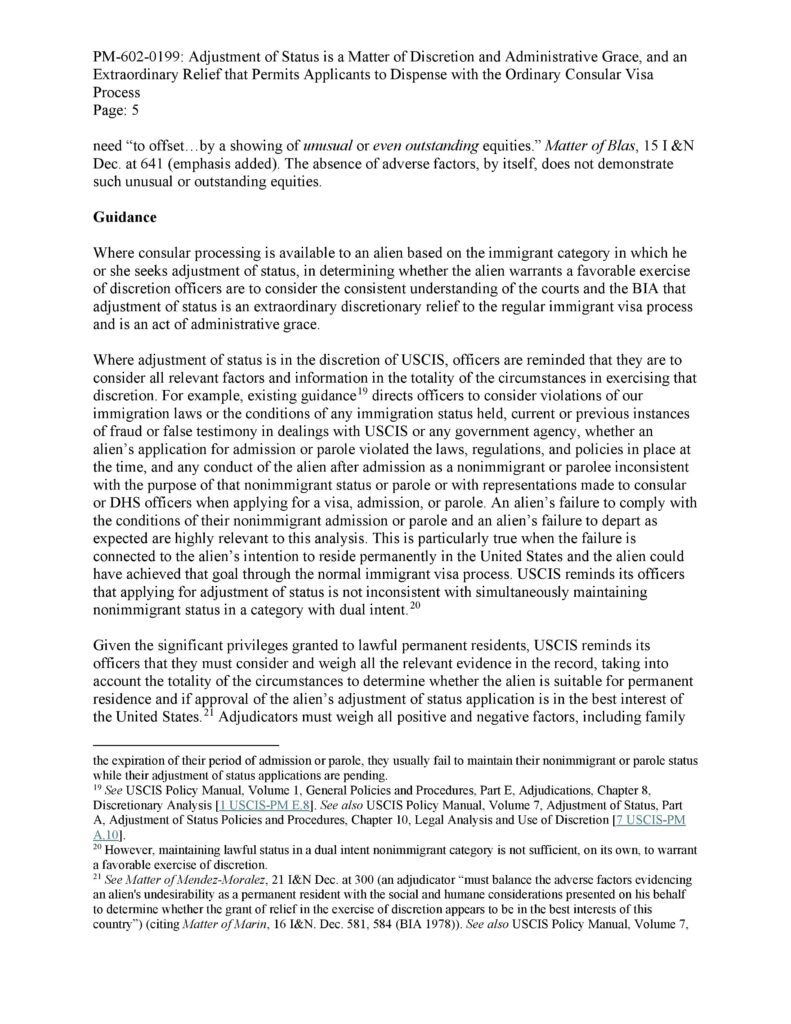
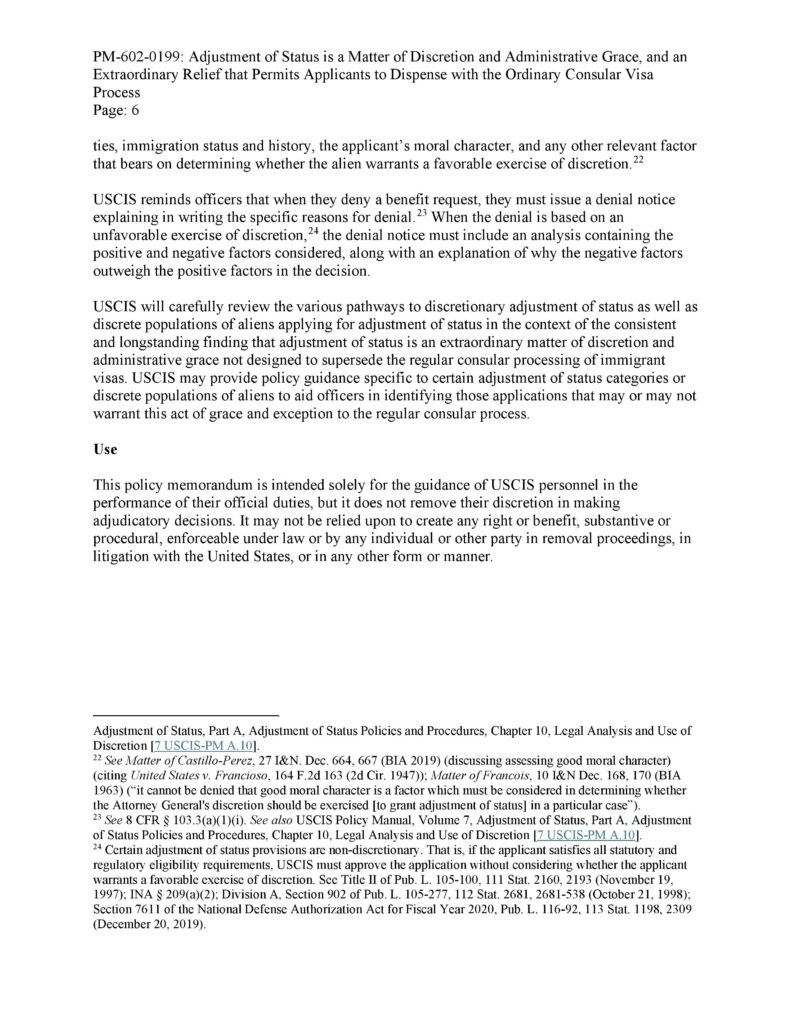
The memo, PM-602-0199, was issued May 21 and titled “Adjustment of Status is a Matter of Discretion and Administrative Grace, and an Extraordinary Relief that Permits Applicants to Dispense with the Ordinary Consular Visa Process.” It takes effect immediately and applies to all pending and future Form I-485 applications.
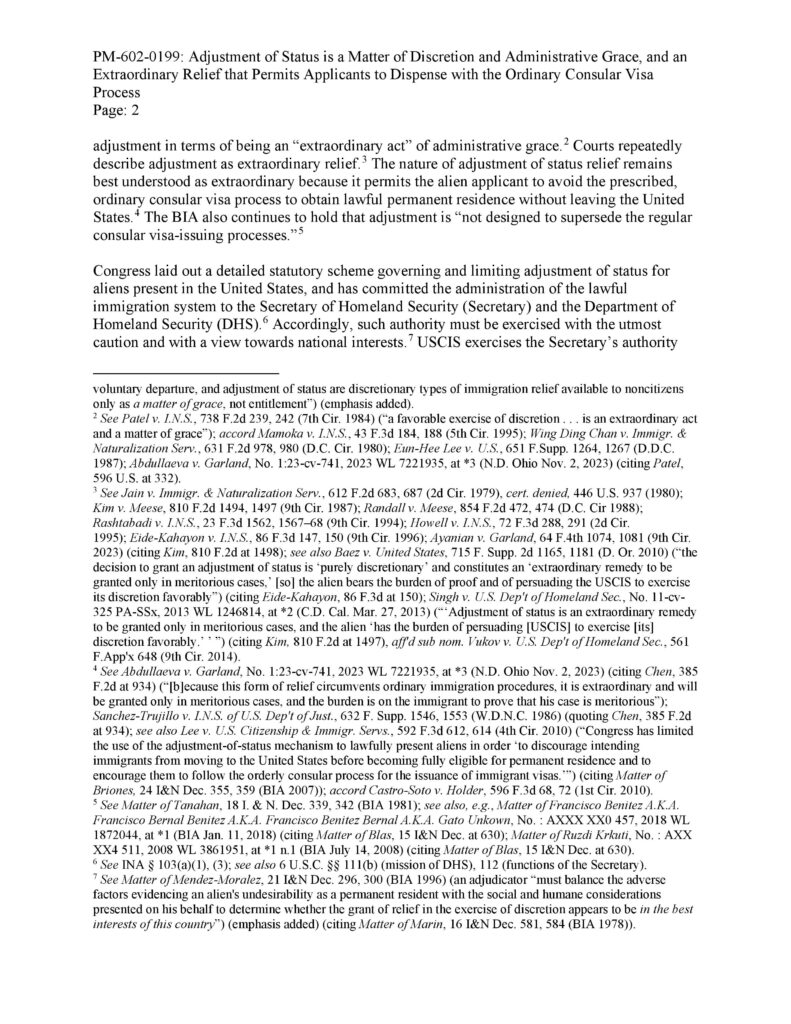
The memorandum does not change the underlying statute, the eligibility criteria of Section 245 of the Immigration and Nationality Act, or the categories of people who can apply for adjustment. It reaffirms longstanding case law, including Matter of Blas, a 1974 Board of Immigration Appeals decision, and the U.S. Supreme Court’s 2022 ruling in Patel v. Garland, both of which characterize adjustment of status as discretionary rather than an entitlement.
What does change is the agency’s instruction to its officers. The memo directs them to treat adjustment of status as a “favor the government may grant,” weigh adverse and favorable factors more actively in every case, and reject any presumption of approval. Officers are also required to issue written explanations of the negative factors considered when denying an application based on discretion.
“We’re returning to the original intent of the law to ensure aliens navigate our nation’s immigration system properly,” USCIS Spokesman Zach Kahler said in a statement Friday. “From now on, an alien who is in the U.S. temporarily and wants a Green Card must return to their home country to apply, except in extraordinary circumstances.”
Kahler said the policy “allows our immigration system to function as the law intended instead of incentivizing loopholes” and “reduces the need to find and remove those who decide to slip into the shadows and remain in the U.S. illegally after being denied residency.”
He added that “nonimmigrants, like students, temporary workers, or people on tourist visas, come to the U.S. for a short time and for a specific purpose. Our system is designed for them to leave when their visit is over. Their visit should not function as the first step in the Green Card process.”
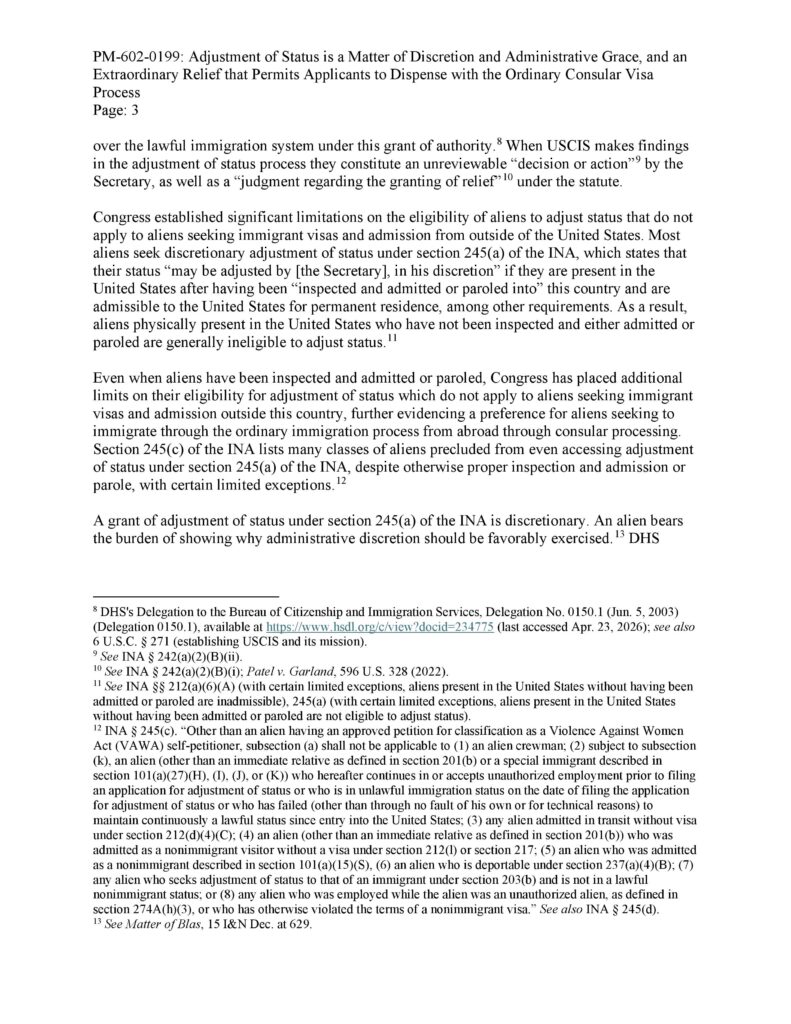
The memo specifically acknowledges that maintaining lawful status in a dual-intent nonimmigrant category, such as H-1B or L-1, “remains compatible with pursuing adjustment of status,” though USCIS notes that maintaining such status “is not sufficient, on its own, to warrant a favorable exercise of discretion.” Statutory protections for immediate relatives of U.S. citizens, asylum and refugee adjusters, Violence Against Women Act self-petitioners, and other special provisions remain intact.
The practical implications for the CNMI are significant. According to a May 15 U.S. Government Accountability Office report on the CW-1 nonimmigrant visa program, the Commonwealth’s economy depends substantially on foreign workers, who accounted for approximately one in three employed workers on average from 2020 through 2024. The CW-1 program is scheduled to end Dec. 31, 2029. The USCIS memo applies to nonimmigrants of any status who file to adjust their status from inside the United States, including the CNMI.
Some of the transitional workers pursue paths to permanent residence over time. The CNMI is also home to mixed-status families, foreign spouses of U.S. citizens, students at Northern Marianas College and the Northern Marianas Technical Institute who may transition to other immigration pathways. Each of those populations is in the United States lawfully but may face heightened discretionary scrutiny if filing to adjust status from inside the country.
The memo arrives amid an active federal-CNMI dialogue on immigration. In March, U.S. Representatives Chip Roy, Thomas Tiffany, and Elijah Crane wrote to federal officials raising concerns about birth tourism and EVS-TAP in the Commonwealth. CNMI House Floor Leader Marissa R. Flores, chair of the House Committee on Tourism, responded with data showing tourist births had dropped from 581 in 2018 to 47 in 2025, urging federal policy to be grounded in current facts. The Saipan Chamber of Commerce sent its own letter to federal cabinet secretaries defending EVS-TAP and citing a 0.25 percent overstay rate. On Friday, Flores introduced the Business Integrity and Regulation of Tourism Harms Act, a first-of-its-kind CNMI bill targeting commercial birth tourism operations.
The memo’s case-by-case discretionary framework places greater emphasis on demonstrating positive equities, including continuous lawful status, family ties, employment history, community involvement, and clean immigration records.