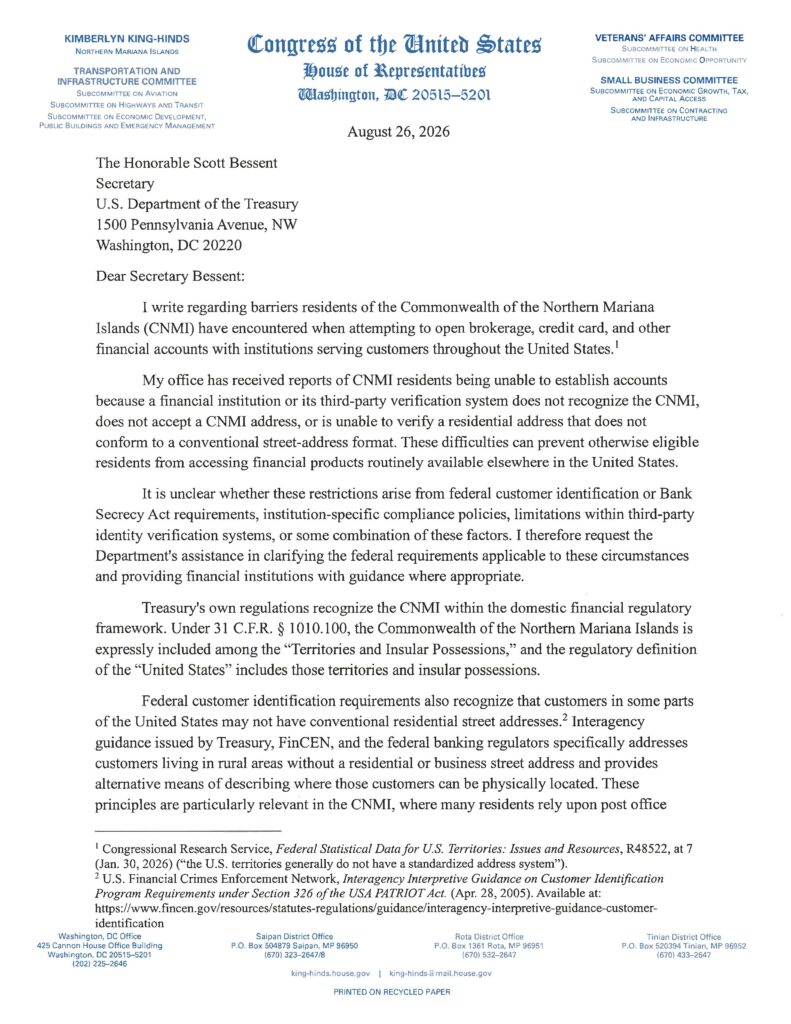


SAIPAN — Congresswoman Kimberlyn King-Hinds is asking the Treasury Department to clarify federal requirements after CNMI residents reported being unable to open brokerage, credit card and other financial accounts because institutions or their third-party verification systems do not recognize the CNMI, do not accept CNMI addresses, or cannot verify addresses that don’t follow conventional street formats.
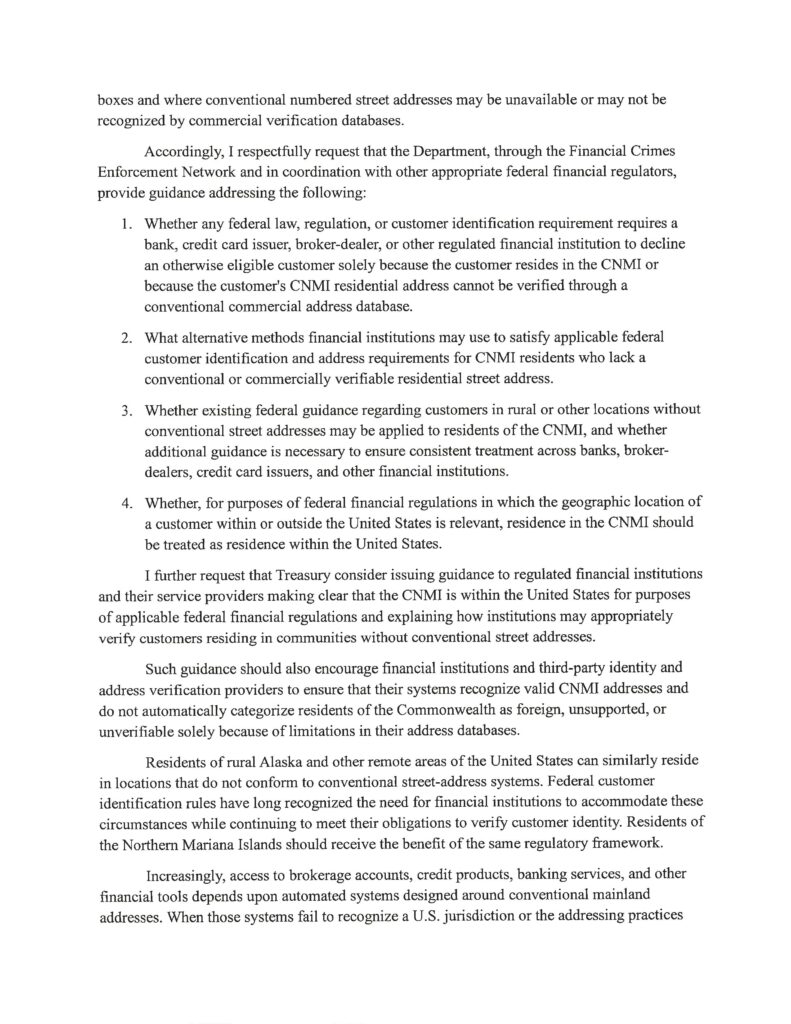
In a letter to Treasury Secretary Scott Bessent dated August 26, King-Hinds said it is unclear whether the restrictions stem from federal customer identification or Bank Secrecy Act requirements, institution-specific compliance policies, limitations in third-party identity verification systems, or a combination. She asked the department, through the Financial Crimes Enforcement Network and other regulators, to answer four questions: whether any federal rule requires declining an otherwise eligible customer solely because they reside in the CNMI or their address can’t be verified through commercial databases; what alternative verification methods institutions may use; whether existing federal guidance for rural customers without conventional street addresses applies to the CNMI; and whether CNMI residence should be treated as residence within the United States for federal financial regulations.
Treasury’s own rules already include the CNMI among the “Territories and Insular Possessions” within the regulatory definition of the United States, the letter notes, and interagency guidance has long addressed customers in rural areas without street addresses — circumstances King-Hinds compared to rural Alaska. Many CNMI residents rely on post office boxes, and conventional numbered street addresses may be unavailable or unrecognized by commercial databases.
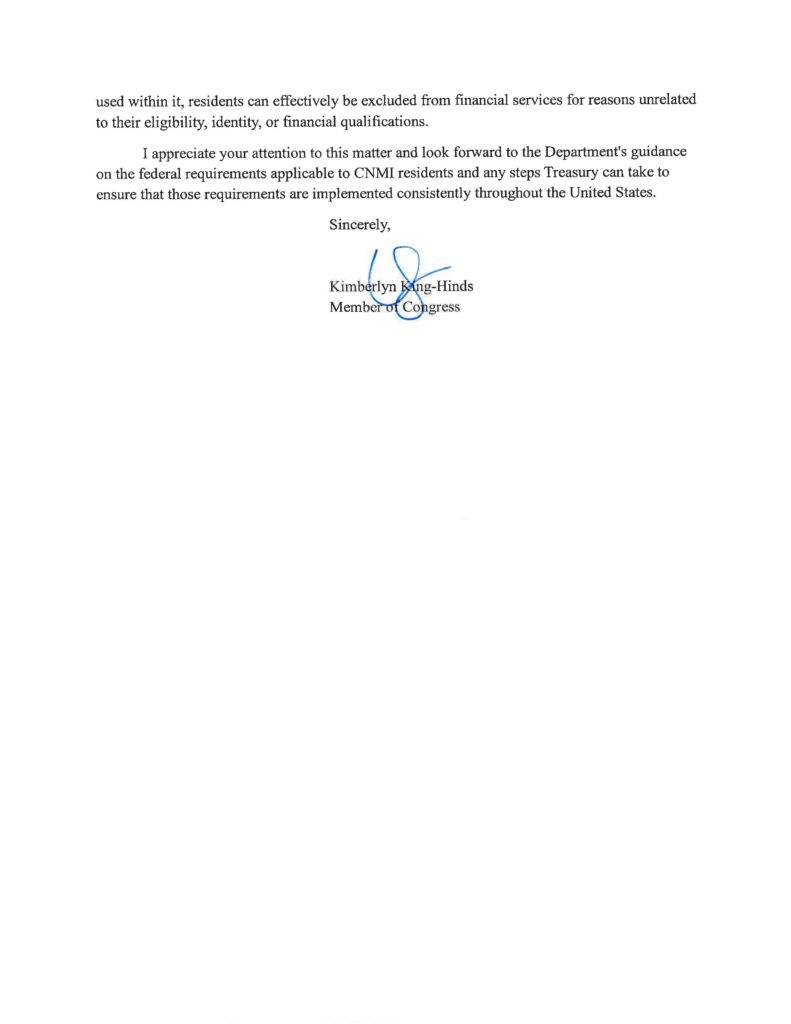
She asked Treasury to consider guidance making clear the CNMI is within the United States for applicable financial regulations and ensuring verification providers do not automatically categorize Commonwealth residents as foreign, unsupported or unverifiable. When automated systems fail to recognize a U.S. jurisdiction, she wrote, residents “can effectively be excluded from financial services for reasons unrelated to their eligibility, identity, or financial qualifications.”