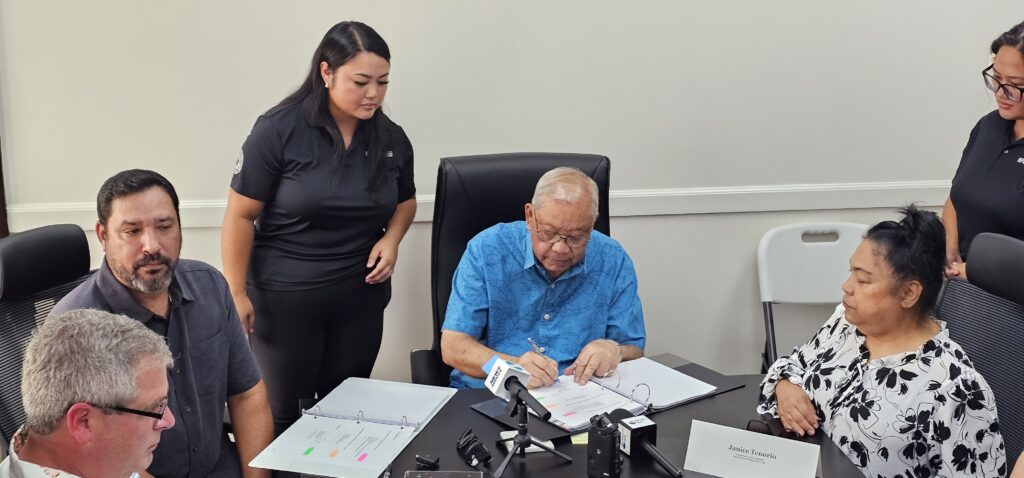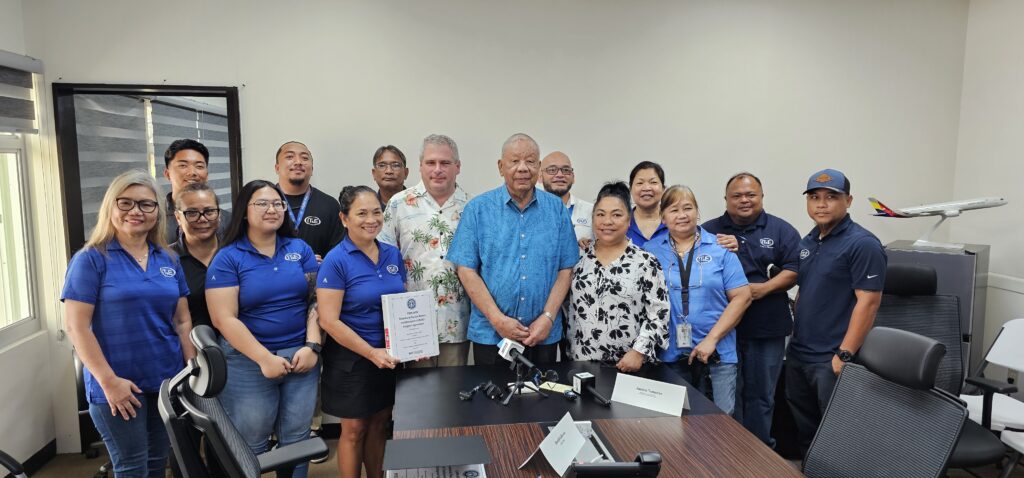
SAIPAN – The CNMI took a major step toward closing its digital divide Wednesday as Governor David M. Apatang, the Broadband Policy and Development Office and IT&E signed the Broadband Equity, Access and Deployment subgrant agreement at the governor’s office on Capitol Hill.
The agreement commits more than $31 million in federal BEAD funds to a four-year project that will build a 100 percent underground, climate-hardened end-to-end fiber optic network reaching every home, business and community anchor institution in the Commonwealth. IT&E is matching that investment with nearly $22 million in private capital, more than 40 percent of total project cost and well beyond the statutory minimum.
The signing took place on the second floor of the governor’s office because the main conference room downstairs is undergoing mold remediation following Super Typhoon Sinlaku.
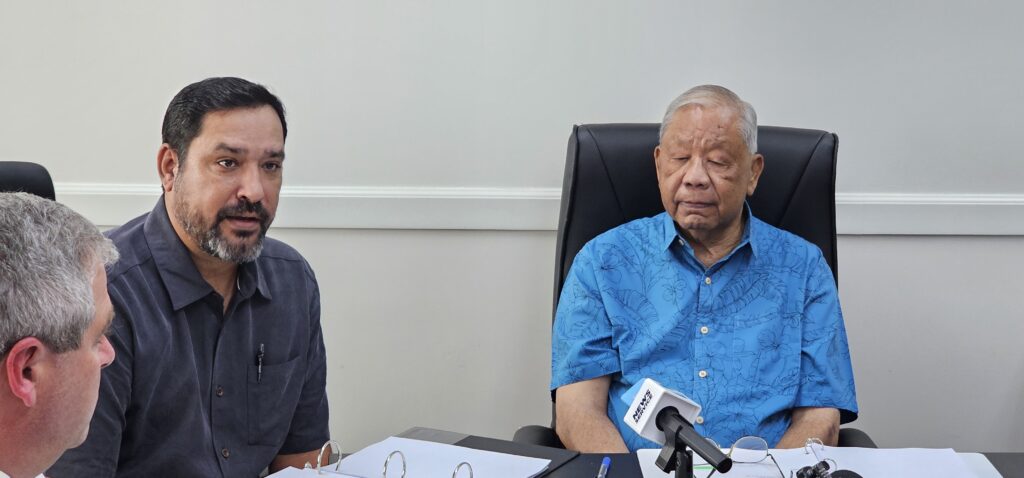
“Today is not ceremonial,” said Glen Hunter, special assistant for the Broadband Policy and Development Office. “What we are signing today is about recovery, resilience and rebuilding in a way that finally breaks a cycle we all know too well.”
Hunter said the CNMI was at zero percent true broadband coverage when BPD was created. The office secured a historic BEAD allocation of nearly $81 million from the National Telecommunications and Information Administration. Wednesday’s agreement obligates the first portion of those funds.
Hunter said BPD faced repeated pressure to scale back resiliency requirements during the procurement process and refused. He said federal dollars must be spent on infrastructure designed to last.
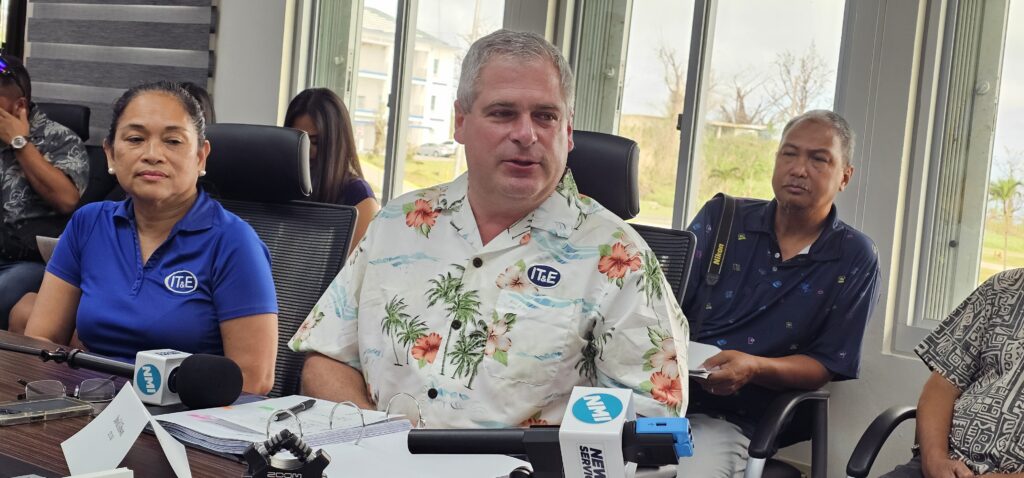
IT&E CEO David Gibson said the project is the single biggest capital investment the company has made anywhere, including its home market of Guam. He said the company is about halfway through its 21st year in the CNMI.
“While the timing is difficult right now for folks on the island, I think it does reinforce the fact that this is what’s right,” Gibson said. “It’s not only right for the people here, but it’s going to be right for future generations.”
Gibson said IT&E’s existing buried infrastructure sustained Super Typhoons Soudelor, Yutu, Mawar and Sinlaku, and the new build will extend that resilience to every customer premises.
Apatang said communication failures during Sinlaku informed his decision to push the project forward.
“We went around and around about communication, and that’s one of the priorities that I placed on FEMA to work with us for,” Apatang said. “Hopefully we don’t experience the same issue again during the next disaster.”
The governor said permitting has already begun and a groundbreaking ceremony will follow.
Hunter said BPD has also used BEAD funding to launch the Governor’s Broadband Digital Boot Camp, which trained nearly 300 CNMI residents in broadband deployment fundamentals. That local workforce is now positioned to support the build-out.
The office traces its origin to a directive issued more than three years ago by the late Governor Arnold I. Palacios and then-Lieutenant Governor Apatang, formally establishing BPD with a mission to secure federal funding and build out broadband infrastructure across the islands.
NTIA Federal Program Officer Ethan Lake, BEAD Director Courtney Dozier and Regional Director William Navas joined the signing by video conference. Lake called the project historic and said the CNMI will serve as a model for other U.S. communities.
When complete, the CNMI will be one of the only U.S. jurisdictions with a fully underground end-to-end fiber network serving every resident and business.