SAIPAN — The Marianas and much of Micronesia will likely see above-normal tropical cyclone activity for the rest of 2026, including a larger number of major typhoons, federal forecasters said Friday, as the region recovers from Super Typhoon Sinlaku.
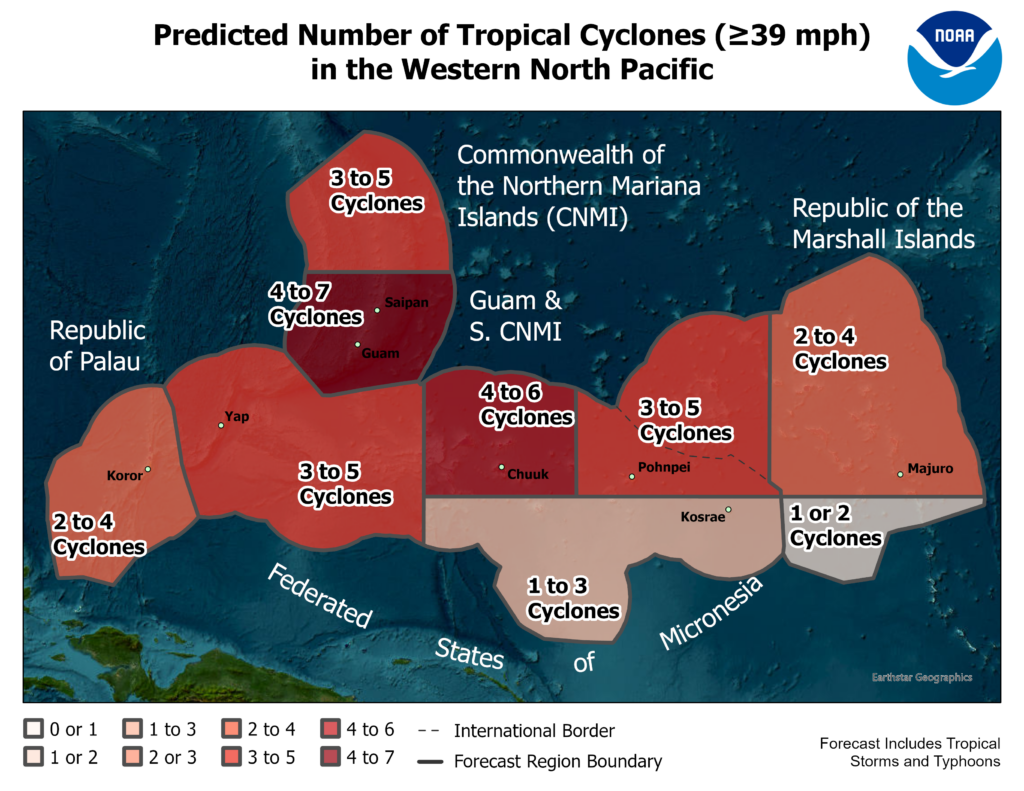
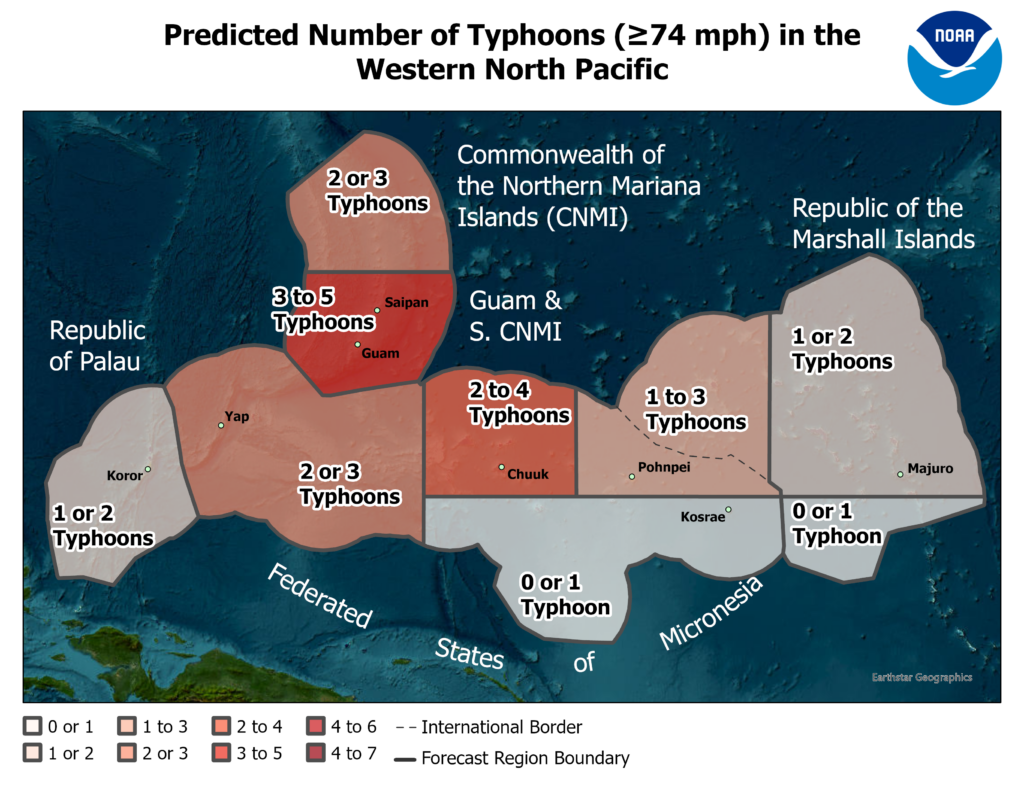
In its Western North Pacific tropical cyclone outlook, the National Oceanic and Atmospheric Administration said the U.S.-affiliated Pacific islands of the Federated States of Micronesia, the Republic of the Marshall Islands, the CNMI, and Guam are expected to experience above-normal activity, while the Republic of Palau is anticipated to see normal to below-normal activity.
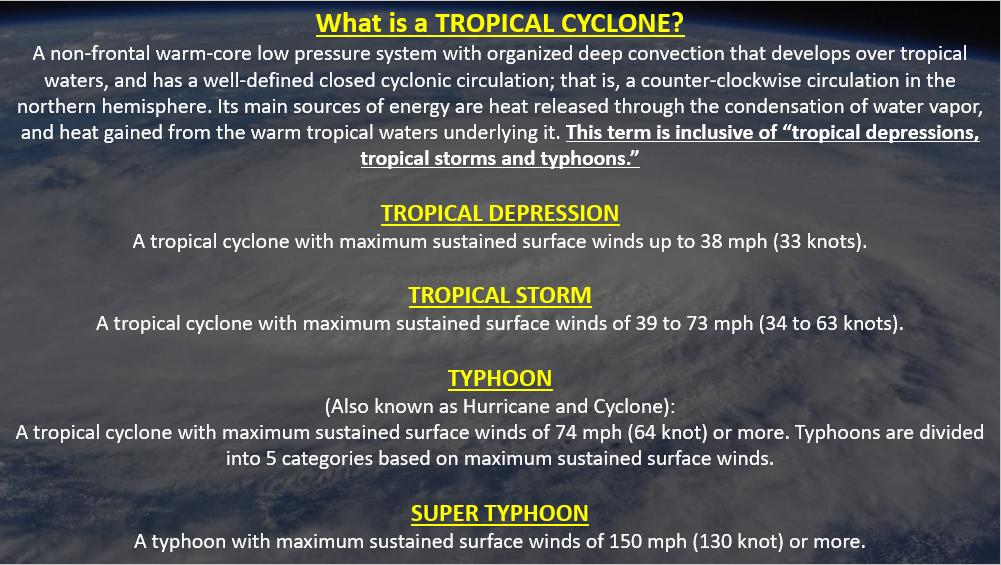
For the area within 300 nautical miles of Guam, Rota, Tinian, and Saipan, the outlook predicts four to seven named storms and three to five typhoons, of which two or three could reach major typhoon intensity. For the northern CNMI, forecasters predict three to five named storms and two or three typhoons, including one or two major typhoons. Major typhoons are classified as Category 3, 4, or 5 systems.
NOAA said the above-normal forecast is consistent with an anticipated shift to El Niño conditions, which the agency expects to develop and strengthen over the coming months. The pattern is likely to produce considerably more regional activity than in recent years, the outlook said, contrasting with the below-average activity seen during the La Niña years of 2020, 2021, 2022, 2024, and 2025.
An eastward shift in tropical cyclone formation associated with El Niño allows storms more time to intensify, which forecasters said could result in a larger number of major typhoons affecting the Marianas and western Micronesia. The same shift is expected to keep activity near or below normal across Palau, with more systems passing to the north.
The outlook is a general guide to overall activity and does not indicate how many systems will make landfall, NOAA said. Forecasters stressed that tropical cyclones occur year-round in the Western North Pacific, that there is no clearly defined typhoon season, and that it takes only one storm to cause significant damage.
Residents, visitors, and mariners were urged to maintain preparedness year-round. NOAA directed the public to CNMI Homeland Security and Emergency Management, Guam Homeland Security and the Office of Civil Defense, and FEMA’s Ready.gov for preparedness information. The outlook will be updated in August if needed.
The outlook is a coordinated effort by NOAA’s National Weather Service Weather Forecast Office in Guam, in collaboration with the Joint Typhoon Warning Center and the Tokyo-based Regional Specialized Meteorological Center.