

SAIPAN — Senate Bill 24-53, the measure Representative Marissa R. Flores denounced Friday as an attack on the elected Attorney General’s office, targets a specific and largely unexamined dispute: whether the Attorney General can grant itself the power to issue criminal investigative subpoenas.
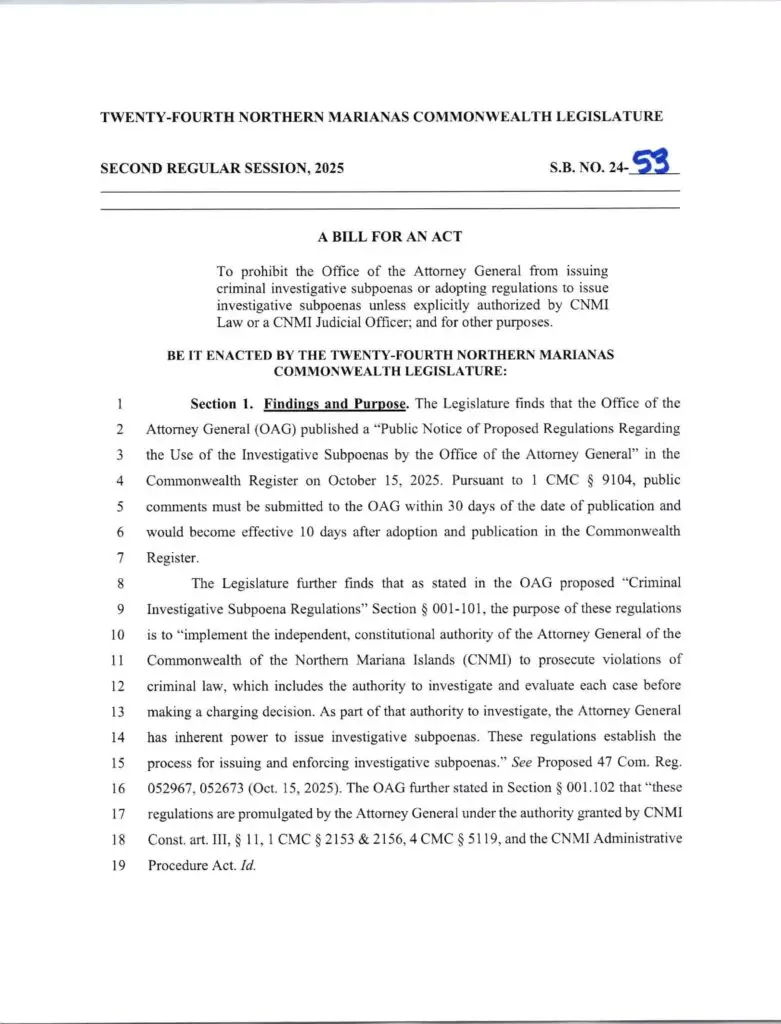
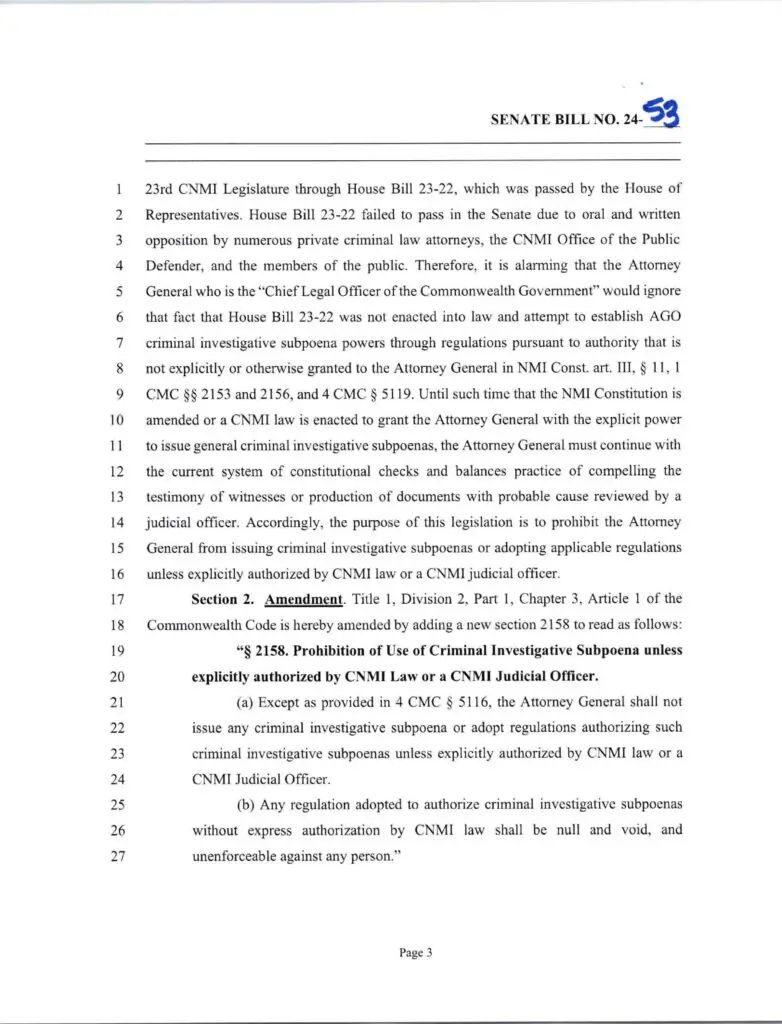
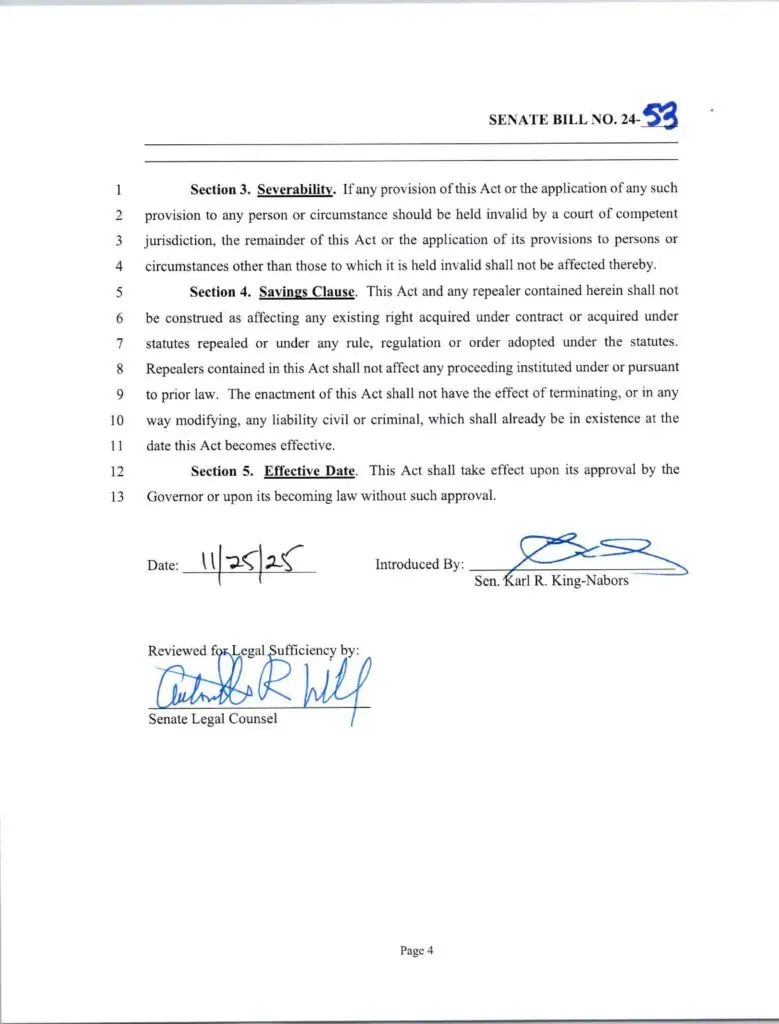
The bill, introduced Nov. 25, 2025, by Senate President Karl R. King-Nabors, would prohibit the Attorney General from issuing criminal investigative subpoenas or adopting regulations authorizing them unless explicitly authorized by CNMI law or a CNMI judicial officer. Any regulation adopted without express authorization would be null and void and unenforceable against any person. The bill preserves the existing exception in 4 CMC Section 5116, which covers consumer protection cases, and would take effect upon the governor’s approval or upon becoming law without it.
The dispute began on Oct. 15, 2025, when the Office of the Attorney General published a public notice of proposed Criminal Investigative Subpoena Regulations in the Commonwealth Register. According to the bill’s findings, the proposed regulations asserted that the Attorney General “has inherent power to issue investigative subpoenas” as part of the office’s independent constitutional authority to prosecute violations of criminal law.
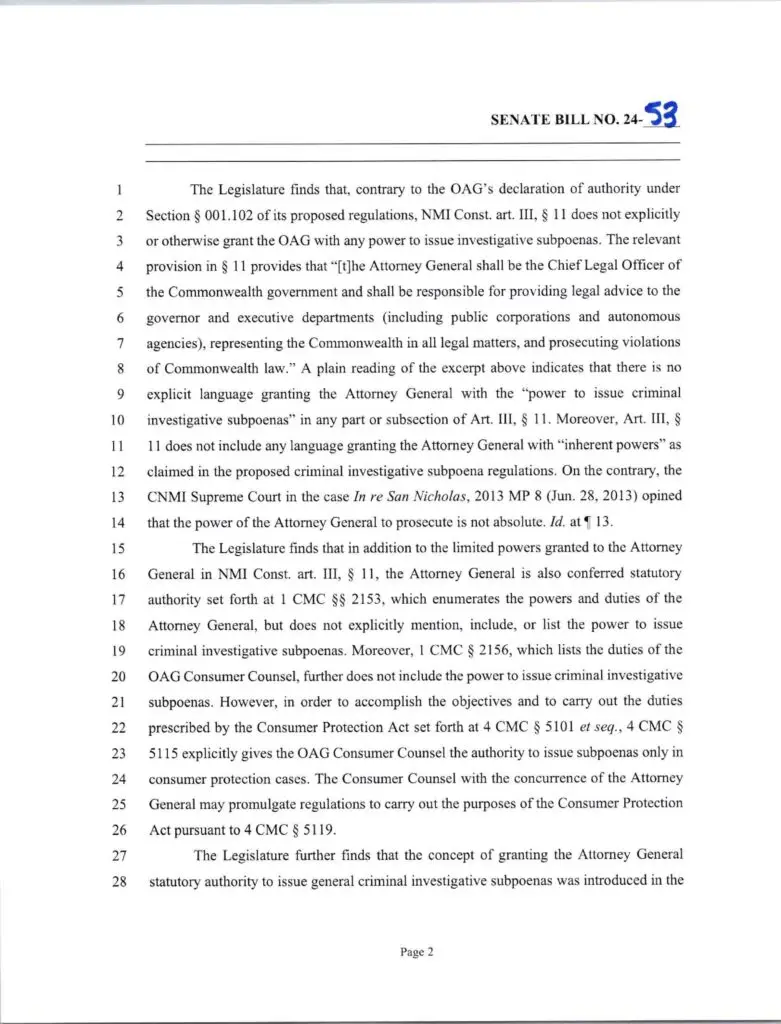
The bill’s findings dispute that claim on several grounds. They state that Article III, Section 11 of the NMI Constitution, which establishes the Attorney General as the Commonwealth’s chief legal officer, contains no explicit language granting subpoena power and no language granting inherent powers. They note that the statutes enumerating the Attorney General’s powers and duties likewise do not mention criminal investigative subpoenas, while the law explicitly grants the OAG Consumer Counsel subpoena authority only in consumer protection cases. The findings also cite the CNMI Supreme Court’s 2013 opinion in In re San Nicholas, which they say opined that the Attorney General’s power to prosecute is not absolute.
The findings further state that the Legislature previously considered granting the Attorney General statutory subpoena authority through House Bill 23-22, which the House passed in 2023. That bill, authored by Flores, “failed to pass in the Senate due to oral and written opposition by numerous private criminal law attorneys, the CNMI Office of the Public Defender, and the members of the public,” according to the findings. Flores says the Senate simply held her bill for 459 days without a hearing before filing it away in January 2025.
Until the constitution is amended or a law is enacted granting explicit subpoena power, the findings state, the Attorney General must continue compelling testimony or documents through the existing system of probable cause reviewed by a judicial officer.
The Attorney General’s office becomes an elected, independent office by constitutional amendment approved by voters in 2014. The 2026 race is the first open contest for the office since that amendment took effect, with the filing deadline having closed in early August.