SAIPAN – Congresswoman Kimberlyn King-Hinds is asking constituents for patience on federal disaster supplemental funding tied to Super Typhoon Sinlaku recovery, walking residents through how the two-phase federal funding process works and citing Typhoon Yutu as the precedent for how long the long-term rebuilding dollars can take to arrive.
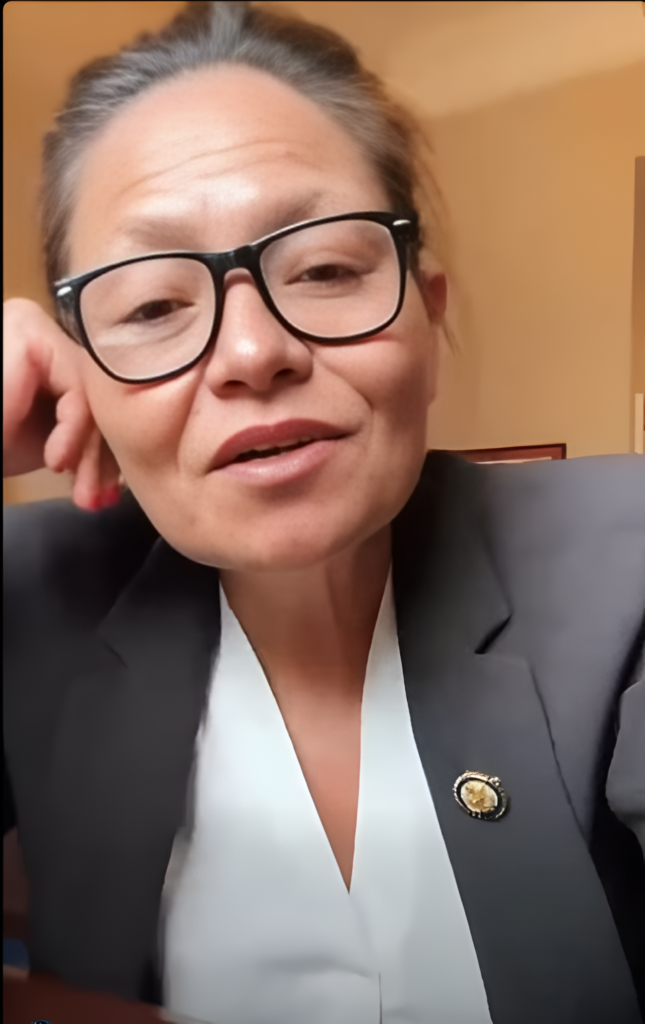
In a video message posted to her social media accounts, King-Hinds said she has been getting a lot of phone calls asking when Congress will approve the money and when those funds will actually reach the Commonwealth.
“I want to explain this in the simplest, simplest way possible so that people understand what’s happening behind the scenes and why these things can take time,” King-Hinds said.
She said FEMA already has money available immediately after a disaster declaration for emergency response work, including debris removal, temporary repairs, emergency crews, tarps, shelters and generators. That is the first phase of federal disaster funding.
When a disaster is large enough that the federal government runs out of regular disaster money already budgeted, Congress has to step in and pass what is called a disaster supplemental appropriation. King-Hinds said that means Congress approves extra money outside of the normal federal budget because disaster costs are bigger than expected.
“The extra money doesn’t happen automatically. Congress has to negotiate it. The House and the Senate have to agree on it. And as you’ve been seeing, it’s a challenge right now,” King-Hinds said. “Both political parties usually argue about how much money should be included, where it should go, and what disasters are going to be covered.”
She said Congress typically bundles multiple disasters from across the country into a single bill, which extends the timeline.
King-Hinds used Typhoon Yutu as a benchmark for what to expect. Yutu hit the CNMI in October 2018. One of the major disaster supplemental funding bills tied to Yutu was not signed into law until June 2019, about eight months later.
Even after Congress approves the money, King-Hinds said the funding does not appear in the CNMI the following day. Federal agencies have to go through paperwork, rules, applications, approvals and the reimbursement process before the dollars reach the ground.
“This is one of the hardest things about being from a small island community,” King-Hinds said. “These typhoons, these disasters, they hit us hard and fast. But the federal system moves like a snail.”
The Congresswoman said disaster supplemental funding covers a broad scope of recovery work, including roads, schools, water systems, power infrastructure, small businesses, housing, ports, airports, health care systems and long-term rebuilding projects.
King-Hinds said she understands that the message is not what constituents want to hear, particularly those still without power, without shelter, or losing income while recovering. She said she felt it was important to be honest about the timeline.
“We’re going to keep fighting. We’re going to keep making sure that the CNMI is included in these funding conversations,” King-Hinds said. “And as we get more closer to our goal, I will keep you guys, as always, in the loop. I love you, CNMI.”