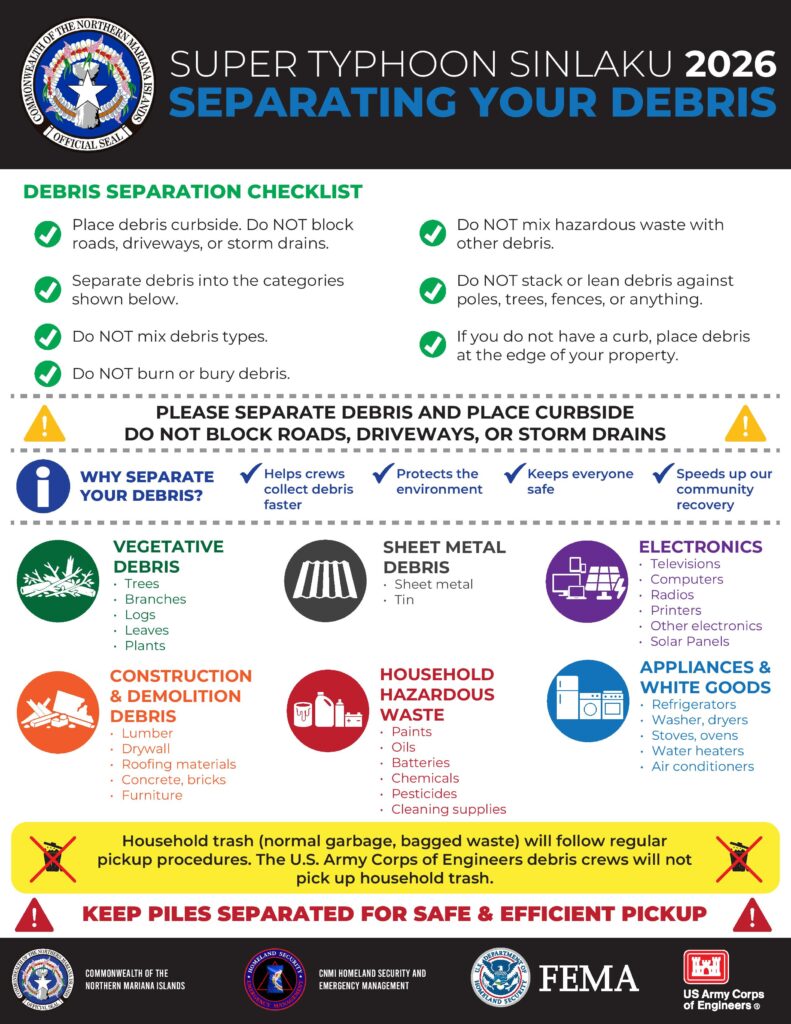
SAIPAN — The CNMI Office of Homeland Security and Emergency Management is asking residents to separate Super Typhoon Sinlaku debris into six categories and place it curbside for pickup by U.S. Army Corps of Engineers crews.
According to the HSEM debris guide, the six categories are vegetative debris, construction and demolition debris, sheet metal debris, household hazardous waste, electronics and appliances and white goods.
Vegetative debris includes trees, branches, logs, leaves and plants. Construction and demolition debris includes lumber, drywall, roofing materials, concrete, bricks and furniture. Sheet metal debris covers sheet metal and tin. Household hazardous waste includes paints, oils, batteries, chemicals, pesticides and cleaning supplies. Electronics include televisions, computers, radios, printers, other electronics and solar panels. Appliances and white goods include refrigerators, washers, dryers, stoves, ovens, water heaters and air conditioners.
HSEM said residents should not mix debris types, should not stack or lean debris against poles, trees, fences or anything else, should not burn or bury debris and should not mix hazardous waste with other debris. Residents without a curb should place debris at the edge of their property.
Debris must not block roads, driveways or storm drains, the agency said.
HSEM said household trash, including normal garbage and bagged waste, will follow regular pickup procedures. U.S. Army Corps of Engineers debris crews will not pick up household trash.
The agency said separating debris helps crews collect it faster, protects the environment, keeps residents safe and speeds up community recovery.
The debris program is a coordinated effort by the CNMI Government, HSEM, the Department of Homeland Security, FEMA and the U.S. Army Corps of Engineers.