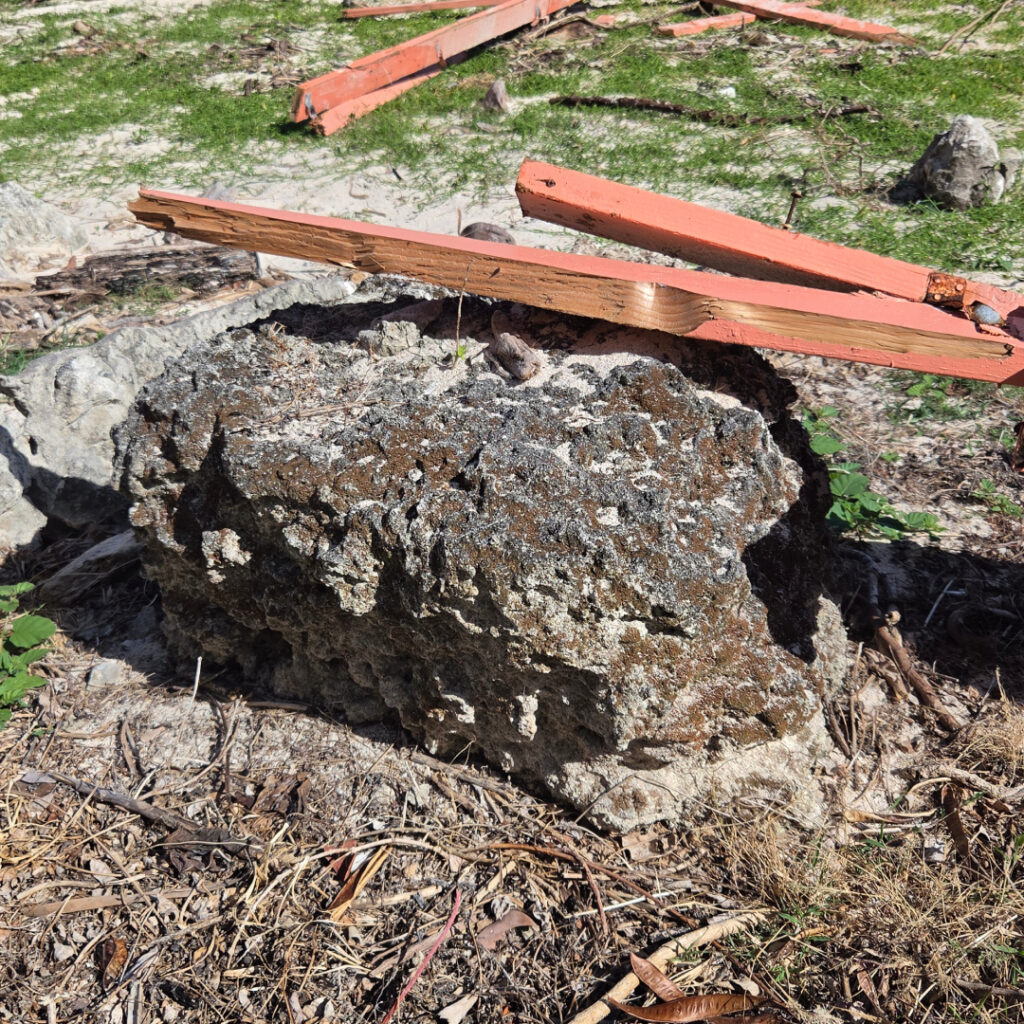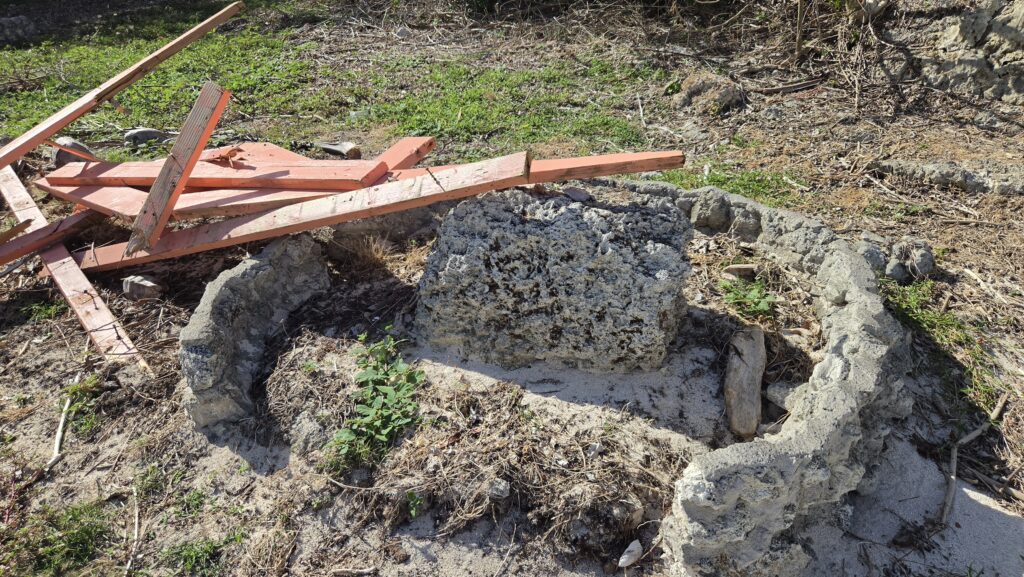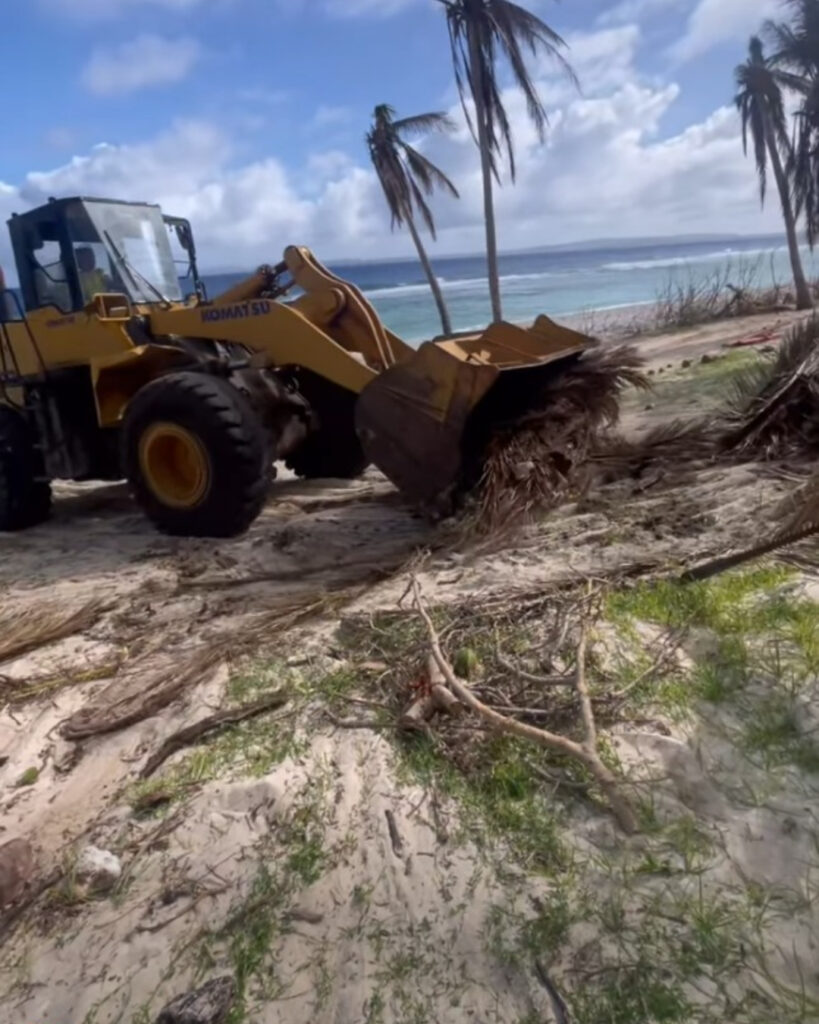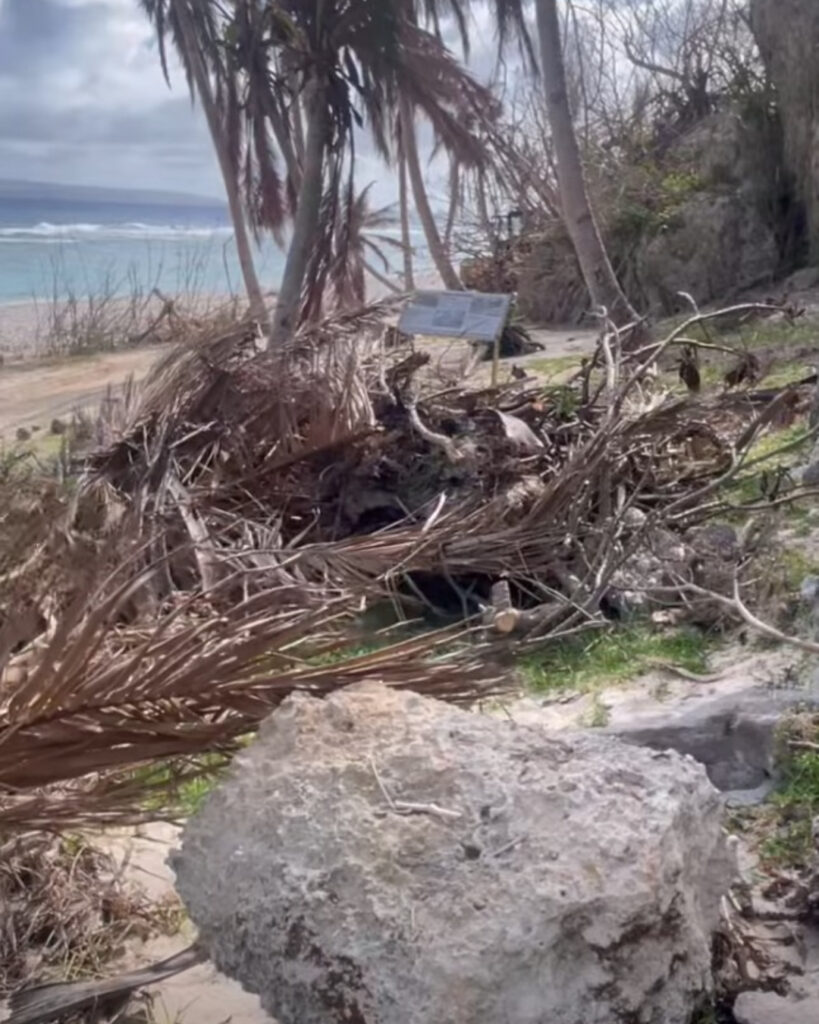
SAIPAN – The CNMI Department of Public Works will investigate the use of a payloader operating close to a Latte site at Obyan Beach during Sinlaku debris cleanup, the DPW Secretary said Wednesday, after a contract archaeologist publicly raised concerns about heavy equipment activity near the sensitive area.
Speaking by phone, the secretary said he has asked his staff to provide a situation report for the area, including which crews were assigned to consolidate and pile debris at Obyan, who had supervisory control over the payloader and whether the operator’s spotters were paying attention to avoid the historical site.
“Hopefully no damages was done to the Latte sites,” he said. “But again, I have a couple guys that are going to be heading over to Obyan to investigate.”
The secretary said the cleanup crews at Obyan were a mix of government workers including Parks and Recreation staff, DPW employees and personnel assigned by legislative offices. He said his team is determining which specific crew was operating the equipment in the area at the time of the video.
DPW will also notify the CNMI Historic Preservation Office to send personnel for an assessment, the secretary said, and may also coordinate with the Coastal Resources Management office to evaluate whether the equipment used caused damage to the beach environment.
The mission for crews across the island, the secretary said, is to cut, pile and stage typhoon-related debris in staging areas so that contractors hired by the U.S. Army Corps of Engineers can collect and remove it.
The secretary said Parks and Recreation, which falls under the Department of Lands and Natural Resources, is the primary division responsible for maintaining parks and beaches, and DPW relies on that office’s expertise and guidance when equipment is used on beaches. He said the emphasis for operators and spotters has been to be careful around sensitive areas, including endangered vegetation and known nesting sites for wildlife such as sea turtles.
“We can always come back later and deal with the trash or debris in a more sensitive manner,” he said.
The DPW investigation was triggered by concerns publicly raised by viewer video posted in social media groups and by a call from Timothy James, a contract archaeologist working with the U.S. Air Force on Tinian’s North Field Restoration Project. James said he had reviewed video showing a payloader operating extremely close to a Latte site at Obyan.
“Latte sites are directly correlated with human remains, because this is how the people would bury their ancestors,” James said. He said any heavy machinery operating near such sites should have an archaeological monitor present and should be subject to the Section 106 review process under the National Historic Preservation Act, particularly when work is being reimbursed with federal funds.
James, who said he has worked as an archaeologist for 10 years across 19 U.S. states, including in post-disaster environments such as the Lahaina fires and large California wildfires, raised broader concerns about cultural resource handling in the Commonwealth. Those included the storage condition of collections at the NMI Museum of History and Culture, what he described as the recovery of human remains uplifted by the storm on Tinian, and the staffing status of the Historic Preservation Office on Saipan.
The secretary closed with a message to the public asking for patience and cooperation as the recovery continues. He asked homeowners to flag any debris piles that may be sitting on top of water pipes, water meters, utility pedestals or communication lines so crews can avoid damaging restored services during removal.