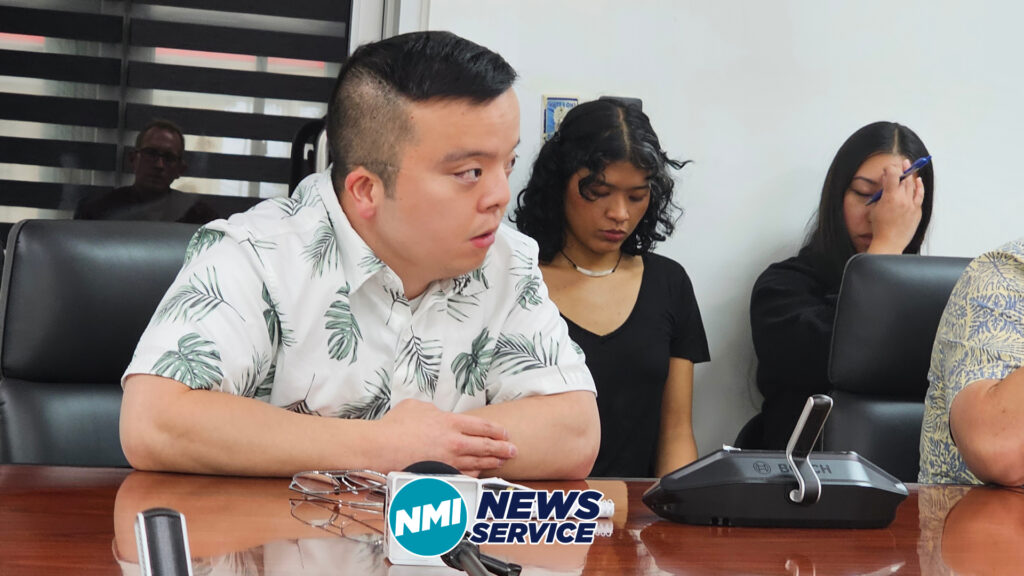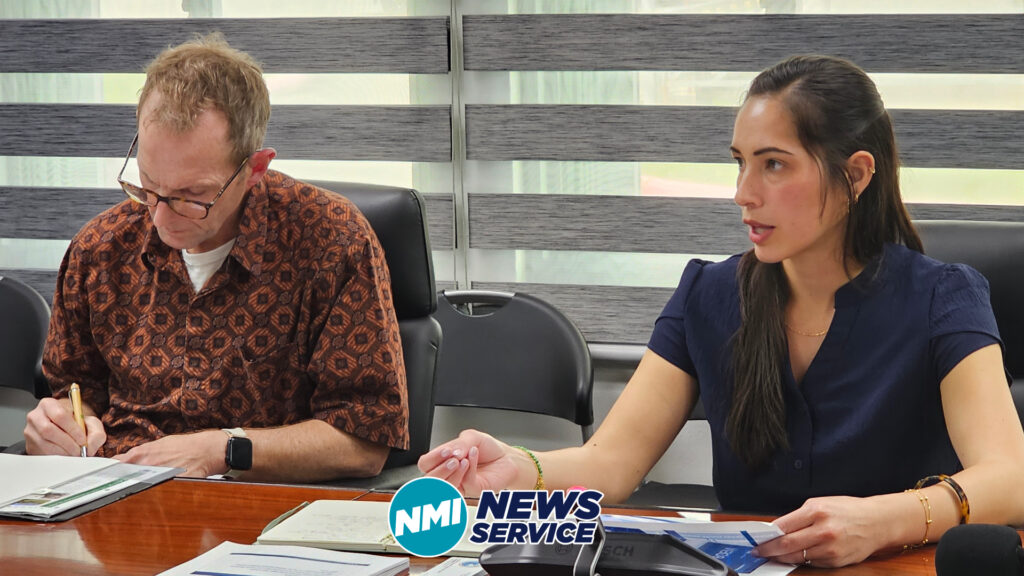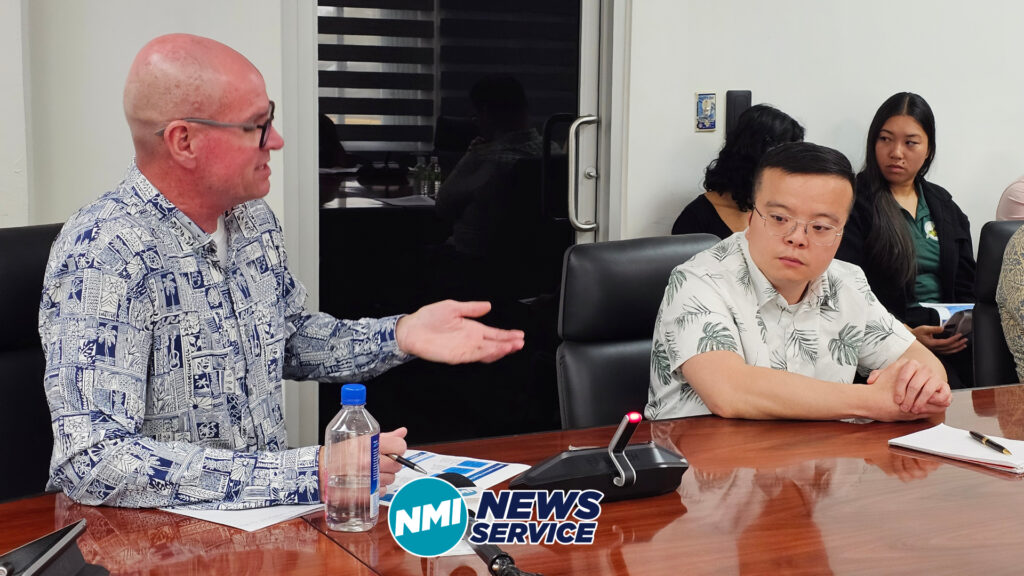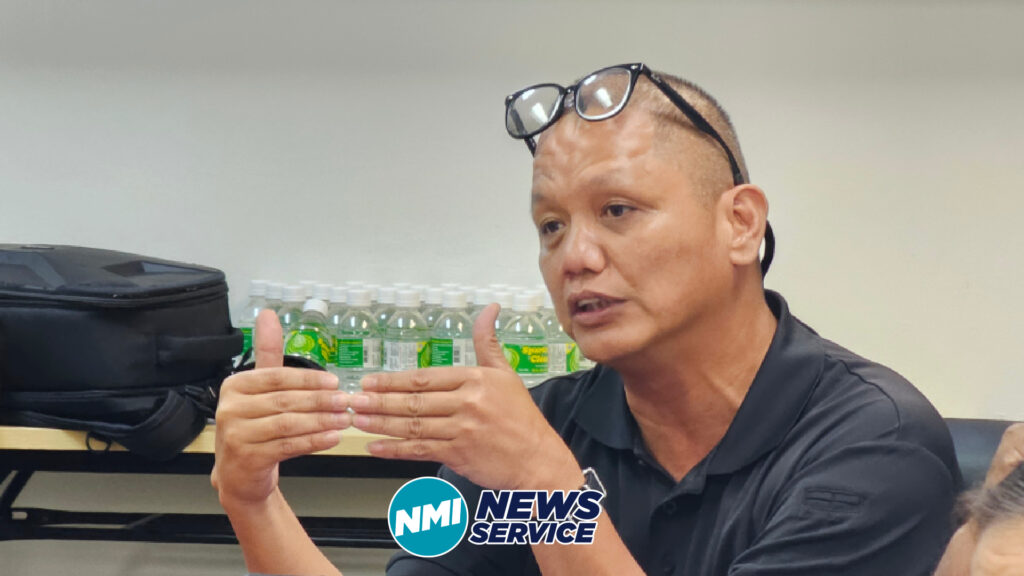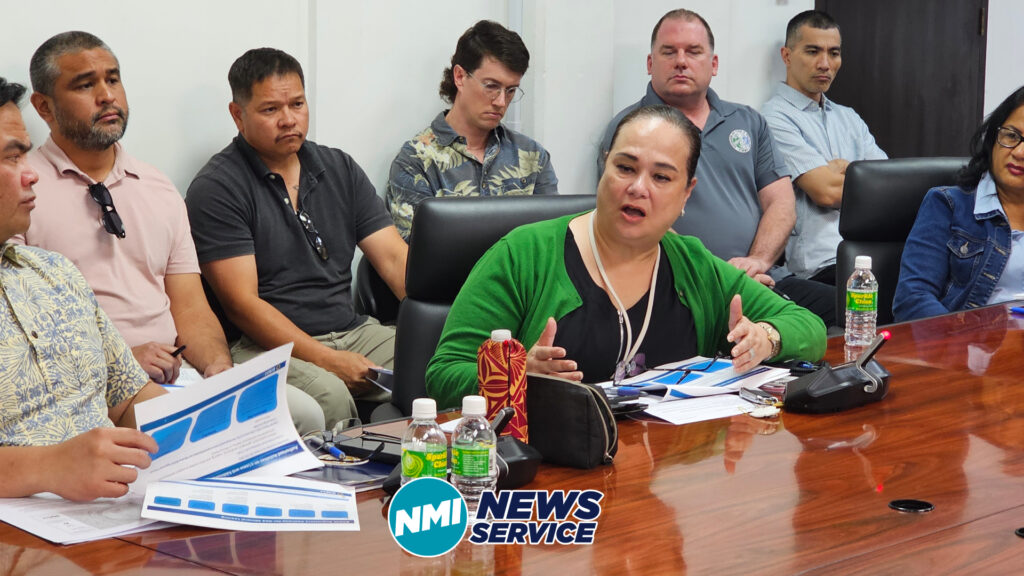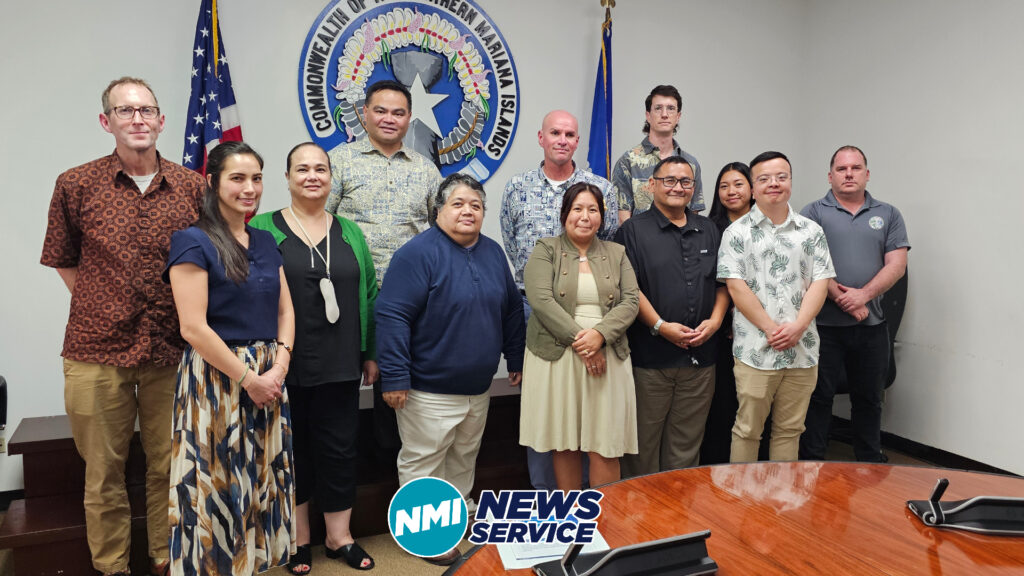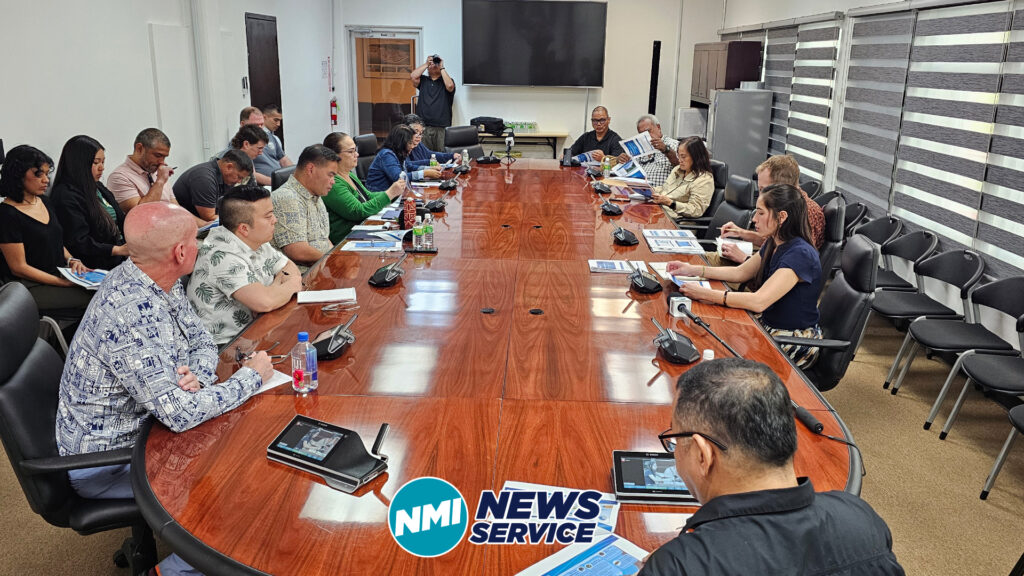
Saipan — Federal officials from the U.S. Department of the Interior and the Bureau of Ocean Energy Management met this week with local biologists, scientists, and career environmental staff in the Governor’s Conference Room at Capitol Hill, where they outlined the status of the federal offshore mineral leasing review for waters tied to the Commonwealth and Guam.
The session was described as a preliminary meeting, with local environmental experts given an opportunity to question the visiting delegation directly as the federal government continues reviewing public comments tied to possible Outer Continental Shelf mineral leasing in the region.
Among the federal officials were Justin Rhee, special adviser with the U.S. Department of the Interior Office of Insular and International Affairs; Douglas Boren, regional director for BOEM’s Pacific Regional Office; and Natalie Nguyen Dayal, DVM, MPH, an energy specialist with BOEM’s Pacific Regional Office.
Presentation materials reviewed by NMI News Service show BOEM told attendees that the Commonwealth is still in the earliest stage of the regulatory pathway, with the current step remaining the Request for Information and Interest, or RFI, phase.
BOEM said the RFI was published in the Federal Register on November 12 and sought information on industry interest, geological conditions, possible environmental and cultural impacts, and competing ocean uses such as navigation and fishing. The agency said the comment period was extended through January 12 at the request of the Governors of the CNMI and Guam.
According to the presentation, BOEM received a total of 65,585 comments during the comment period, including 1,672 unique submissions, 58,592 copies associated with 29 form-letter campaigns, and 5,321 comments categorized as duplicate or non-germane.
The materials show that federal officials summarized major themes raised by commenters, with environmental concerns dominating much of the response. Those included warnings about possible irreversible damage to deep-sea ecosystems, threats to marine life and fisheries, concerns over sediment plumes, and the risk of impacts extending across neighboring islands. BOEM also noted requests for fuller environmental surveys, stronger baseline scientific data, and a full Environmental Impact Statement before any leasing decision moves forward.
The presentation also reflected cultural and socioeconomic concerns raised by commenters. Those concerns included calls for meaningful government-to-government consultation and broader community engagement, requests for full consultation with Indigenous people of the CNMI, and concerns that deep-sea mining could damage underwater cultural heritage sites. Economic concerns included questions about whether any leasing framework would provide real local job creation, infrastructure investment, or meaningful benefit sharing for the CNMI or Guam.
At the same time, BOEM said some comments supported further exploration, arguing that offshore critical minerals could help address national security risks and supply-chain concerns tied to key mineral resources. The agency said commenters identifying potential commercial interest pointed to possible deposits of polymetallic nodules and polymetallic sulfides within the broader RFI area.
The presentation described the broader leasing pathway as a multi-step process that begins with the RFI stage, followed by identification of areas that could be considered for leasing, National Environmental Policy Act review, publication of a proposed leasing notice, publication of a formal leasing notice, and only then a competitive lease sale.
BOEM also outlined ongoing and planned mineral-related studies in the Pacific that it said are intended to inform future decision-making. Those include work tied to water column habitat characterization, socioeconomic analysis of Pacific island fisheries, sediment plume impacts, sea turtle distribution, port capability assessments, and deep-sea mining technology assessments. The agency also pointed to planned 2026 survey work involving Guam and the CNMI, including Saildrone mapping efforts and a planned E/V Nautilus expedition with remotely operated and autonomous underwater vehicle operations.
The agency’s presentation listed its next steps as reviewing public comments from the RFI, considering areas for potential leasing, conducting NEPA review on any areas that advance for consideration, continuing coordination with the governments of the CNMI and Guam, and working with federal and regional partners on environmental and technical studies.
While the discussion inside the conference room remained focused on technical and environmental questions, a small group of protesters also gathered in connection with the meeting. At least one protester who had previously been removed from a related BOEM meeting in Guam again attempted to disrupt proceedings, though the meeting continued.
The meeting did not mark any final leasing decision, but it provided local environmental professionals with an early chance to press federal officials on the scientific, cultural, and economic stakes as the review process moves forward.