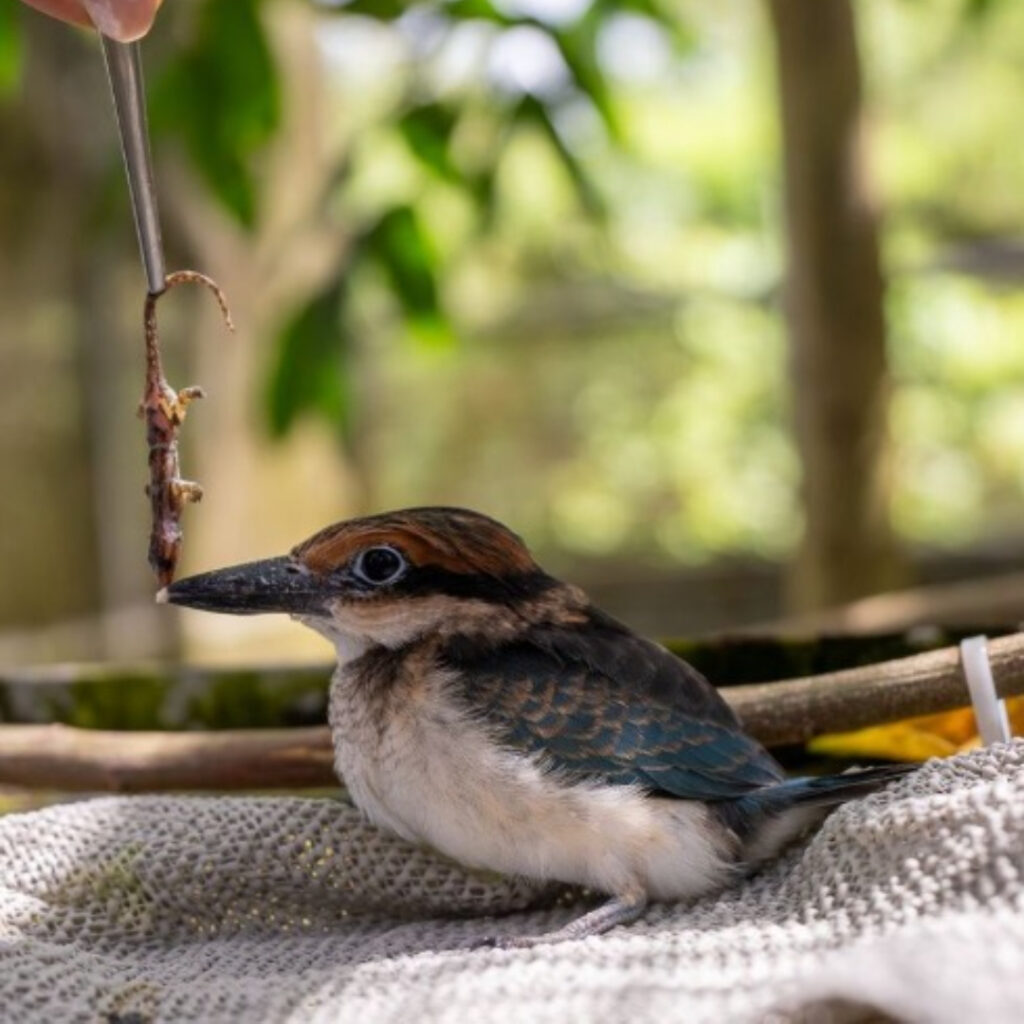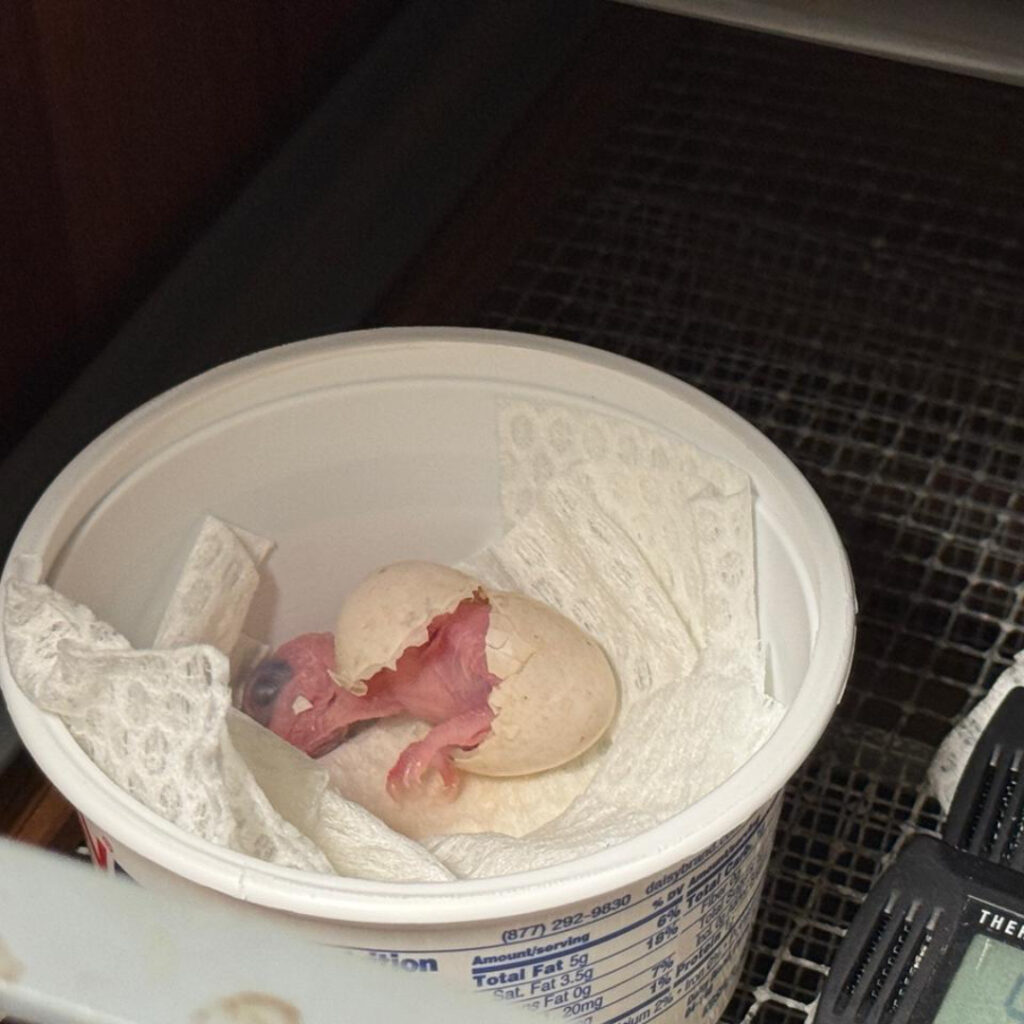
HAGÅTÑA – A Guam sihek chick was successfully hatched through artificial incubation for the first time in Department of Agriculture history just five days after Super Typhoon Sinlaku made landfall, the agency announced Thursday.
The Division of Aquatic and Wildlife Resources said staff moved both sihek and ko’ko’ populations indoors as the storm approached. Among the secured eggs was a sihek 10 days into parental incubation. Given the severity of the conditions, the egg was transferred to an incubator while the parents were housed separately for the duration of the storm.
The chick is now 32 days old, weighed 55 grams Thursday morning and is thriving. DNA sexing conducted Wednesday using the eggshell confirmed the chick is female, bringing the department’s captive sihek population to five males and two females.
“While we always prefer that our avian parents hatch their own young, the storm required us to intervene,” DAWR captive breeding biologist Suzanne Medina said. “This successful hatch marks a major first for our department while offering hope as we work to recover our native species.”
DAWR Chief Jay Gutierrez said the hatch reflects years of training and preparation.
“This hatch is a reflection of years of training and preparation by our team,” Gutierrez said. “When the storm hit, our staff knew exactly what to do. We are committed to recovering our native species using the expertise we have built right here on island.”
The new female has since been released into her enclosure to join her male partner. G3 Conservation Corps volunteers assisted with cleaning and repairing sihek enclosures after the storm and were present for the release.
The hatch carries added significance because of a recent change in commercial shipping. Following the discontinuation of live animal shipping by United Airlines, DOAG lost the ability to exchange sihek with mainland partner zoos. The department said this hatch demonstrates its capacity to advance recovery efforts using local resources and expertise.
DOAG Director Chelsa Muña said the hatch is a milestone for both the department and the people of Guam.
“The successful hatch of this sihek chick, just days after Sinlaku made landfall, is a testament to the dedication and preparedness of our DAWR team,” Muña said. “For over three years, we held our breath over the future of our population. To welcome a second female, achieved through the work of our own people, is a milestone we are proud of. The sihek is part of who we are as CHamoru people, and every hatch brings us closer to a future where this bird once again belongs to our island.”
The sihek hatch was not the only recovery story from the storm. A 24-day-old ko’ko’ chick that had been separated from its parents required staff intervention after it stopped eating for three days post-storm. The chick, now two months old, is doing well. Its sex has not yet been determined.