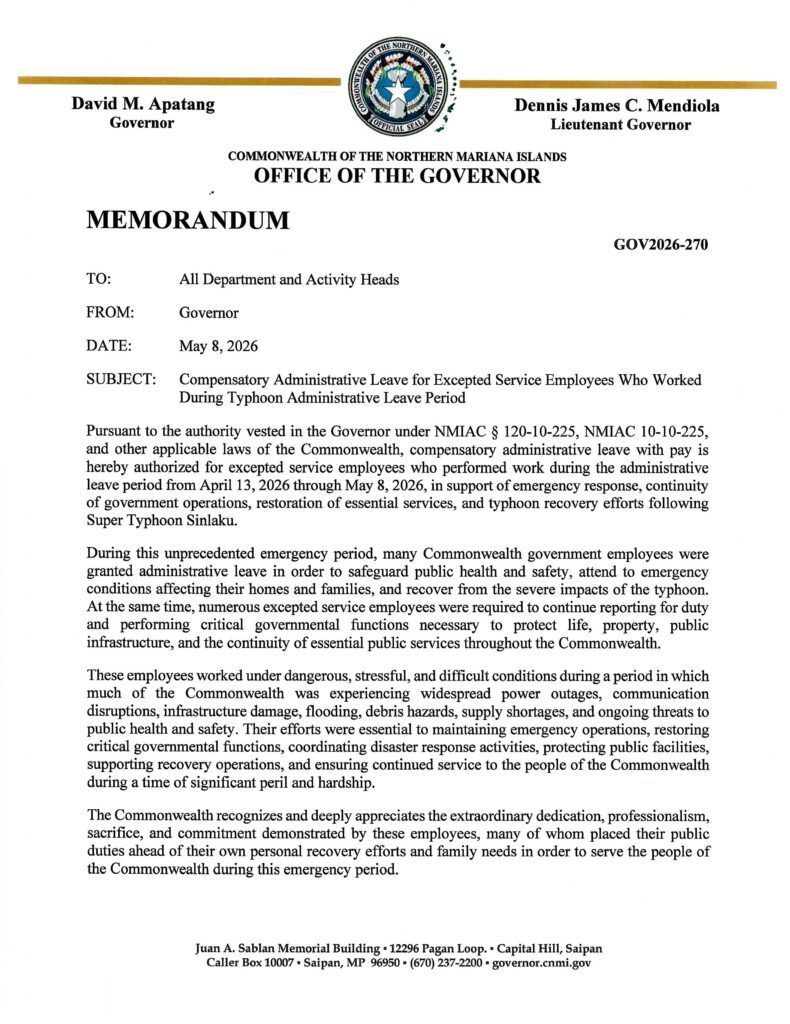
SAIPAN — Governor David M. Apatang authorized compensatory administrative leave with pay for excepted service employees who worked during the Super Typhoon Sinlaku administrative leave period from April 13 through May 8, in a memorandum dated May 8.
The memo, GOV2026-270, addresses a gap in compensation between classified civil service employees and excepted service employees. Under existing regulations, classified civil service employees receive pay for both their administrative leave hours and any actual hours worked, but no equivalent provision exists for excepted service workers who continued reporting during the same period.
“Numerous excepted service employees were required to continue reporting for duty and performing critical governmental functions necessary to protect life, property, public infrastructure, and the continuity of essential public services throughout the Commonwealth,” Apatang said.
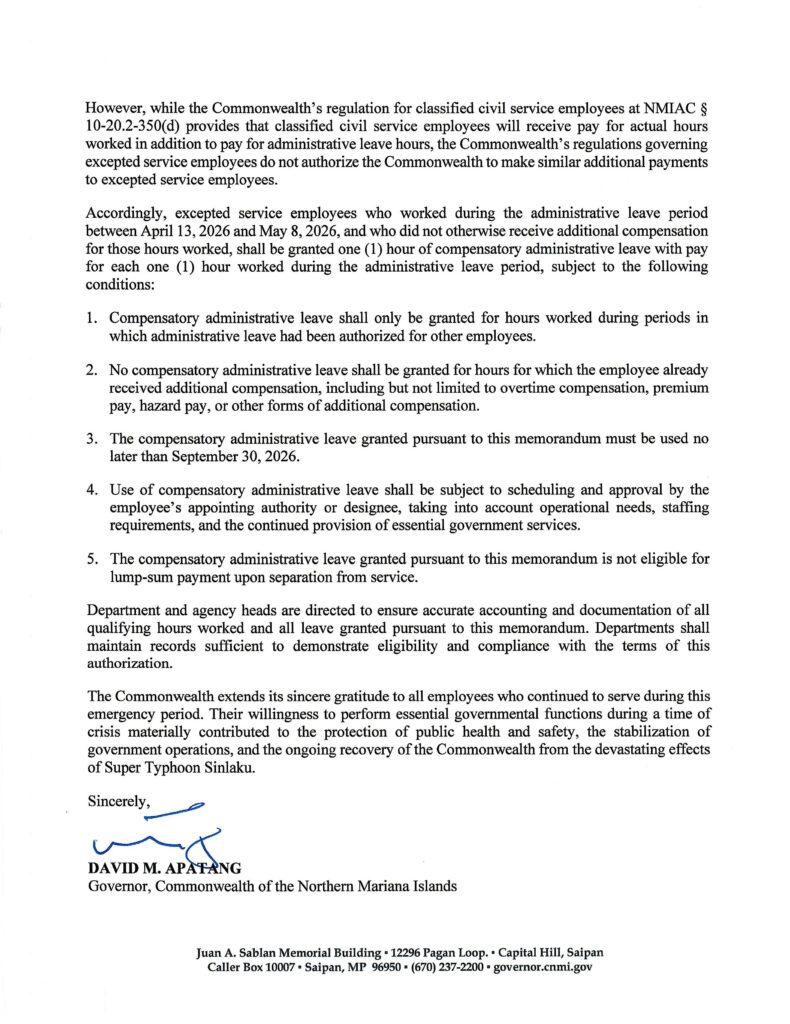
Under the authorization, eligible excepted service employees will receive one hour of compensatory administrative leave with pay for each hour worked during the administrative leave period.
The compensatory leave comes with five conditions. It applies only to hours worked when administrative leave had been authorized for other employees. It cannot be granted for hours that already received additional compensation such as overtime, premium pay or hazard pay. The leave must be used by September 30. Use is subject to scheduling and approval by the employee’s appointing authority. And the leave is not eligible for lump-sum payment upon separation from service.
Department and agency heads have been directed to keep accurate accounting and documentation of qualifying hours and leave granted.
“These employees worked under dangerous, stressful, and difficult conditions during a period in which much of the Commonwealth was experiencing widespread power outages, communication disruptions, infrastructure damage, flooding, debris hazards, supply shortages, and ongoing threats to public health and safety,” Apatang said.