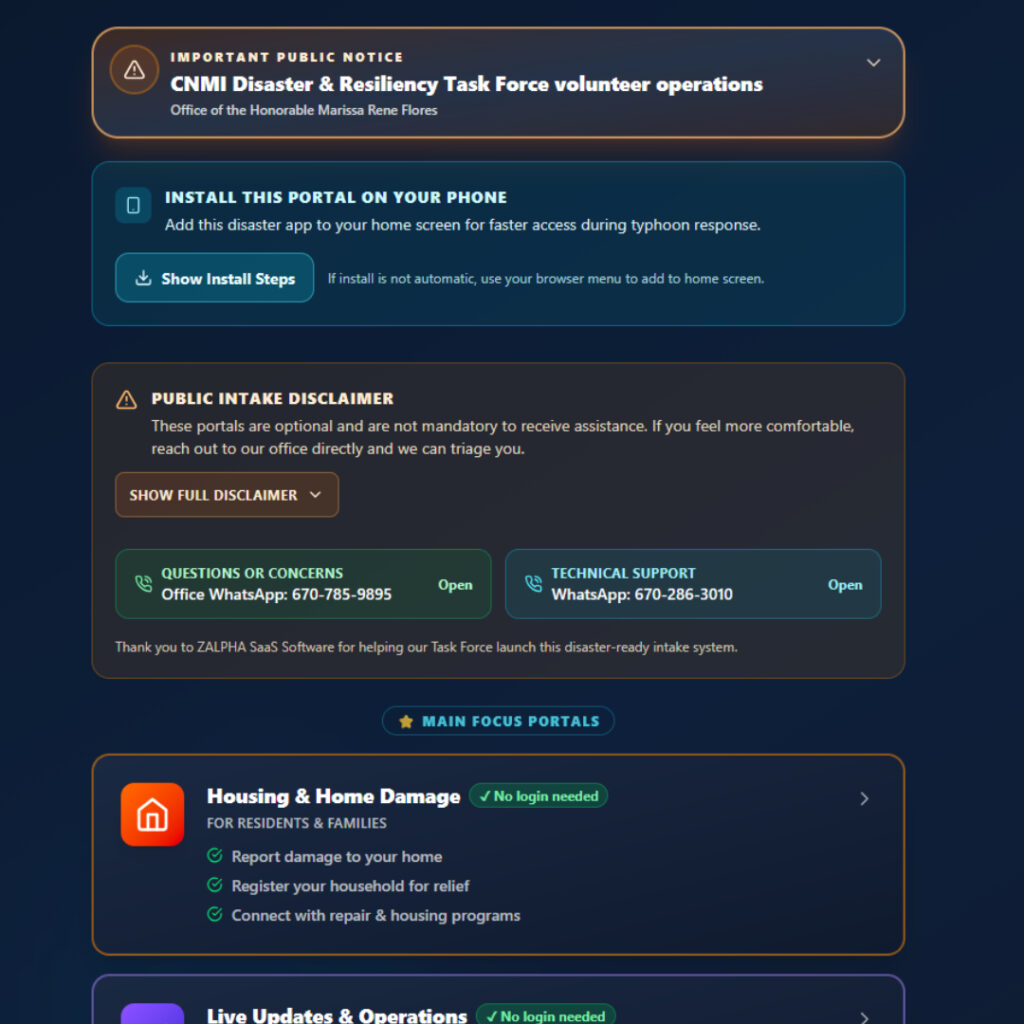
SAIPAN — A new disaster intake platform built by a community volunteer coding team is now live and accepting submissions from residents affected by Typhoon Sinlaku, connecting survivors directly with relief organizations through a geofenced, multilingual app designed to fill the coordination gaps that emerged during the storm’s immediate aftermath.
The platform, developed by the CNMI Disaster and Resiliency Task Force, was the centerpiece of a midday in-studio interview Wednesday on Good Morning Marianas featuring Rep. Marissa Rene Flores of Precinct 3 and developer P.K. Daigo, who built the system over months prior to the storm.
Among the task force includes Flores, Daigo, Sonya Dancoe, and Cindy Hoepner. All participants stressed they are volunteering in their private capacities, not representing their employers or government roles.
The app’s primary portals allow residents to report housing and home damage, register household needs, track power and water restoration and connect with repair and housing programs, all without requiring a login. The intake form is available in English, Chamorro, Chinese, Filipino, Korean, Japanese, Bangladeshi, Turkish, Thai and Carolinian.
Daigo said the platform is geofenced to the CNMI, meaning only users physically located in the islands can submit forms, a security measure to prevent fraud. Sensitive information such as power outage locations is kept confidential and routed only to relevant agencies like CUC rather than made publicly visible.
Flores said the platform grew directly from her frustrations during the first days after Sinlaku, when the diversity of Precinct 3, heavy with renters in apartment buildings rather than homestead residents, made coordinating relief extremely difficult.
“I couldn’t go anywhere to find a database that tells me in my precinct which is very diverse,” Flores said. “A lot of my constituents are also living in apartments that have different categories on how we manage their care.”
She described the heartbreak of learning that a loss of life may have occurred because services did not reach a vulnerable resident in time, and of hearing that residents on feeding tubes were consuming general food distribution items not suitable for their dietary needs.
“Those are the really, really delicate populations that we want to make sure that they get the help,” Flores said.
Daigo said the intake system is modeled on a coordinated case management platform he worked with as a social worker in San Francisco two decades ago, where all service providers shared a single database to prevent duplication and identify gaps. The platform includes a donations inventory tracker with UPC barcode scanning to log incoming pallets and supplies and an anonymous tip line to report price gouging or looting.
A live updates portal aggregates information from government agencies, the mayor’s offices on all three islands, the legislature, CUC and open businesses and refreshes every 30 to 60 seconds. NMI News Service feeds are also integrated into the platform.
The task force said it is not a case management agency and will not distribute aid directly. Instead, it receives intake submissions, reviews them and routes cases to the appropriate organizations, including American Red Cross and Samaritan’s Purse, which have agreed to participate.
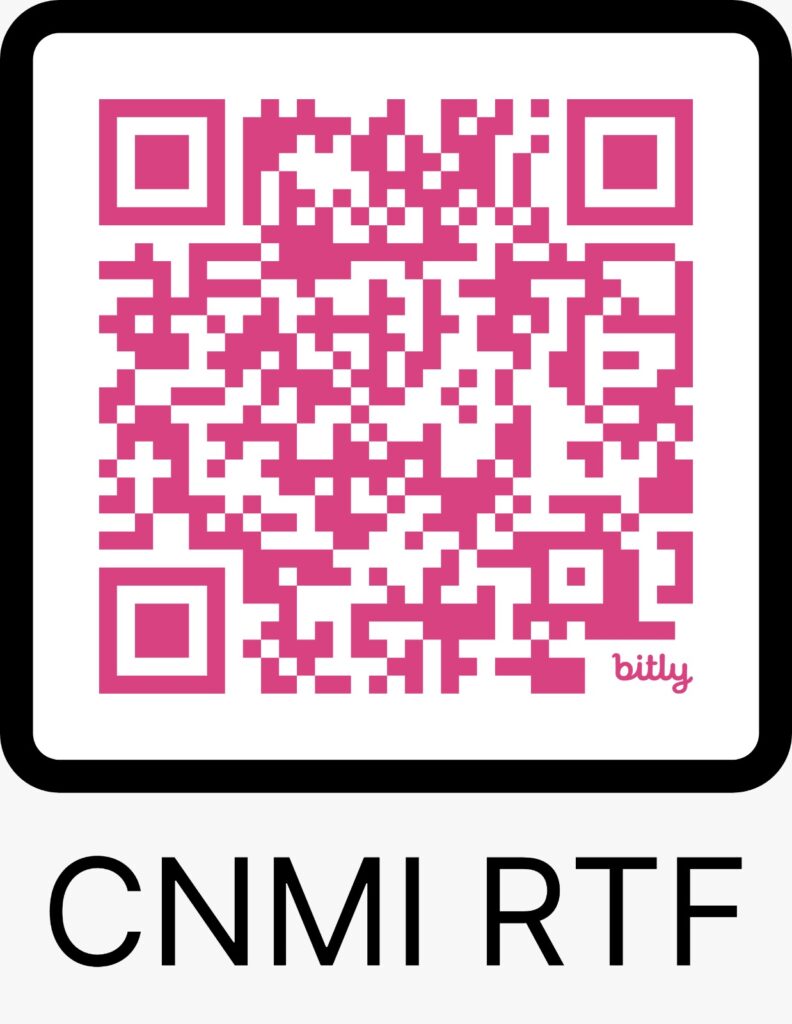
Residents can access the platform through the QR code on the task force’s social media pages or through Rep. Flores’ office. For questions, contact the office via WhatsApp at (670) 785-9895. For technical support, contact Daigo at (670) 286-3010.