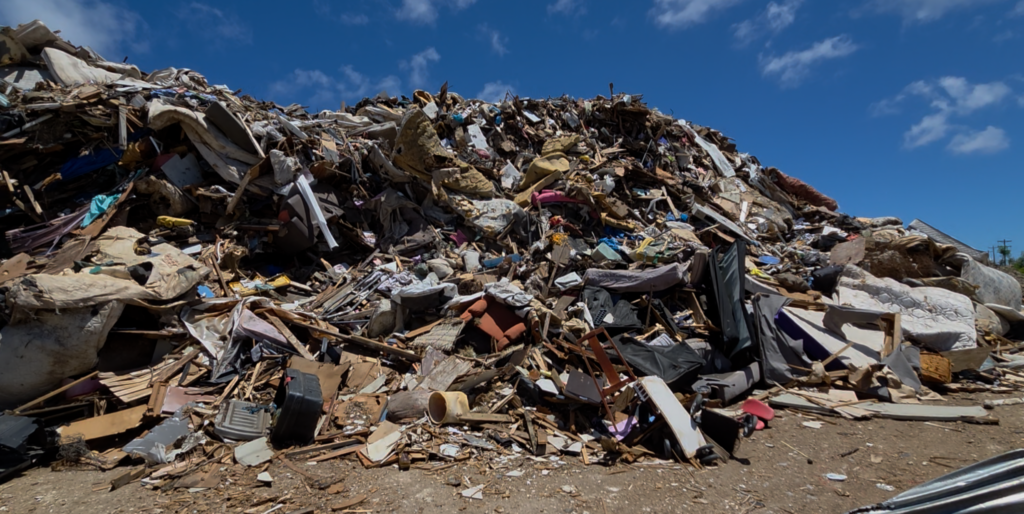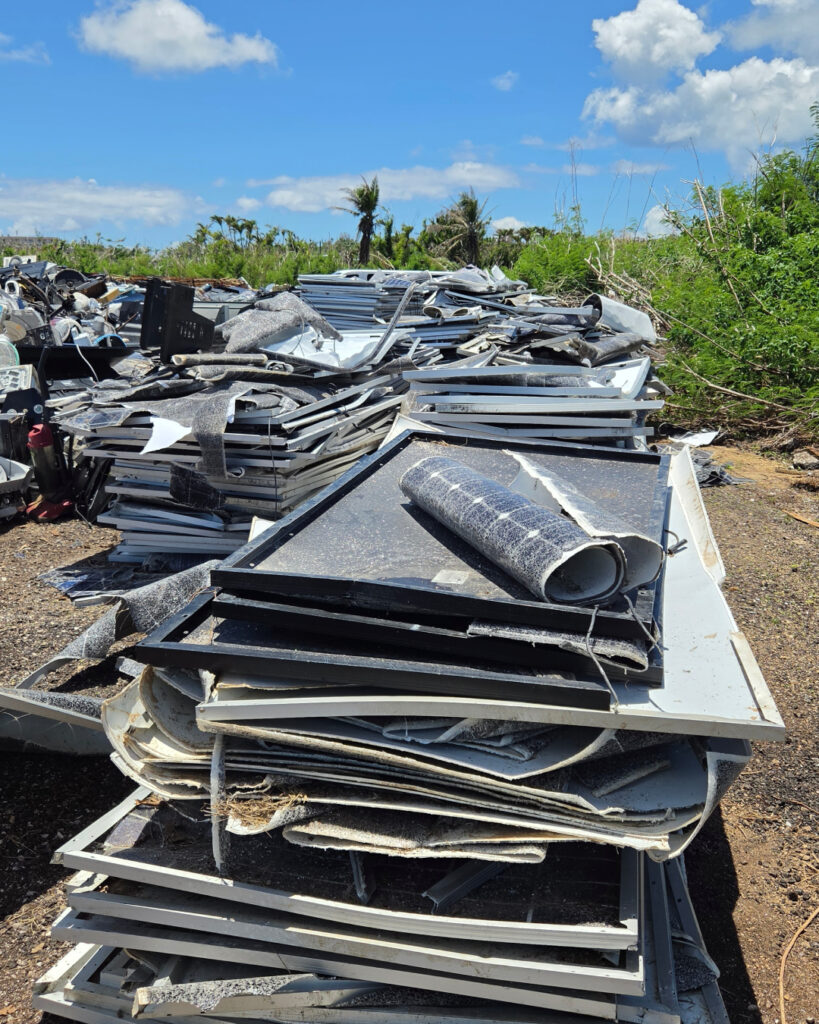
SAIPAN — The U.S. Army Corps of Engineers has cleared just over 40,000 cubic yards of debris on Saipan, about 15 percent of the estimated total, and is asking residents to sort their roadside piles to speed the recovery.
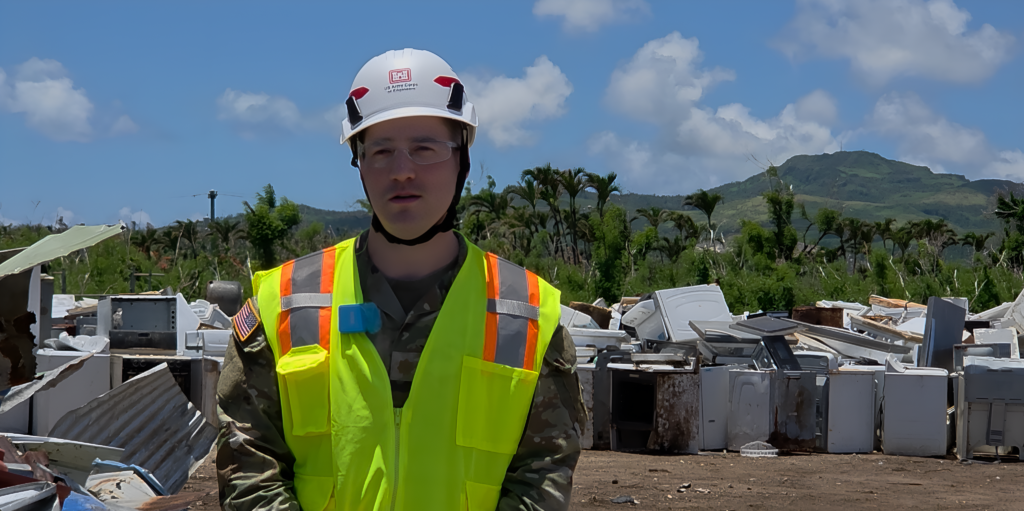
Maj. Brian Berger, the USACE Debris Mission Commander for the Super Typhoon Sinlaku response, said his team manages the removal of debris from the right of way along local streets across the CNMI. The Corps estimates Saipan alone holds about 300,000 cubic yards of debris.
“Sort better, recover faster,” Berger said. “If individuals can sort their debris piles by the various debris streams, that’s going to have our crews picking it up much more quickly.”
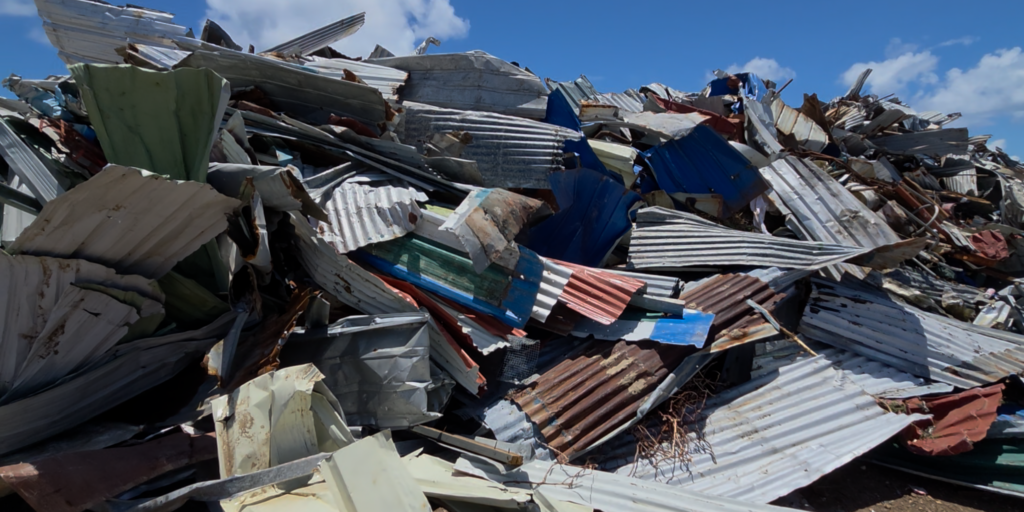
He said sorting metals, vegetative debris, and electronic waste into separate piles along the right of way allows crews to collect material faster.
Most of the collected debris is brought to the Corps’ primary Temporary Debris Staging and Reduction Site, where the various waste streams from across Saipan are processed. Berger said roughly 25,000 cubic yards of the total collected so far is vegetative debris. A vegetative waste site in Marpi is still under development.
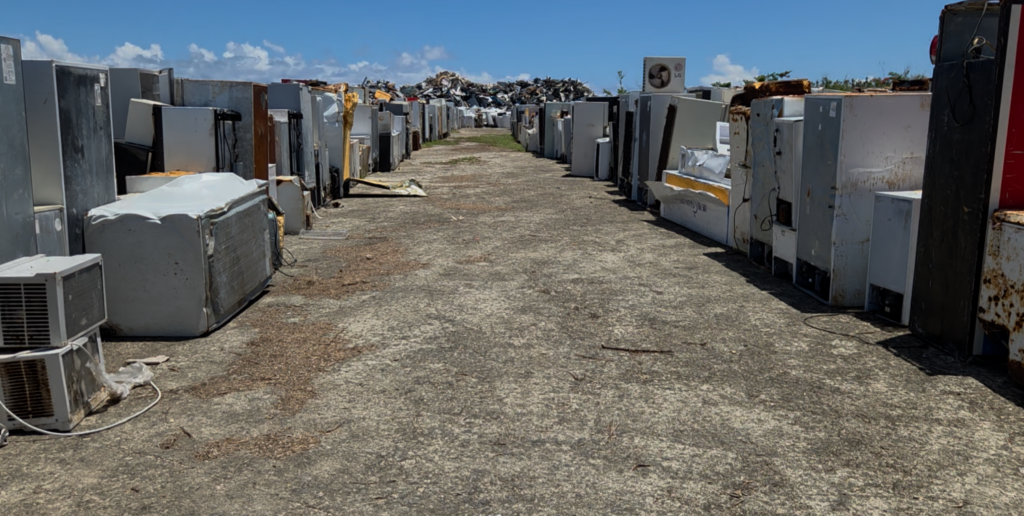
The Corps has a different plan for each waste stream, Berger said. Metals will be baled, containerized, and shipped to a recycler on the West Coast. Vegetative debris will be run through a wood chipper, with some chips given to local farmers and most of the material staying on Saipan. Appliances and electronics will be containerized and sent to the United States for final disposal.
Berger said the Corps manages the final disposition of the waste streams. He said the team works with local partners at the Department of Public Works and the mayor’s office.
The Corps intends to complete the debris removal portion of the mission around the first week of July, Berger said, though final disposition could extend past that date depending on shipping and logistics of moving material off island.
Berger, who is on his first recovery operation, said the experience has been a point of pride. He said the commanding general, who visited this week, told the team that when residents see the red shirt of the Corps of Engineers, it means help has arrived.
“This is USACE at its best, when we’re helping people recover from a disaster like this,” he said.