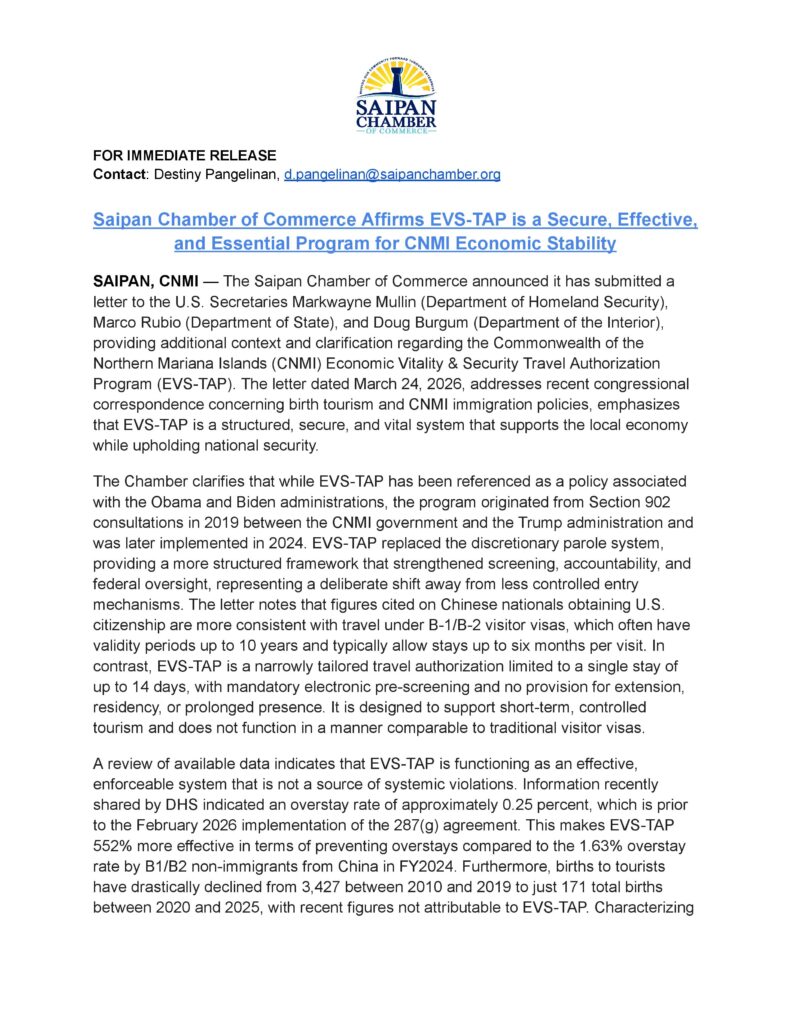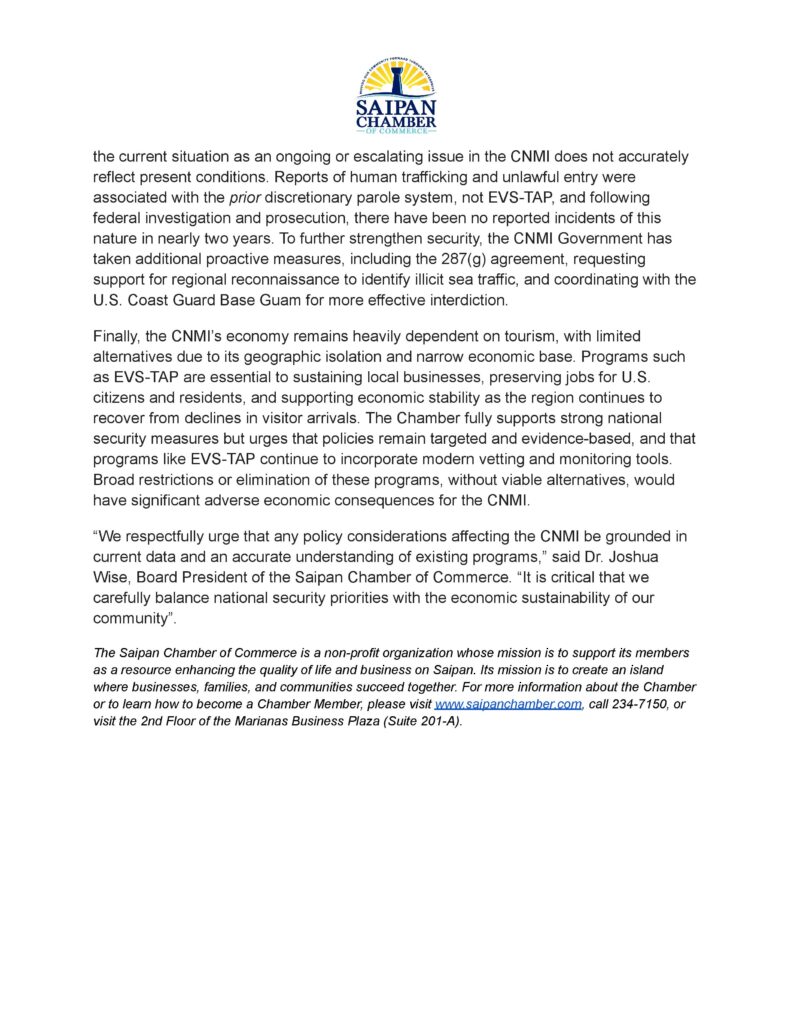
SAIPAN — The Saipan Chamber of Commerce has submitted a letter to the secretaries of Homeland Security, State and the Interior urging federal officials to consider current data and accurate program details before making any policy decisions affecting the CNMI’s primary travel authorization program for Chinese visitors.
The letter, dated March 24, 2026, was addressed to DHS Secretary Markwayne Mullin, Secretary of State Marco Rubio and Interior Secretary Doug Burgum. It was submitted in response to recent congressional correspondence concerning birth tourism and CNMI immigration policies, and argues that the CNMI Economic Vitality and Security Travel Authorization Program, known as EVS-TAP, is a structured, secure and economically essential program that has been mischaracterized in recent public debate.
The Chamber pushed back on characterizations of EVS-TAP as a product of the Obama and Biden administrations, noting that the program originated from Section 902 consultations in 2019 between the CNMI government and the Trump administration and was implemented in 2024. The Chamber said EVS-TAP replaced the prior discretionary parole system with a more structured framework that strengthened screening, accountability and federal oversight.
The letter also drew a distinction between EVS-TAP and the B-1/B-2 visitor visa program, which the Chamber said is a more likely vehicle for the birth tourism activity cited in recent congressional letters. EVS-TAP authorizes a single stay of up to 14 days with mandatory electronic pre-screening and no provision for extension, residency or prolonged presence. B-1/B-2 visas can carry validity periods of up to 10 years and typically allow stays of up to six months per visit.
On overstays, the Chamber cited DHS data showing an EVS-TAP overstay rate of approximately 0.25 percent, which it said is prior to the February 2026 implementation of the 287(g) agreement. The Chamber said that figure represents a rate 552 percent more effective at preventing overstays than the 1.63 percent overstay rate recorded for B-1/B-2 non-immigrants from China in fiscal year 2024.
The Chamber also noted that births to tourists in the CNMI fell from 3,427 between 2010 and 2019 to 171 total births between 2020 and 2025, and said recent figures are not attributable to EVS-TAP. It added that reports of human trafficking and unlawful entry in the CNMI were associated with the prior parole system, not EVS-TAP, and that no incidents of that nature have been reported in nearly two years following federal investigation and prosecution.
The letter cited the CNMI’s heavy dependence on tourism and its limited economic alternatives, arguing that broad restrictions on EVS-TAP without viable replacements would cause significant harm to local businesses and jobs.
“We respectfully urge that any policy considerations affecting the CNMI be grounded in current data and an accurate understanding of existing programs,” said Dr. Joshua Wise, board president of the Saipan Chamber of Commerce. “It is critical that we carefully balance national security priorities with the economic sustainability of our community.”