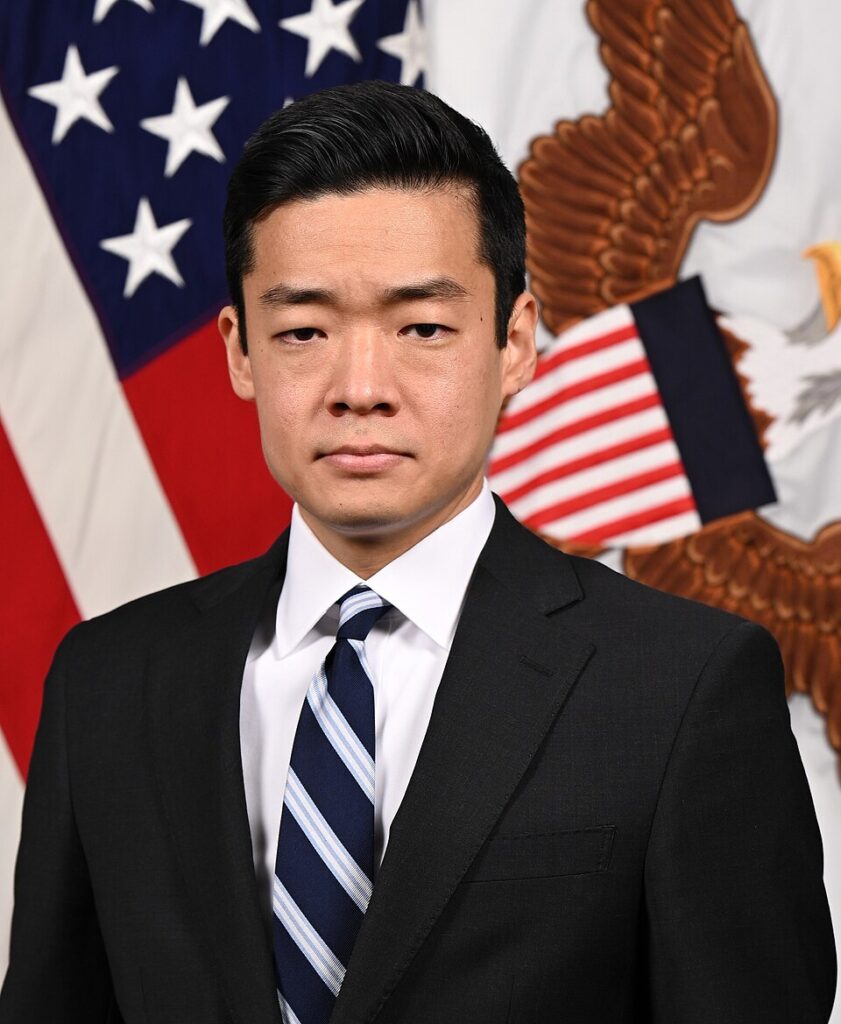
SAIPAN — The assistant secretary of war for Indo-Pacific security affairs has responded to Congresswoman Kimberlyn King-Hinds’ January letter urging federal action on the CNMI’s economic crisis, acknowledging the Commonwealth’s fiscal strain and its strategic value to the United States but stopping short of any specific commitments.
John Noh, whose title reflects the Trump administration’s renaming of the Department of Defense as the Department of War, wrote to King-Hinds on March 20, nearly two and a half months after she and other CNMI leaders sent a joint letter to President Donald Trump warning that the Commonwealth’s economy was approaching irreversible collapse absent immediate federal action.
“CNMI is a key partner in U.S. defense efforts in the western Pacific, and the Department is concerned about the economic headwinds that you face,” Noh wrote. “We acknowledge the impact that this economic outlook could have for our ongoing initiatives and defense sites in CNMI.”
Noh said he had directed his team to engage ambitiously with the CNMI government through the ongoing Section 902 consultations and to underscore the value of the Department’s economic contributions to the islands, including military construction. He said he looks forward to exploring opportunities to expand the partnership.
“The Department of War looks forward to engaging with you to explore mutually beneficial opportunities to advance U.S. military force posture in CNMI,” Noh wrote.
The response addressed only King-Hinds. The joint January 6 letter to Trump was co-signed by Governor David M. Apatang, Senate President Karl King Nabors and House Speaker Edmund Villagomez. A separate letter sent the same day to Admiral Samuel J. Paparo, commander of U.S. Indo-Pacific Command, carried the same four signatures and made a parallel case for INDOPACOM’s engagement. No response to the Paparo letter was included in the documents released Monday.
The January letters described an economy contracting at a pace that threatens basic viability. Visitor arrivals in Fiscal Year 2025 declined 32.4 percent from Fiscal Year 2024, itself already 58 percent below pre-pandemic Fiscal Year 2018 levels. Hotel occupancy had fallen to an average of roughly 15 percent. More than 110 businesses and nonprofits had closed since early 2024. Weekly inbound international air seats had fallen from more than 12,000 before the pandemic to fewer than 4,700.
The letters asked the administration for three specific actions requiring no new appropriations: restoring Chinese air access to the CNMI under the Annex VI exemption in the U.S.-China Air Transport Agreement, which Department of Transportation Part 213 orders have effectively blocked; including the Philippines in the Guam-CNMI Visa Waiver Program, which the letters said could generate as many as 8,000 additional visitors annually; and directing Japan and South Korea investment agreement partners to restore air service to the CNMI as part of those trade commitments.
The letters argued that allowing a U.S. jurisdiction in the Indo-Pacific to collapse economically posed a greater national security risk than any benefit derived from maintaining the constraints suppressing recovery.
“The Commonwealth of the Northern Mariana Islands sits at the forward edge of America’s presence in the Indo-Pacific,” the letters stated. “An economic collapse here would not remain a local issue. It would weaken U.S. credibility, diminish American commercial presence, and leave strategic ground unoccupied at a time when the United States is actively competing for presence, credibility, and influence in the region.”
Noh’s response did not address the specific requests in the letters.