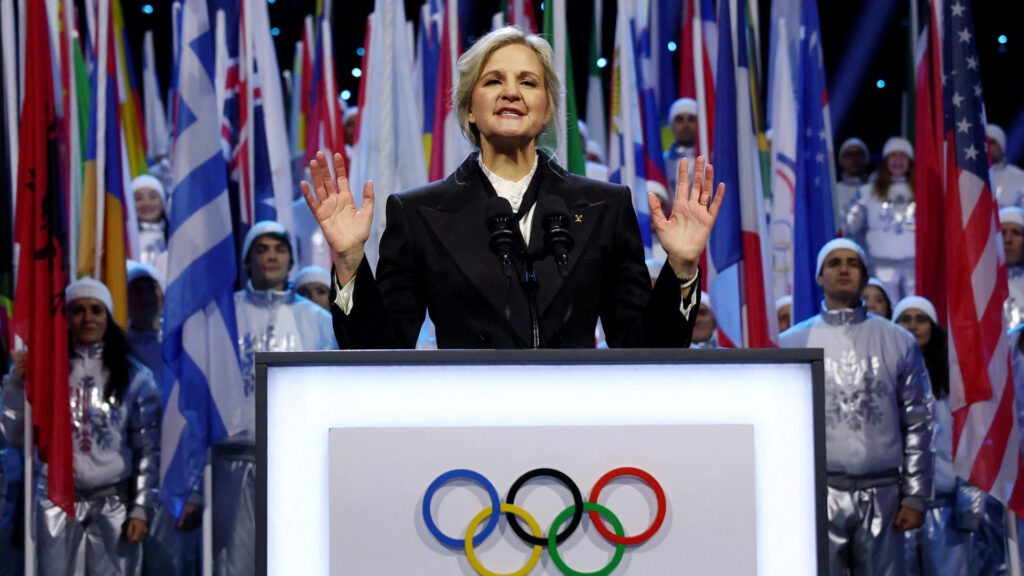
LAUSANNE, Switzerland —The International Olympic Committee adopted a sweeping new policy Thursday that limits eligibility for women’s competition at all Olympic events to biological females, replacing a 2021 framework that had given individual sports federations broader discretion over transgender athlete participation.
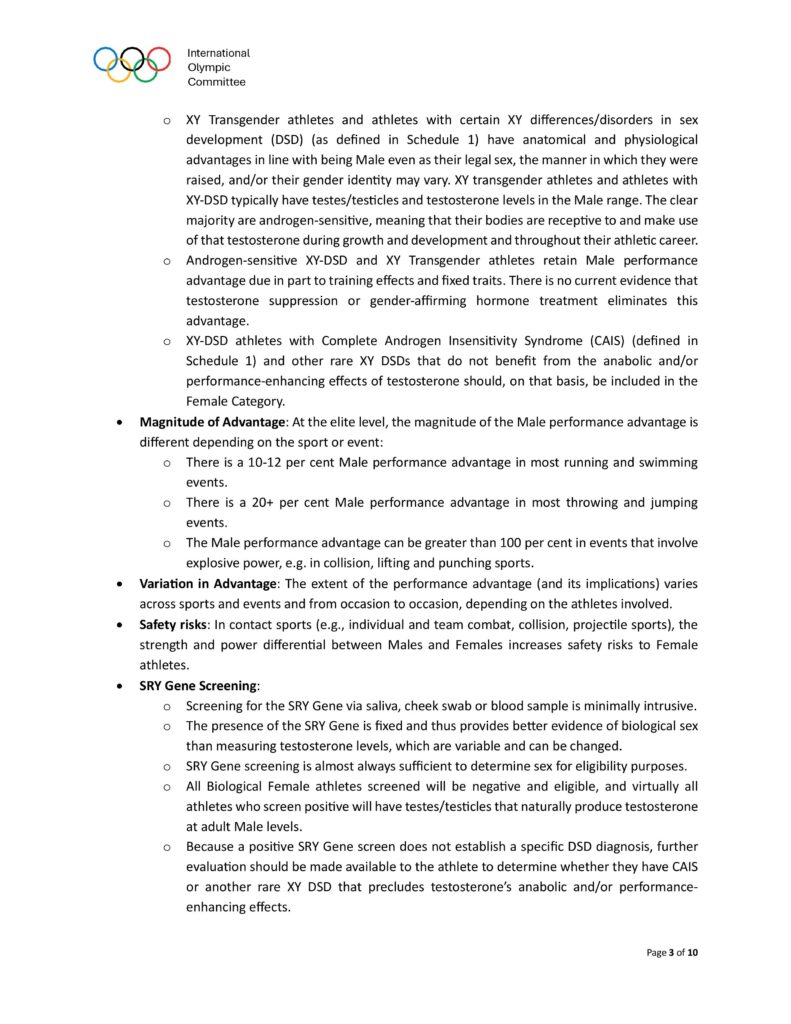
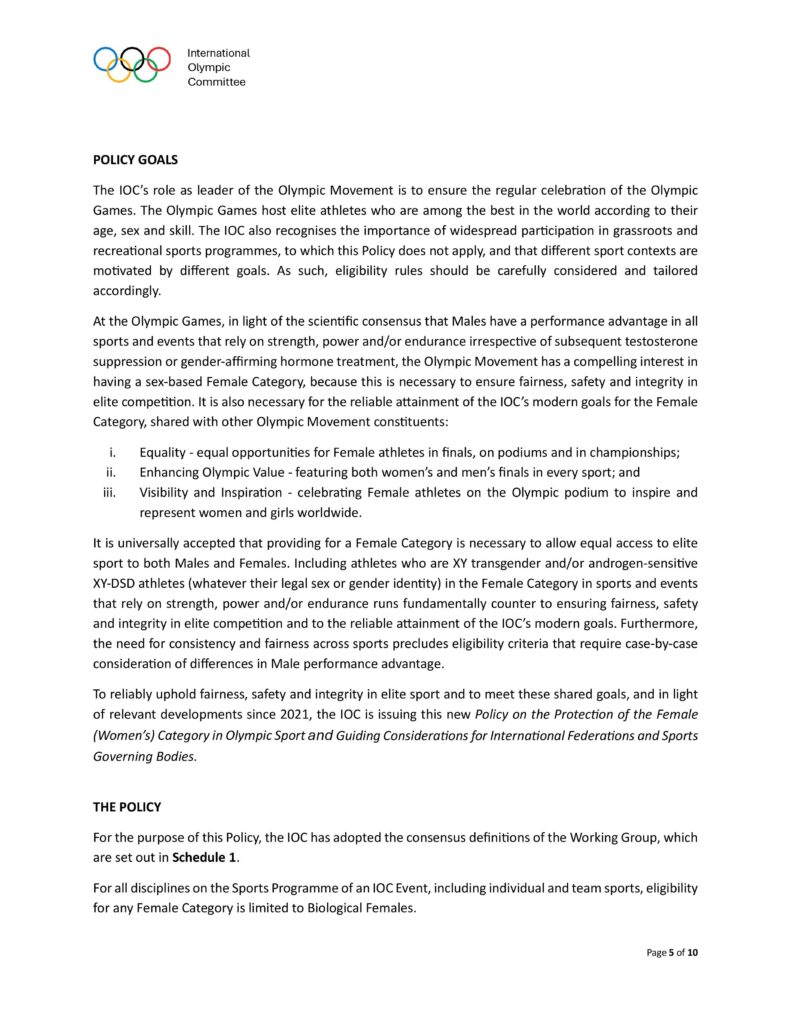
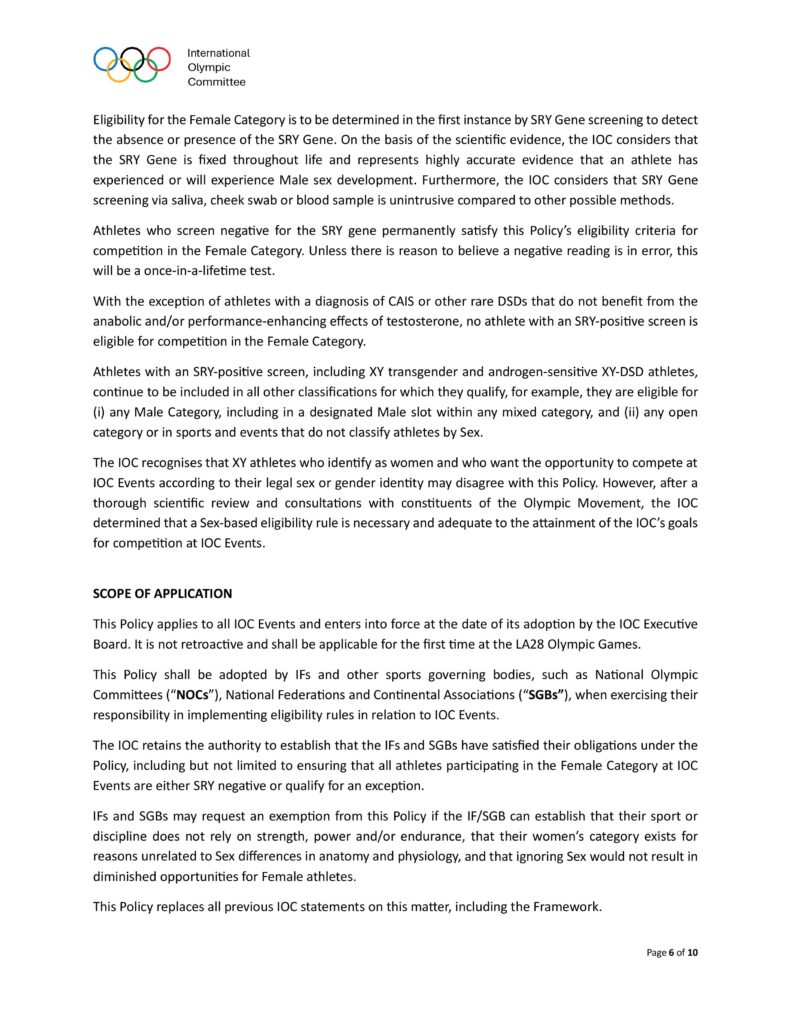
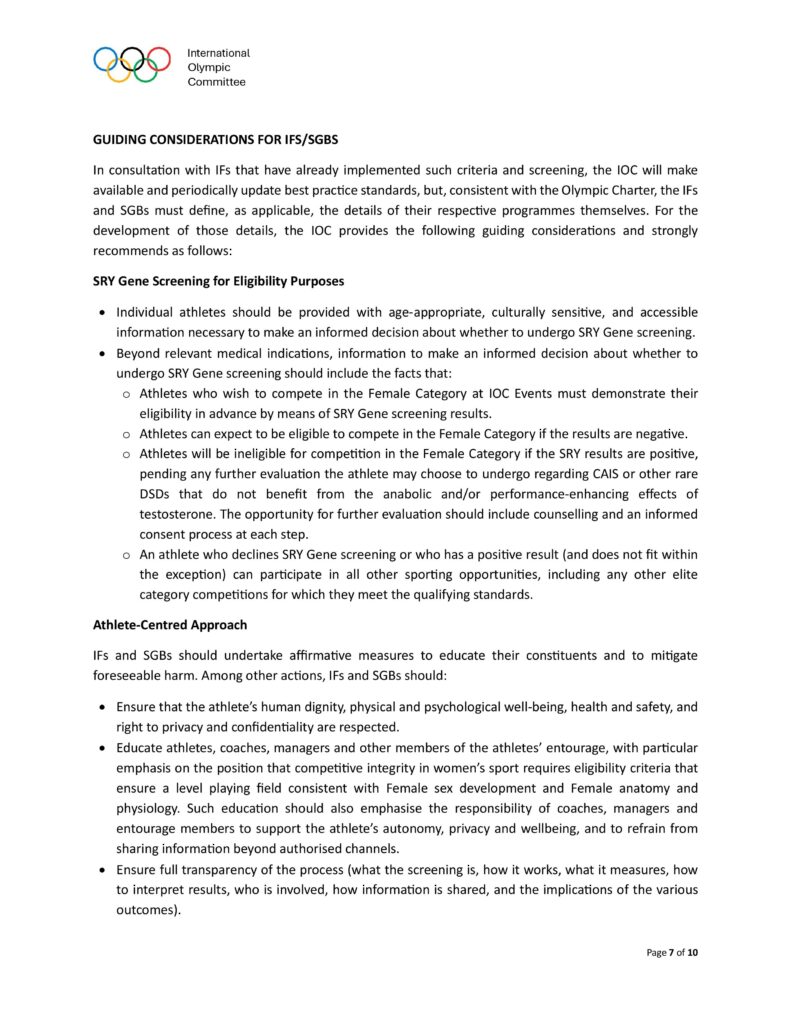
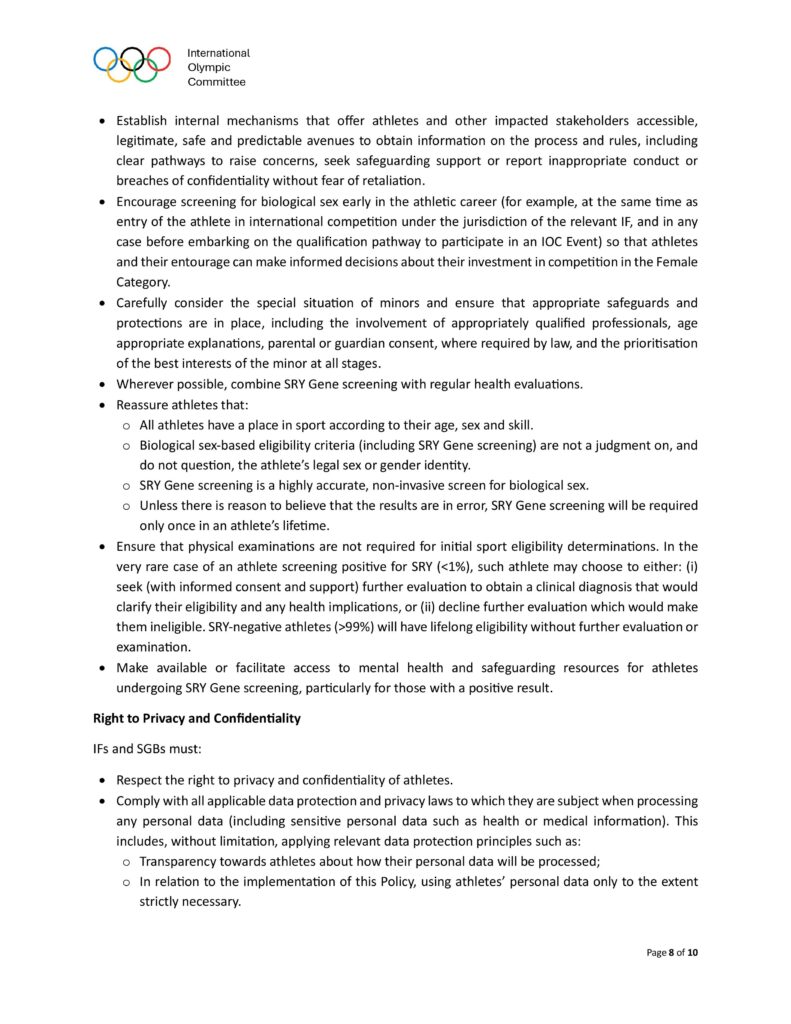
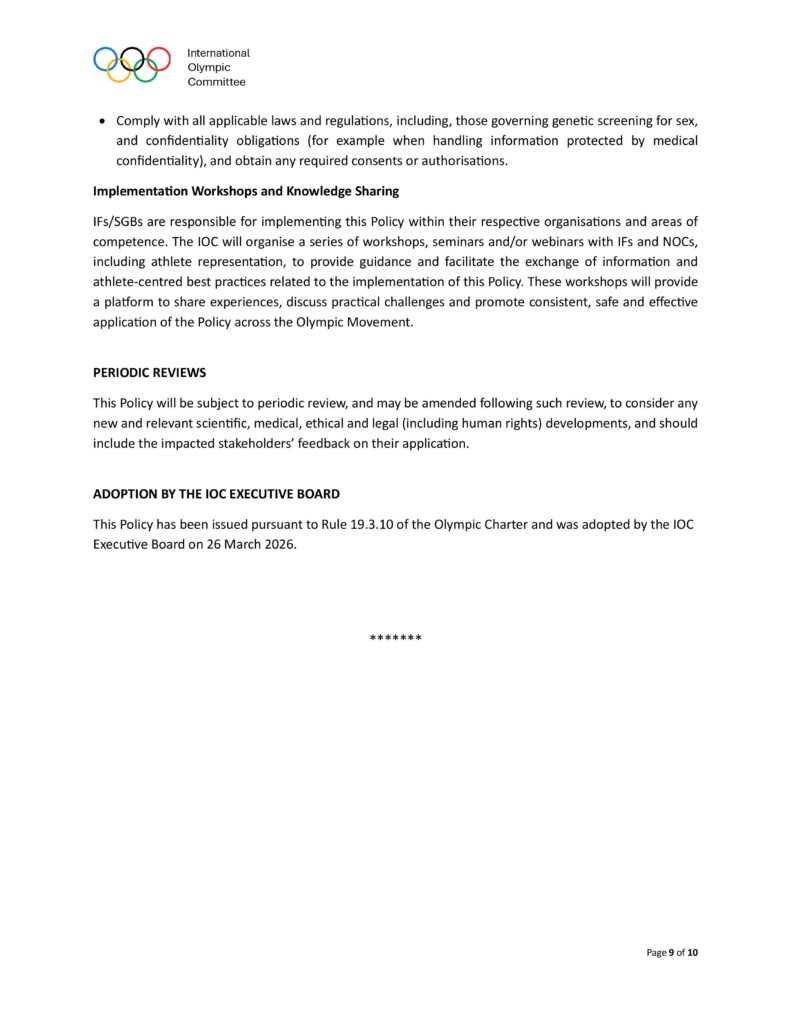
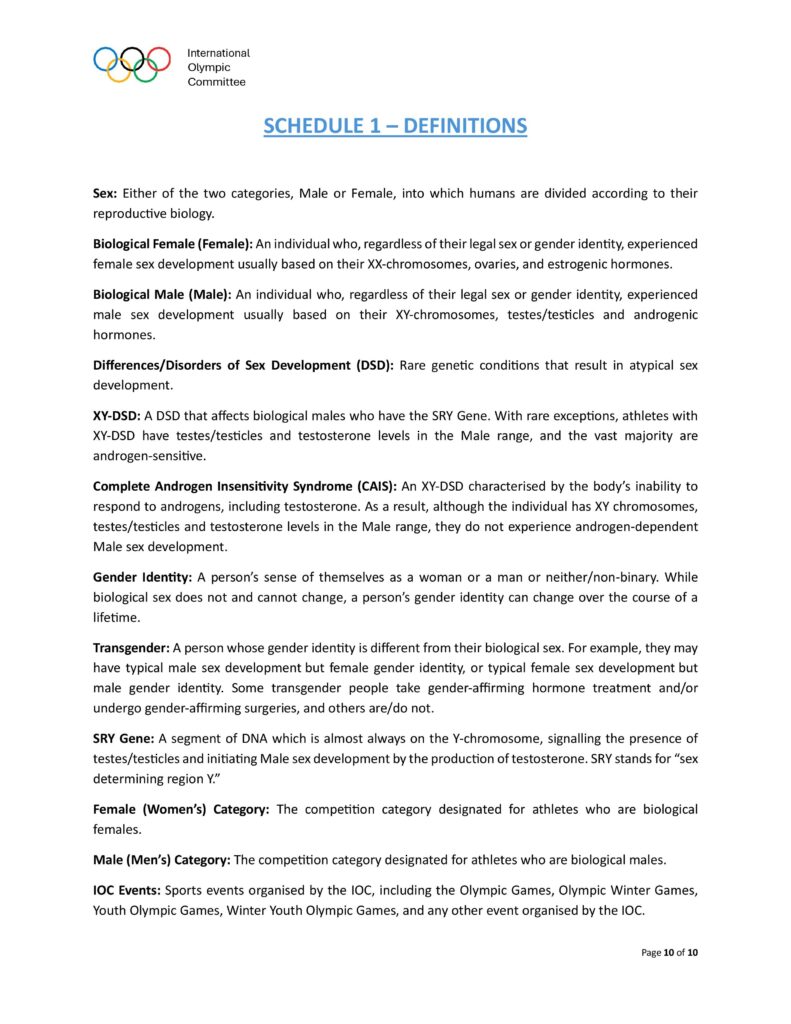
The policy, adopted by the IOC Executive Board on March 26, 2026, establishes that eligibility for the female category at all IOC events will be determined through screening for the SRY gene, a segment of DNA almost always found on the Y chromosome that initiates male sex development. Athletes who screen negative will be permanently eligible for women’s competition. Athletes who screen positive will be ineligible, with a narrow exception for those diagnosed with Complete Androgen Insensitivity Syndrome or other rare conditions in which the body does not respond to testosterone.
The policy takes effect immediately but will be applied for the first time at the LA28 Olympic Games.
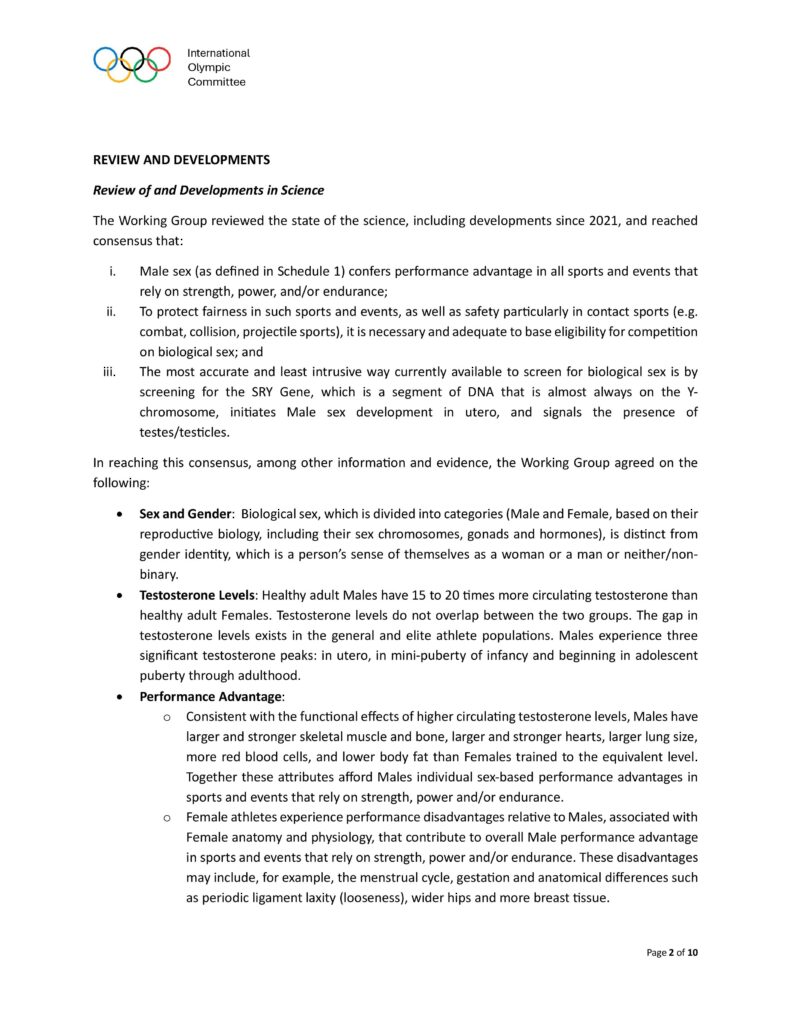
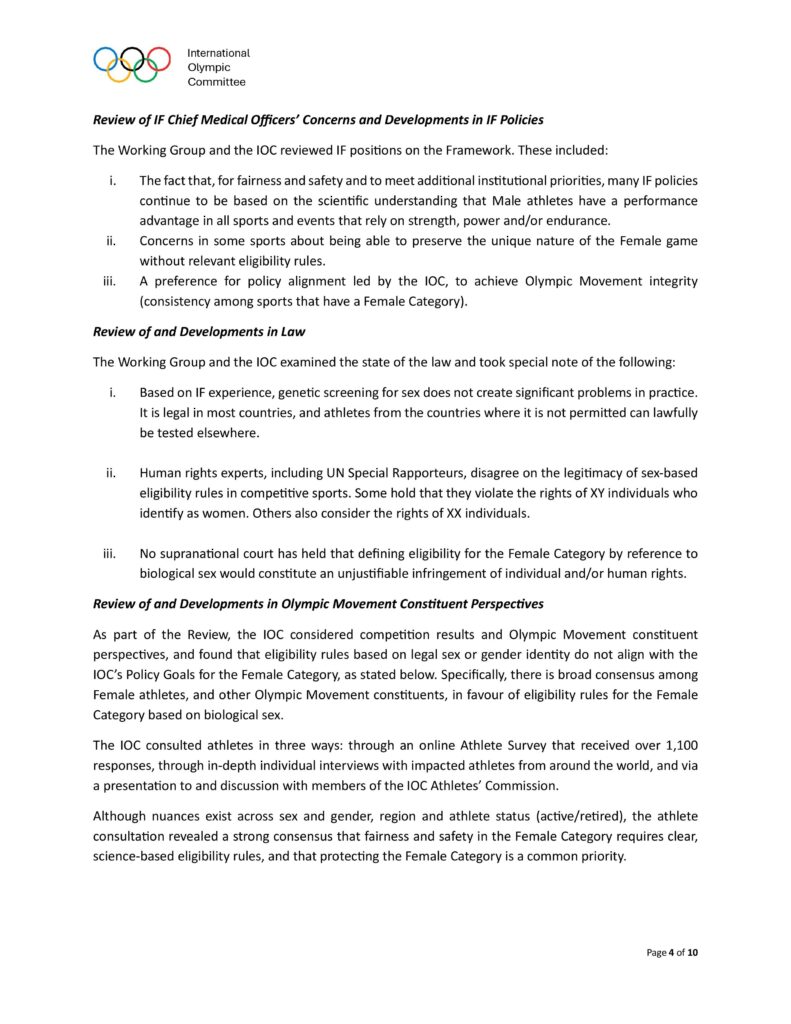
The IOC said its scientific working group, which included specialists in sports science, endocrinology, transgender medicine, women’s health, ethics and law, reached consensus that male sex confers a performance advantage in all sports relying on strength, power or endurance, and that testosterone suppression or gender-affirming hormone treatment does not eliminate that advantage. The group found that males have 15 to 20 times more circulating testosterone than females, with a 10 to 12 percent male performance advantage in most running and swimming events, more than 20 percent in throwing and jumping, and potentially greater than 100 percent in explosive power sports such as combat and lifting.
“Biological sex, which is divided into categories (Male and Female, based on their reproductive biology, including their sex chromosomes, gonads and hormones), is distinct from gender identity, which is a person’s sense of themselves as a woman or a man or neither/non-binary.”
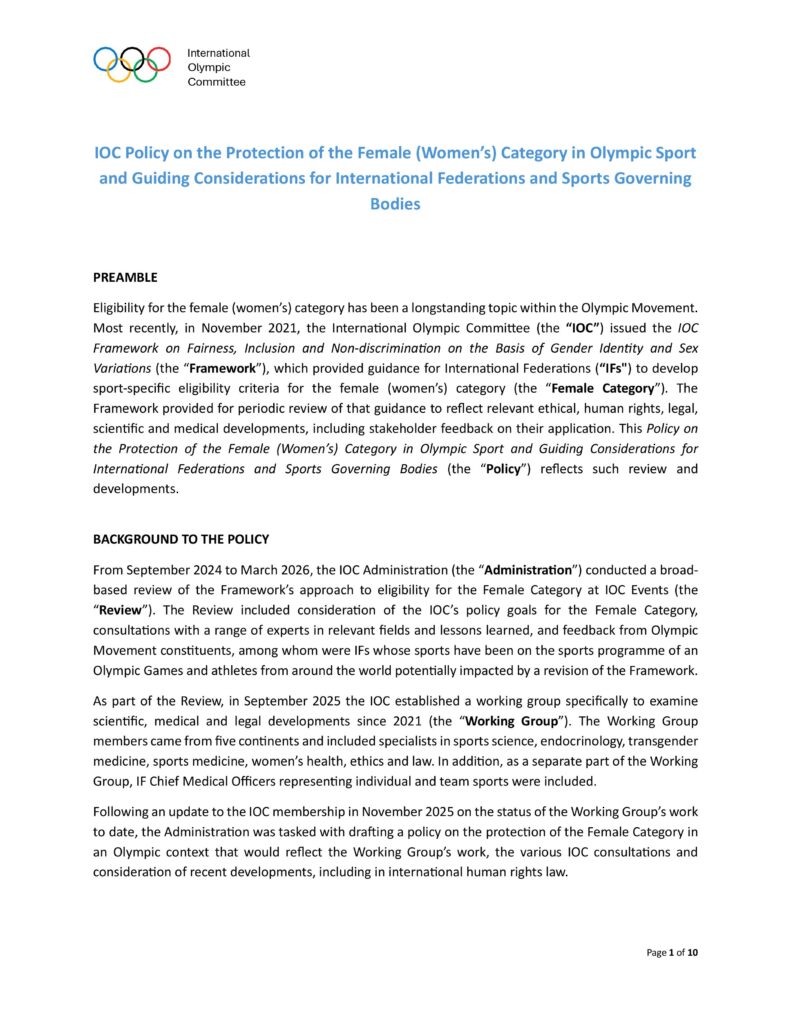
The policy represents a significant shift from the IOC’s 2021 framework, which had moved away from testosterone-based eligibility rules and directed individual federations to develop their own criteria. The new policy establishes a single standard across all Olympic sports and supersedes all previous IOC statements on the matter.
The IOC acknowledged that XY athletes who identify as women and wish to compete according to their gender identity may disagree with the policy. It said a thorough scientific review and consultation with Olympic Movement constituents, including more than 1,100 athlete survey responses, revealed broad consensus among female athletes in favor of eligibility rules based on biological sex.
Athletes who screen positive for the SRY gene remain eligible for any male category, any designated male slot in a mixed category, and any open category competition.
The policy will apply to all IOC events, including the Olympic Games, Olympic Winter Games and Youth Olympic Games. International federations and national Olympic committees are required to adopt and implement it. Federations whose sports do not rely on strength, power or endurance may apply for an exemption.
The IOC said SRY gene screening via saliva, cheek swab or blood sample is minimally intrusive and, barring error, will be required only once in an athlete’s lifetime.