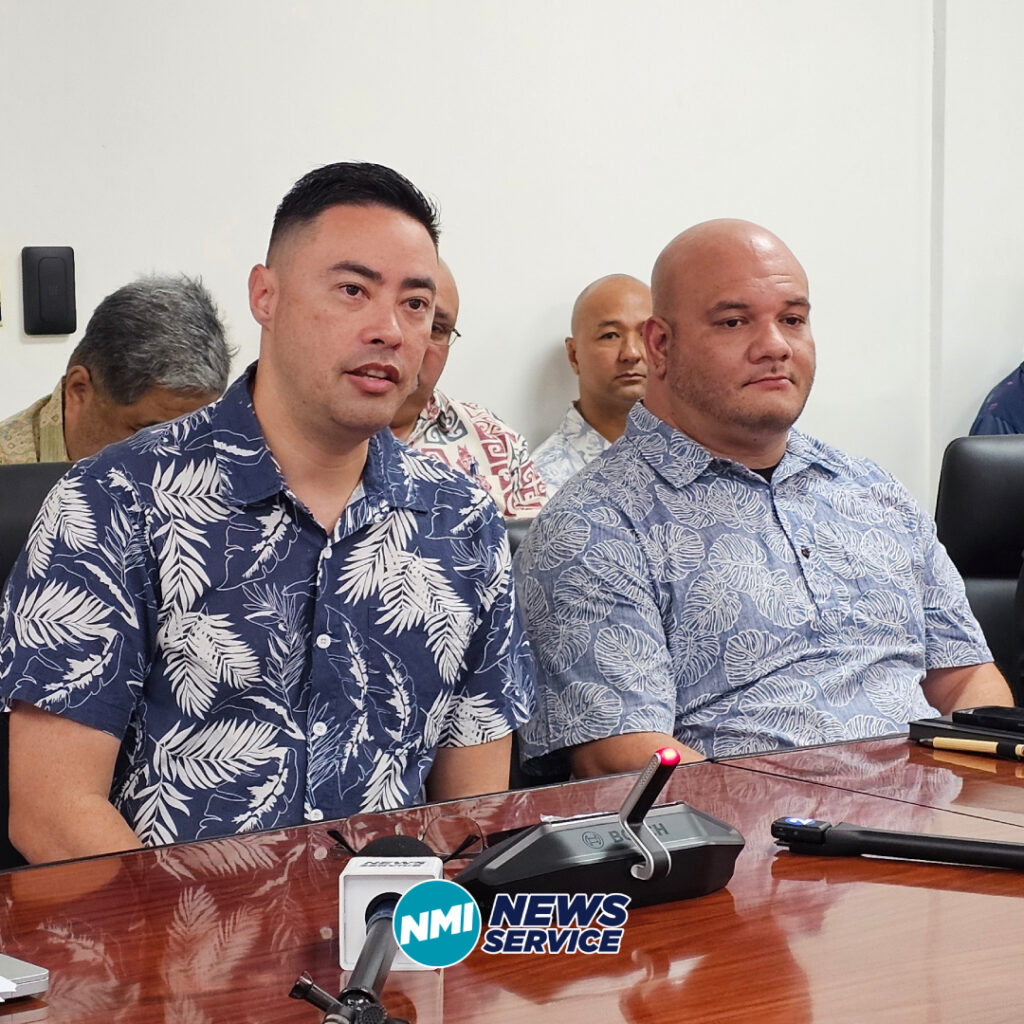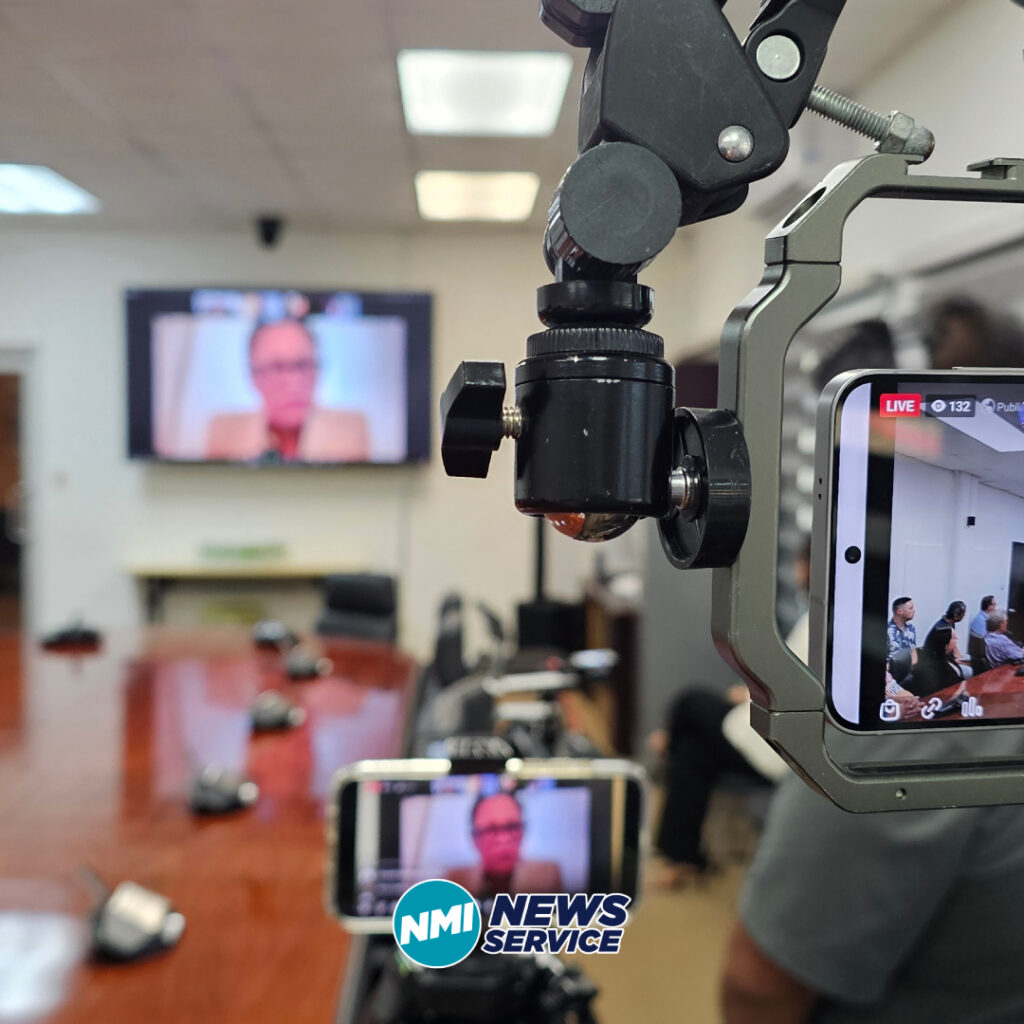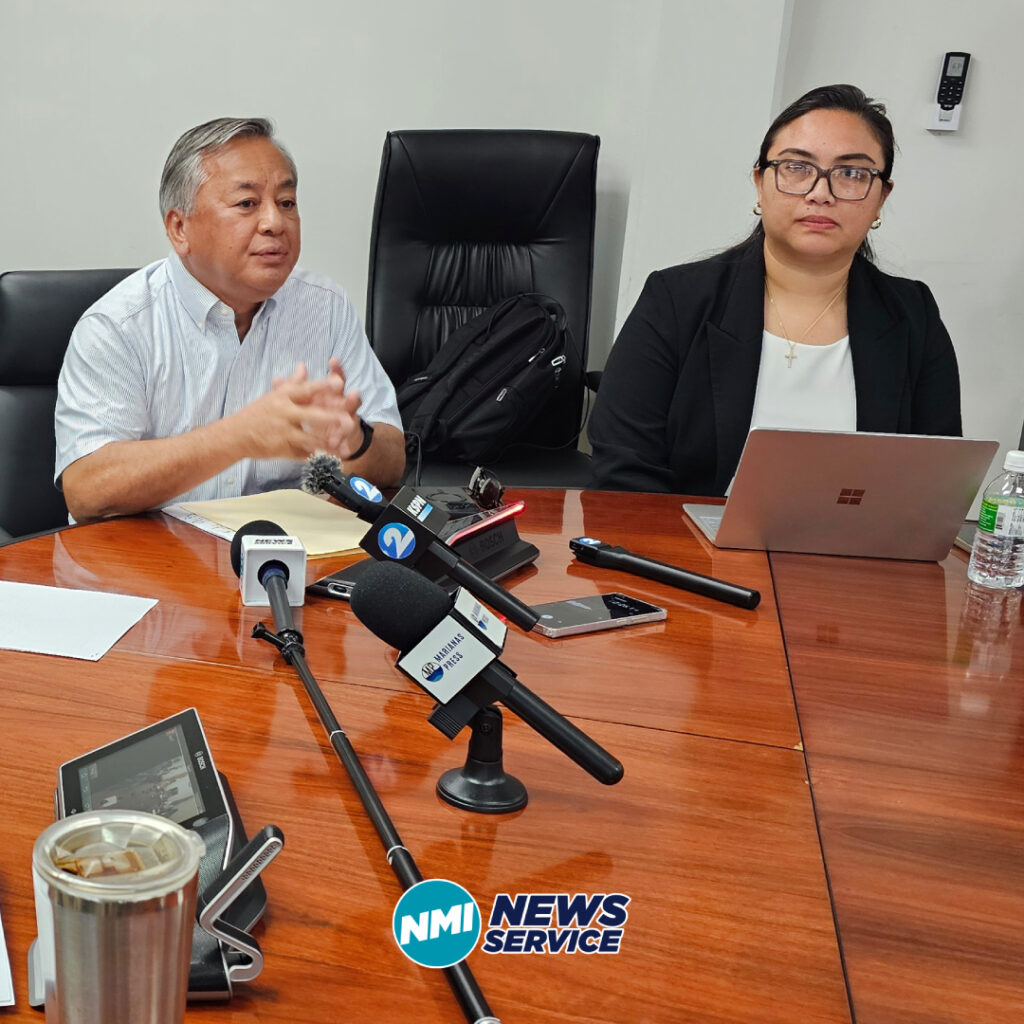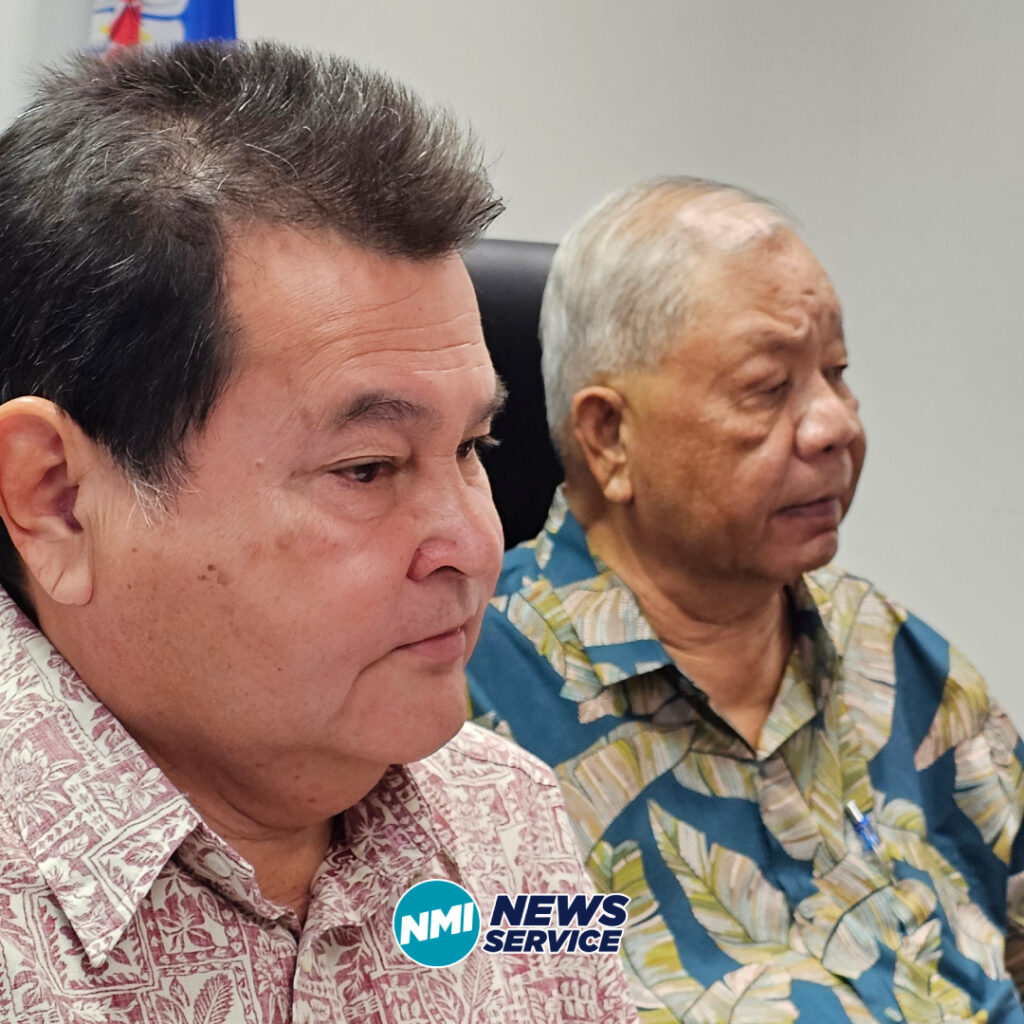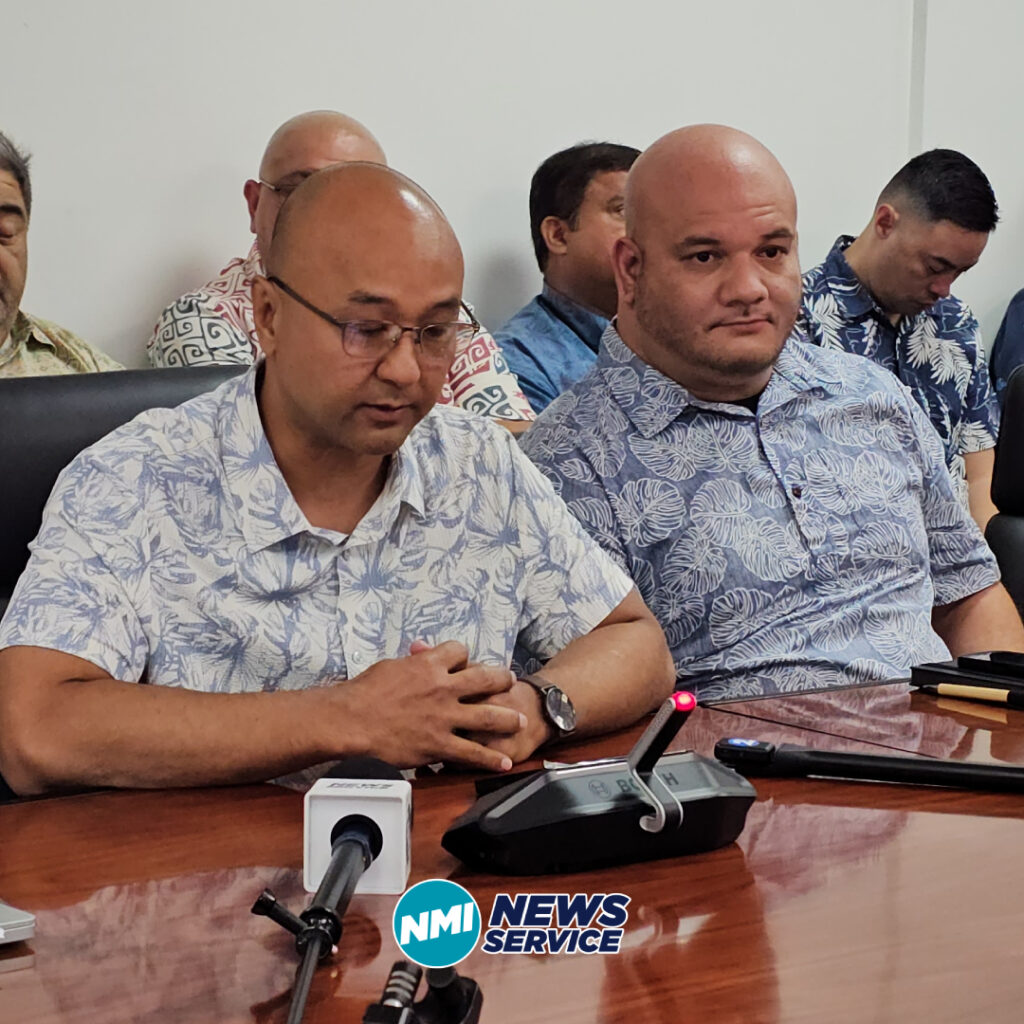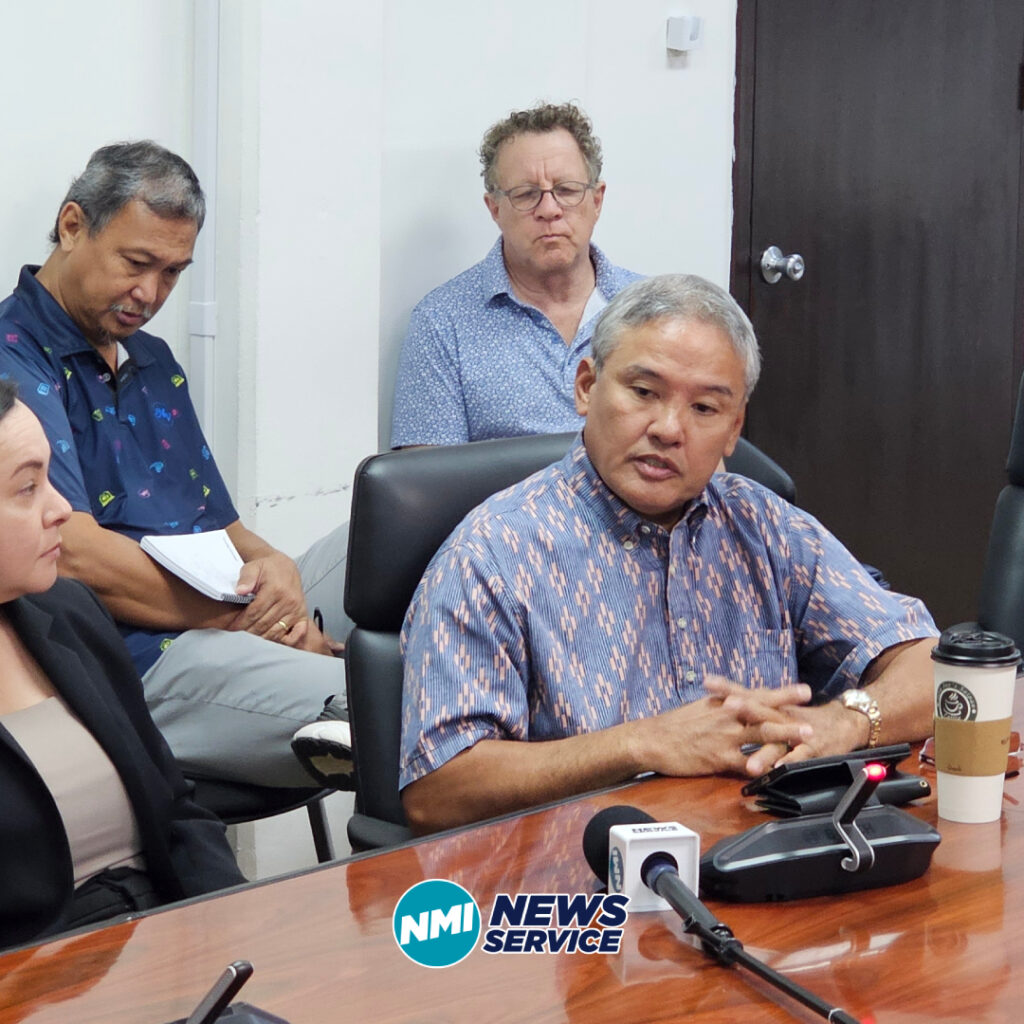
SAIPAN — Governor David M. Apatang held his first extended media availability since returning from Washington, D.C. on Wednesday, briefing reporters on a week of federal meetings alongside the broad coalition he brought to the nation’s capital, while declining to address a turbulent home front that greeted him when he arrived back on Saipan Friday.
With those matters set aside, the governor and his team spent the morning walking reporters through what they described as the most unified and productive Washington engagement the CNMI has undertaken in years, one built around a two-and-a-half-hour 902 consultation, a follow-on Intergovernmental and Interagency meeting the next day, and a stopover in Hawaii for additional federal discussions on the return trip.
Delegate Kimberlyn King-Hinds, participating by video from Washington, DC called the effort a strong example of the unified approach she has long advocated for. “We are all asking for the same things and we are all bringing up the same issues and we are all prioritizing them in the matter of urgency,” she said, congratulating the governor for assembling and executing the mission.
Former Judge Wesley Bogdan led the CNMI’s presentation during the 902 session. The meeting established four to five working groups with designated leads and a 30-day deadline to produce reports from both sides.
Secretary of Finance Tracy Norita delivered what may have been the most sobering update of the morning. Following a $5.5 million federal grant secured after the September 2025 talks, which came with requirements including austerity measures, a fiscal reform plan, a revenue council, and a commitment to catch up on three years of single audits, the CNMI returned to Washington asking for a follow-up to its original $61 million request. The answer was no.
“We were told no further funding will be made available. There is no funding vehicle to provide us with that initial funding assistance that we requested,” Norita said, adding that stakeholders should not expect second-quarter funding.
Instead, the two sides agreed to form a multi-year funding working group aimed at developing a framework for when a funding vehicle does become available. The CNMI’s ask within that framework is $60 million per year, totaling approximately $429.1 million over seven years, allocated between government operations and economic development and infrastructure. The proposed breakdown would front-load operations funding in years one through four, with the ratio gradually shifting toward economic development in years five through seven.
Norita said the CNMI also continued to press its position on the tax cover-over dispute, in which the government is asking the IRS to interpret Section 603(b) of the Covenant to yield an additional $20 million annually in tax revenues derived from CNMI activity but currently retained by the U.S. Treasury. The IRS has pushed back, but Norita said the CNMI intends to hold its position, with the Attorney General’s Office supporting the argument.
On fiscal reforms already underway, Norita cited the establishment of the Governor’s Revenue Council, a government-wide directive on cost containment, the transition to prepaid utility meters across agencies, and an executive order establishing a single audit committee tasked with completing three years of audits within one year, a timeline she described as unprecedented.
CJ Bermudes, executive director of the Governor’s Council of Economic Advisers and the CNMI lead for the immigration and labor working group, said the delegation made progress in addressing what he described as misinformation circulating in Washington about the CNMI’s transitional worker program.
The federal co-lead for the working group is Rory Burke, Deputy Assistant Secretary for Immigration Policy at the Department of Homeland Security. Bermudes said both sides are meeting weekly and that a key focus is bridging data gaps while demonstrating that the CNMI’s workforce needs are distinct from those of the broader United States.
Among the statistics the CNMI team brought to bear: the overstay rate under the EVS-TAP program is 0.25 percent, a figure that Customs and Border Protection officials themselves cited approvingly, according to multiple attendees. The governor noted that since the CNMI signed an agreement with DHS, that figure is expected to improve further.
The governor also met directly with Homeland Security Secretary Kristi Noem, a session that lasted nearly 90 minutes, far longer than the 20 minutes the team anticipated. Lobbyist Jason Osborne, who helped arrange the Washington meetings at no cost to the CNMI government, noted that the governor used the time to push back on false narratives about the commonwealth and press for changes to the Guam-CNMI Visa Waiver Program.
The delegation’s most urgent economic concern centered on the disruption caused by the merger of Korean Air and Asiana Airlines and the subsequent Korean government requirement that the merged carrier maintain 90 percent flight capacity to Guam rather than the CNMI. That policy has created pricing and capacity disruptions directly affecting T’way and Jeju Air’s ability to sustain service to Saipan.
Joe Guerrero of the Governor’s Council of Economic Advisers and Alex Sablan, Vice President of Corporate Business Development at Tan Holdings Corporation and chair of the Tourism Recovery Task Force, co-led the tourism and transportation working group. Their asks included action on Annex 6 of the 2007 U.S.-China Air Transport Agreement, the inclusion of the Philippines in the Guam-CNMI Visa Waiver Program, leveraging existing U.S. trade agreements with South Korea and Japan, and for the first time, serious consideration of removing cabotage restrictions, a push now supported by the Department of Defense, which has flagged the restrictions as hampering military logistics in the region.
The team separately met with Brand USA, the official U.S. destination marketing agency, and secured opportunities for the CNMI to join upcoming sales and trade missions to Korea and Japan. MVA Managing Director Jamika Taijeron said Brand USA’s key focus markets align directly with the CNMI’s primary visitor markets.
On the diplomatic track, the governor’s delegation met with Deputy Secretary of State Christopher Landau, the official directly below Secretary Marco Rubio, and raised concern about the Korean Air-Asiana merger’s impact on the CNMI. Landau has since assigned staff to the issue, and the Department of Interior is expected to travel to Korea this month, with State Department support anticipated.
As for T’way and Jeju’s status, MVA said T’way has already posted its summer schedule for booking, and further details on Jeju are expected at a separate press conference.
On the military front, the governor said he has been actively pushing the Department of Defense to increase ship visits to the CNMI, including submarines, noting that a single submarine crew and full compliment of support of nearly 1,000 sailors spending a week on island would generate significant hotel and economic activity. The delegation is also working toward clearing a destroyer for maintenance work in the CNMI, with environmental clearance among the pending issues.
A separate but related effort involves an approximately $700 to $800 million request submitted by the Commonwealth Utilities Corporation to the Office of Local Defense Community Cooperation to replace aging power generation infrastructure. The governor acknowledged the CNMI is unlikely to receive the full amount but expressed hope for at least $100 million, tied to the broader military buildup in Tinian and potential expansion to Saipan and Rota.
The Team and the Volunteers
Multiple participants noted that a significant portion of the delegation participated at no cost to the government. Osborne and his colleague Mary Cole arranged and attended meetings as volunteers. Sablan, Guerrero, Dr. Joshua Wise of the Saipan Chamber of Commerce, and former Judge Wesley Bogdan also participated without government compensation.
“It’s not cheap to go to D.C. It’s not easy to go to D.C. in February,” Sablan said. “But it was a great team effort.”
The delegation now has 30 days to finalize working group reports before reconvening with federal counterparts. Secretary Norita said Interior meetings are continuing on a weekly basis in the interim.