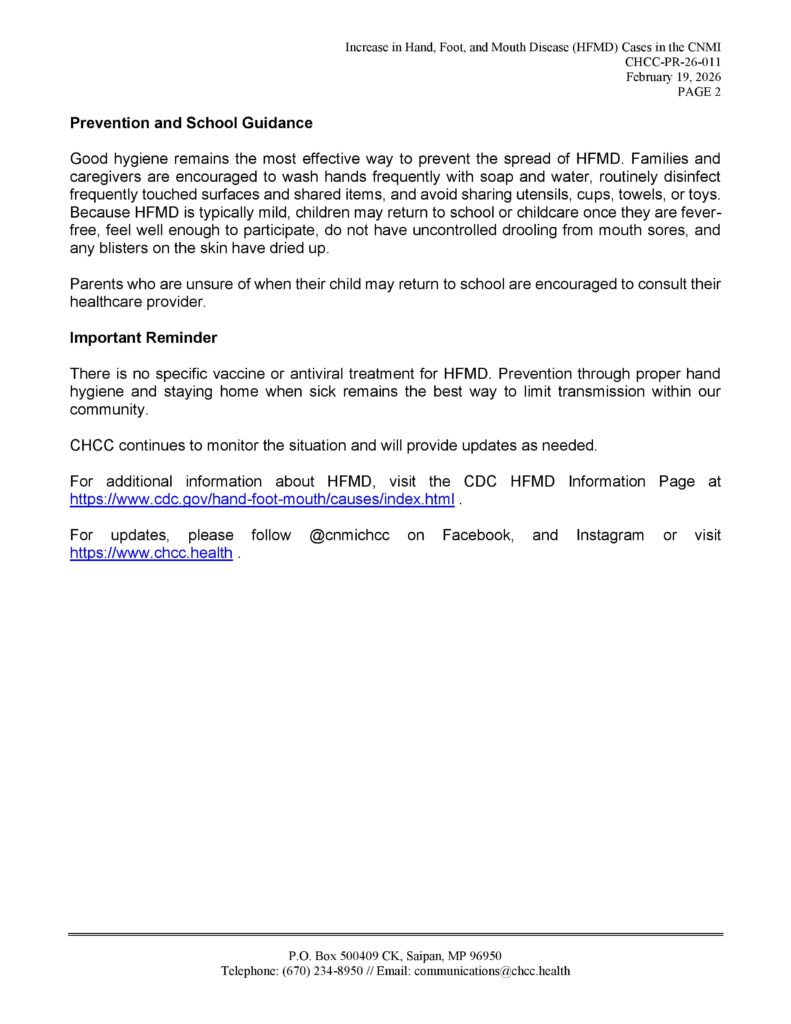
SAIPAN — The Commonwealth Healthcare Corporation is advising the community of an increase in reported cases of hand, foot, and mouth disease, saying 14 cases have been identified so far in 2026 through CHCC surveillance.
CHCC said HFMD is a common viral illness most often affecting infants and young children, though older children and adults can also be infected. Symptoms typically appear 3 to 7 days after exposure and most people recover within 7 to 10 days without medical treatment.
CHCC listed common symptoms as fever, sore throat, painful mouth sores, and a rash on the hands and feet, with possible rash also appearing on the elbows, knees, or buttocks. CHCC also cited decreased appetite and fatigue.
The agency said HFMD spreads through close personal contact, respiratory droplets from coughing or sneezing, contact with contaminated surfaces, and exposure to stool, particularly during diaper changes. CHCC said children can continue spreading the virus even after symptoms begin to improve.
CHCC said the illness is generally mild and can be managed at home with rest and fluids, but medical attention should be sought if fever lasts more than three days, signs of dehydration develop, severe headache or stiff neck occurs, or symptoms worsen instead of improving.
For prevention, CHCC urged frequent handwashing with soap and water, disinfecting frequently touched surfaces and shared items, and avoiding sharing utensils, cups, towels, or toys. CHCC said children may return to school or childcare once they are fever-free, feel well enough to participate, do not have uncontrolled drooling from mouth sores, and any blisters have dried up.
CHCC said there is no specific vaccine or antiviral treatment for HFMD, and that prevention through hygiene and staying home when sick remains the best way to limit transmission. CHCC said it will continue monitoring and provide updates as needed.