SAIPAN — Attorney General Edward Manibusan has sent a formal letter to the CNMI Senate urging members to scrutinize Associate Judge Joseph N. Camacho’s nomination to serve as Presiding Judge of the Superior Court, arguing that a pattern of reversed rulings in serious criminal cases raises legitimate concerns about his fitness for the role.
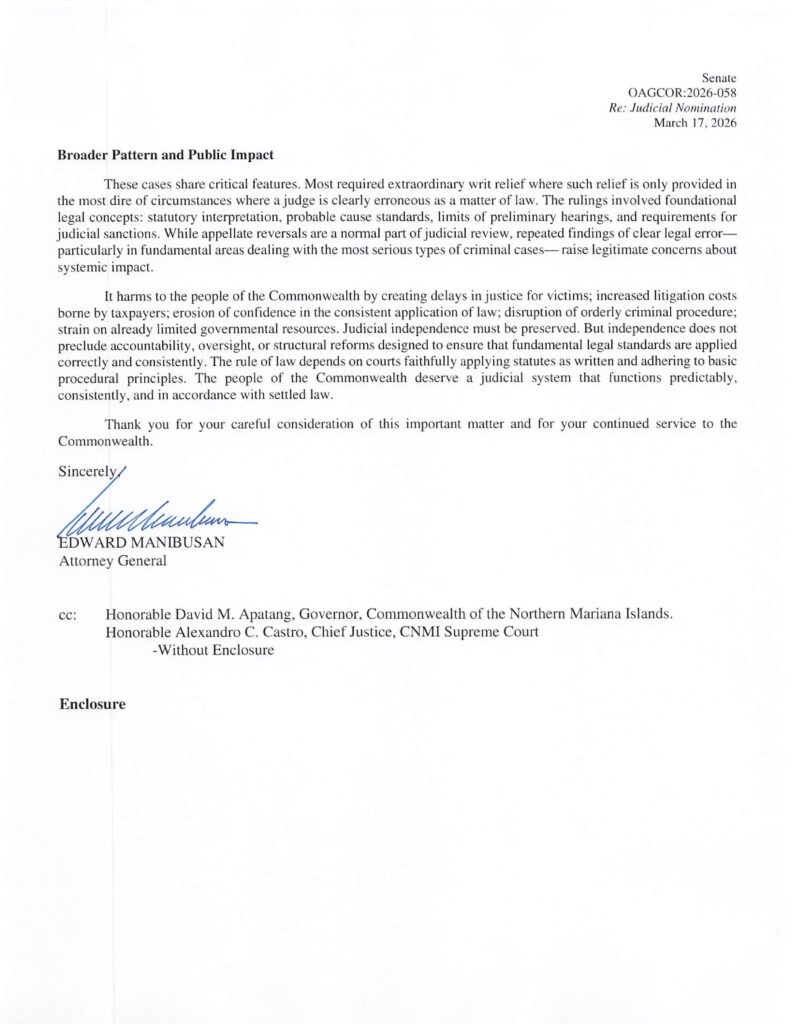
The letter, dated March 17 and addressed to all nine members of the 24th Northern Mariana Islands Legislature’s Senate, was also copied to Governor David M. Apatang and Chief Justice Alexandro C. Castro.
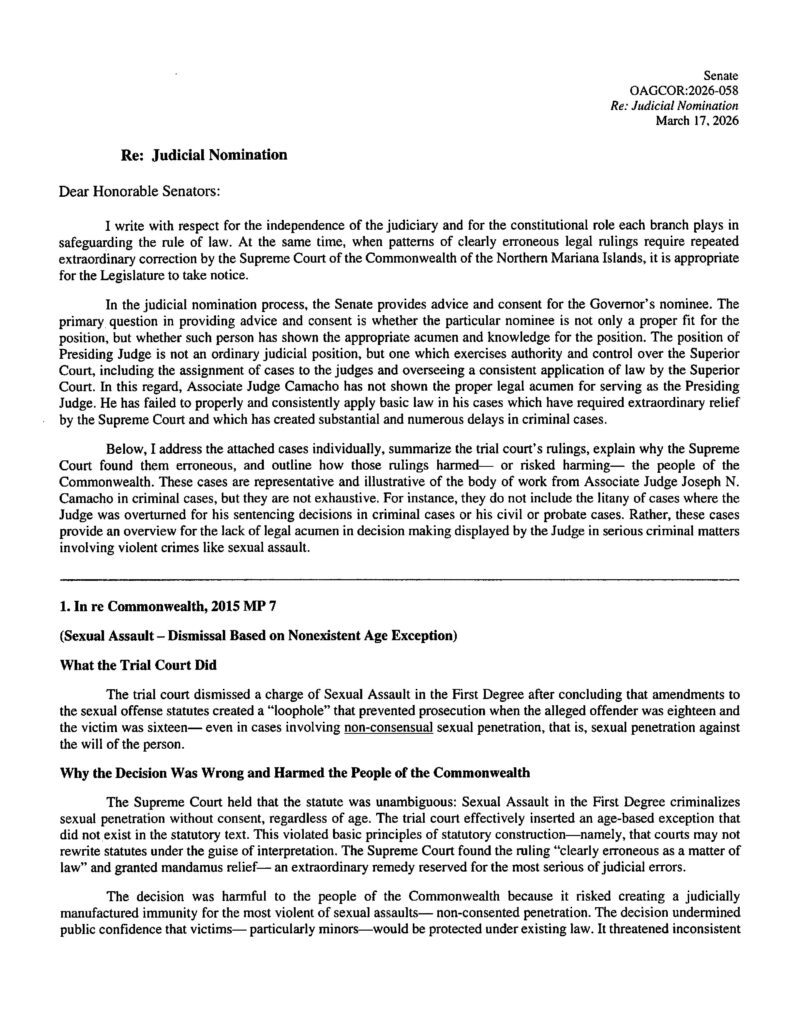
Manibusan opened by acknowledging judicial independence and the constitutional role each branch plays in safeguarding the rule of law. But he argued that repeated extraordinary correction by the CNMI Supreme Court of the same judge’s rulings makes legislative scrutiny appropriate during the advice and consent process.
“The position of Presiding Judge is not an ordinary judicial position,” Manibusan wrote, “but one which exercises authority and control over the Superior Court, including the assignment of cases to the judges and overseeing a consistent application of law by the Superior Court.”
The letter walks through five cases in which Manibusan said Judge Camacho’s rulings were found clearly erroneous by the Supreme Court, requiring extraordinary writ relief, a remedy reserved for the most serious judicial errors.
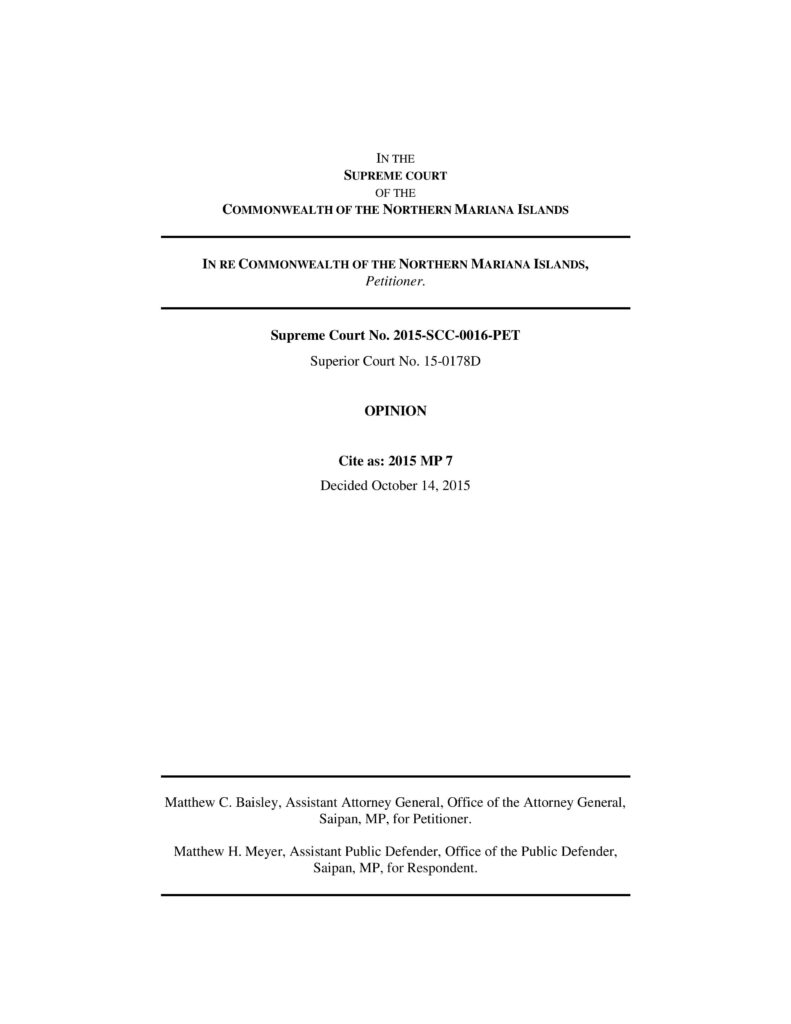
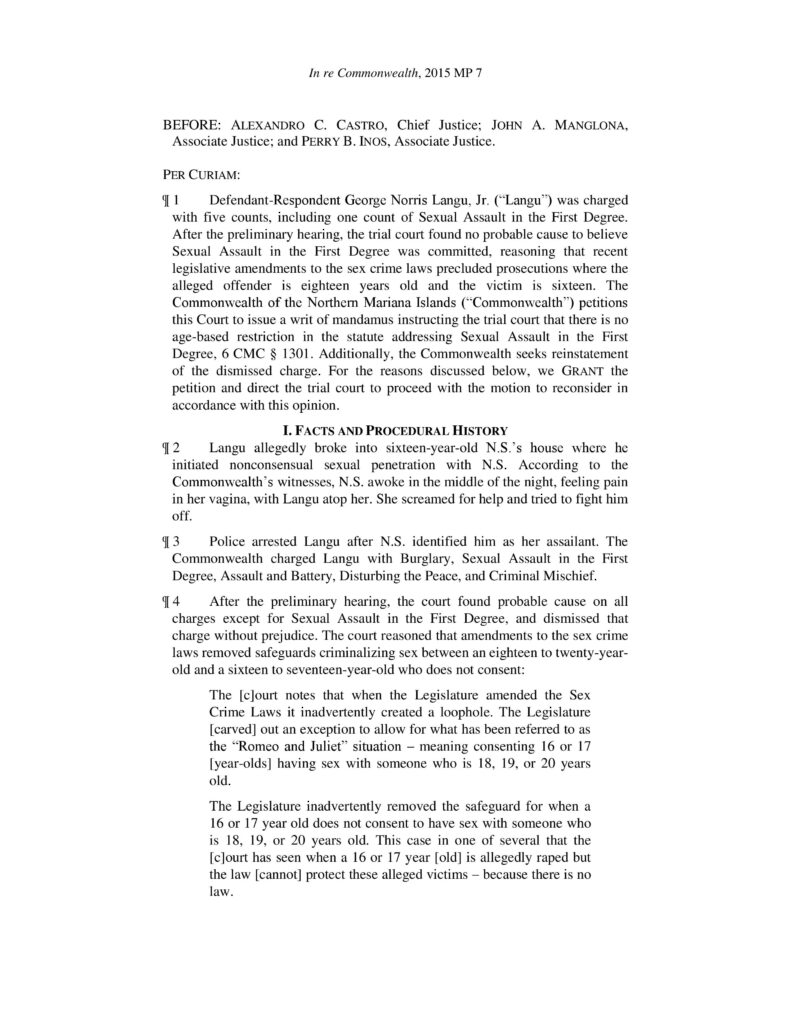
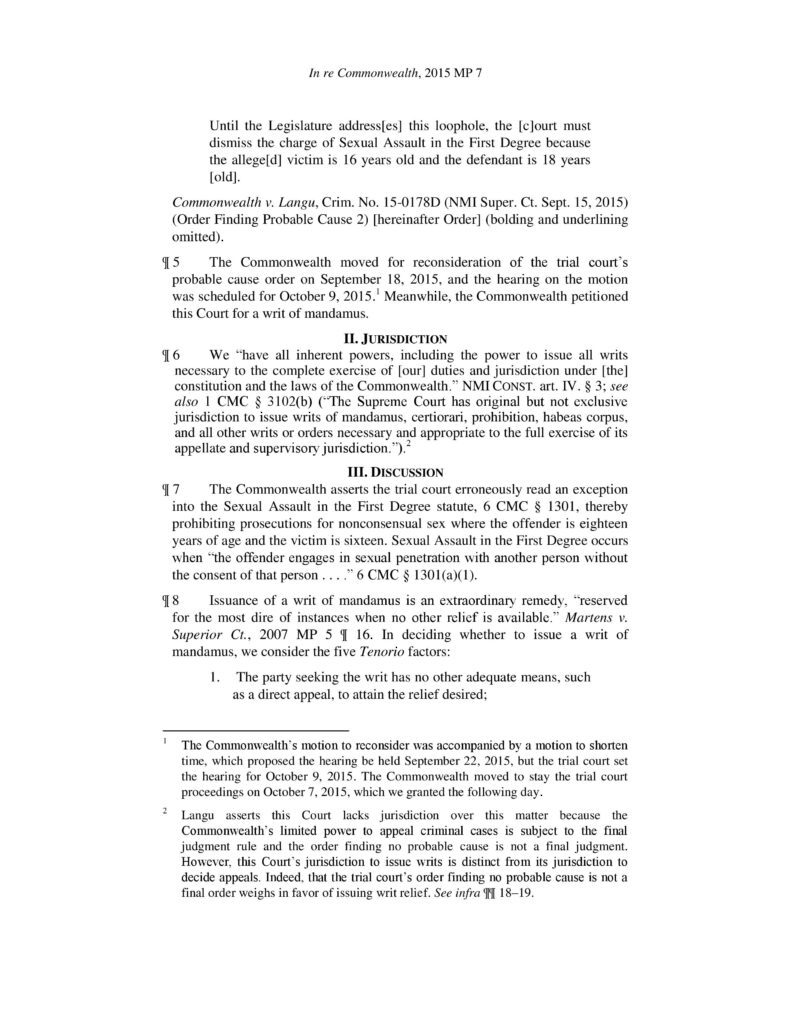
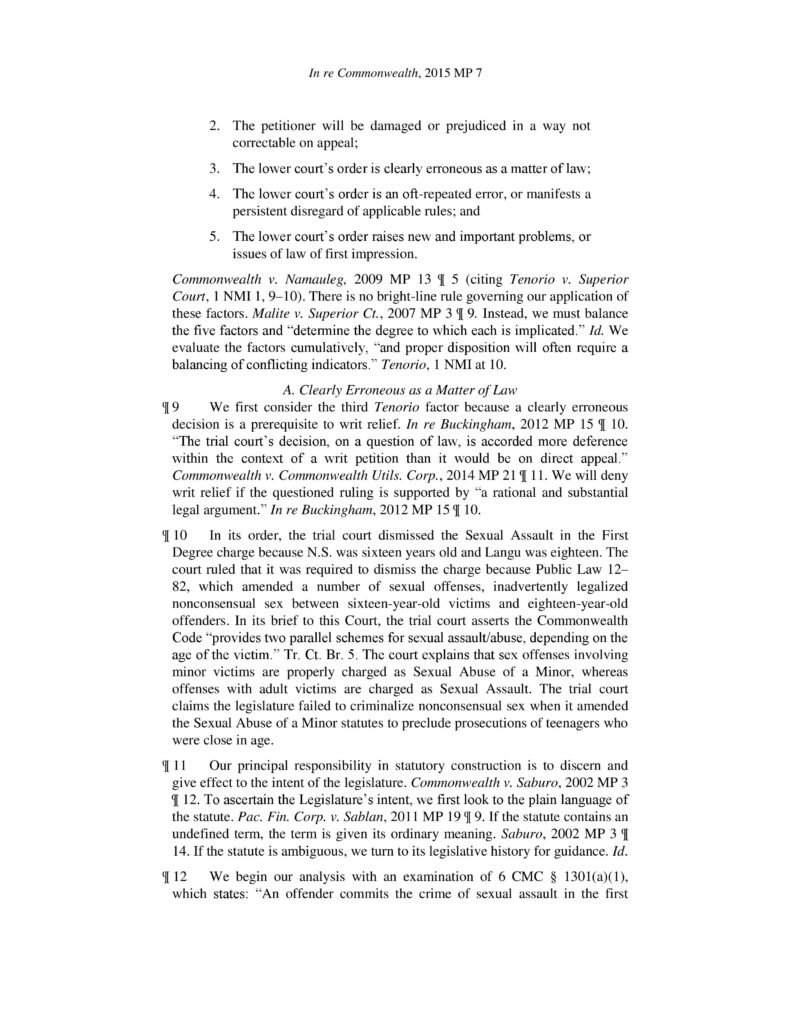
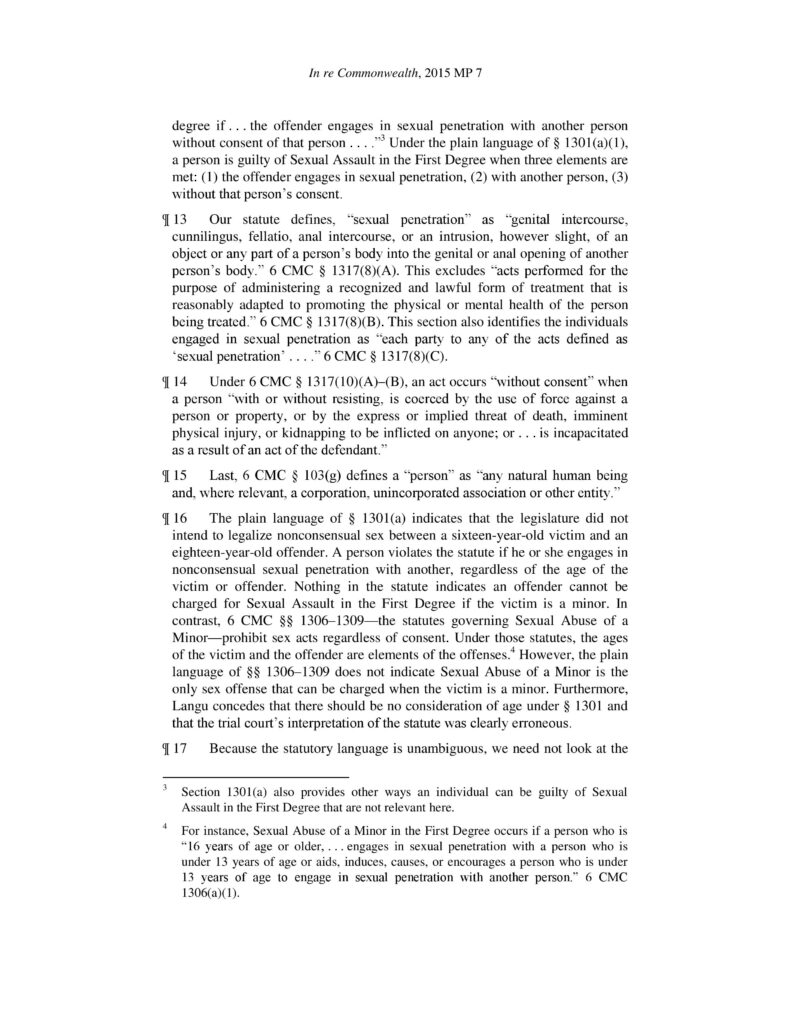
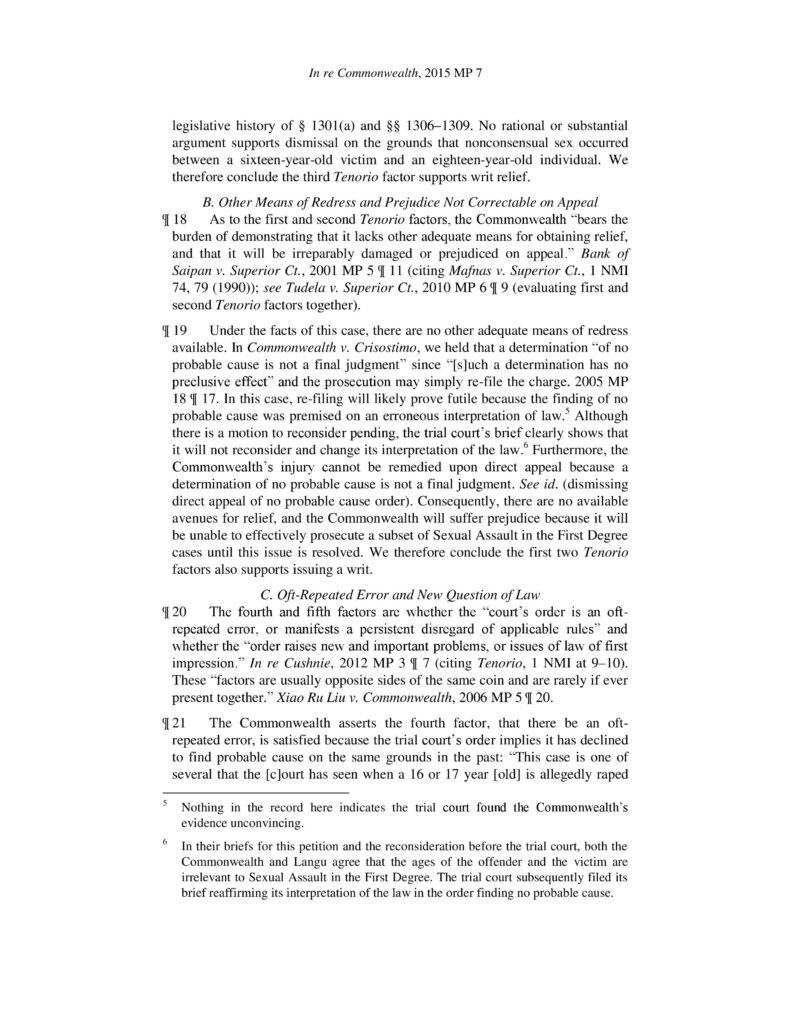
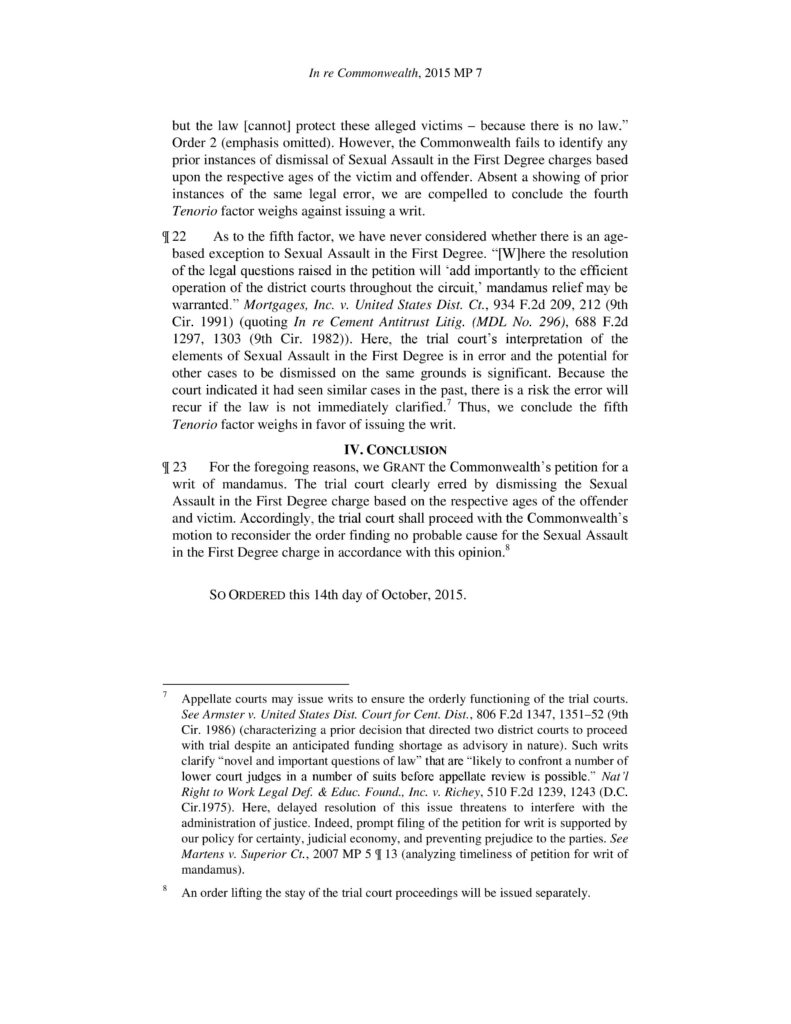
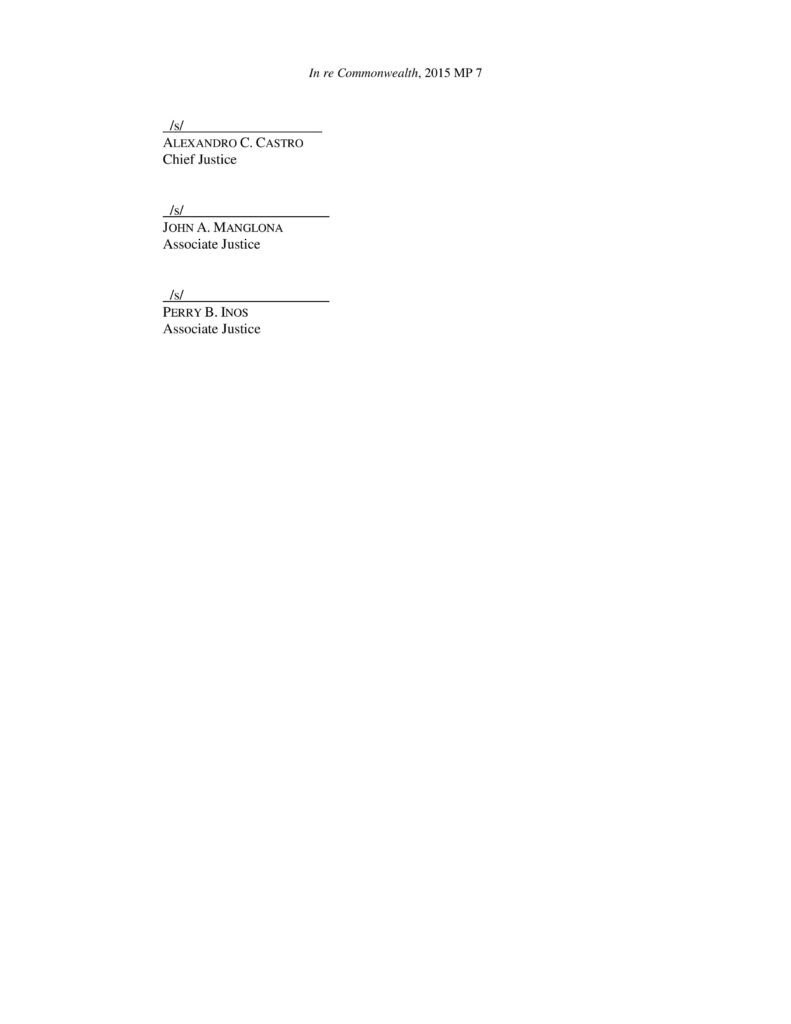
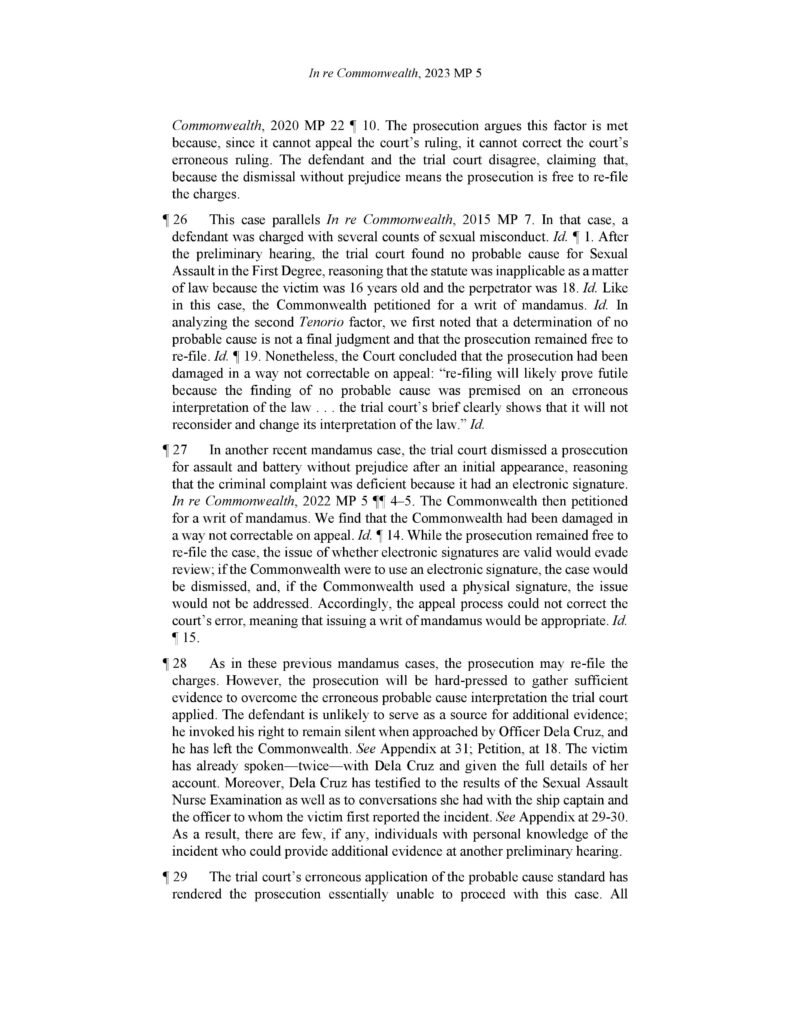
In the first case, In re Commonwealth, 2015 MP 7, Judge Camacho dismissed a first-degree sexual assault charge after concluding that legislative amendments to the sex crime statutes created a loophole that decriminalized non-consensual sex between an 18-year-old offender and a 16-year-old victim. The Supreme Court granted a writ of mandamus, ruling the statute was unambiguous and that no age-based exception existed. Manibusan said the ruling, had it stood, would have created a judicially manufactured immunity for one of the most violent categories of sexual assault.
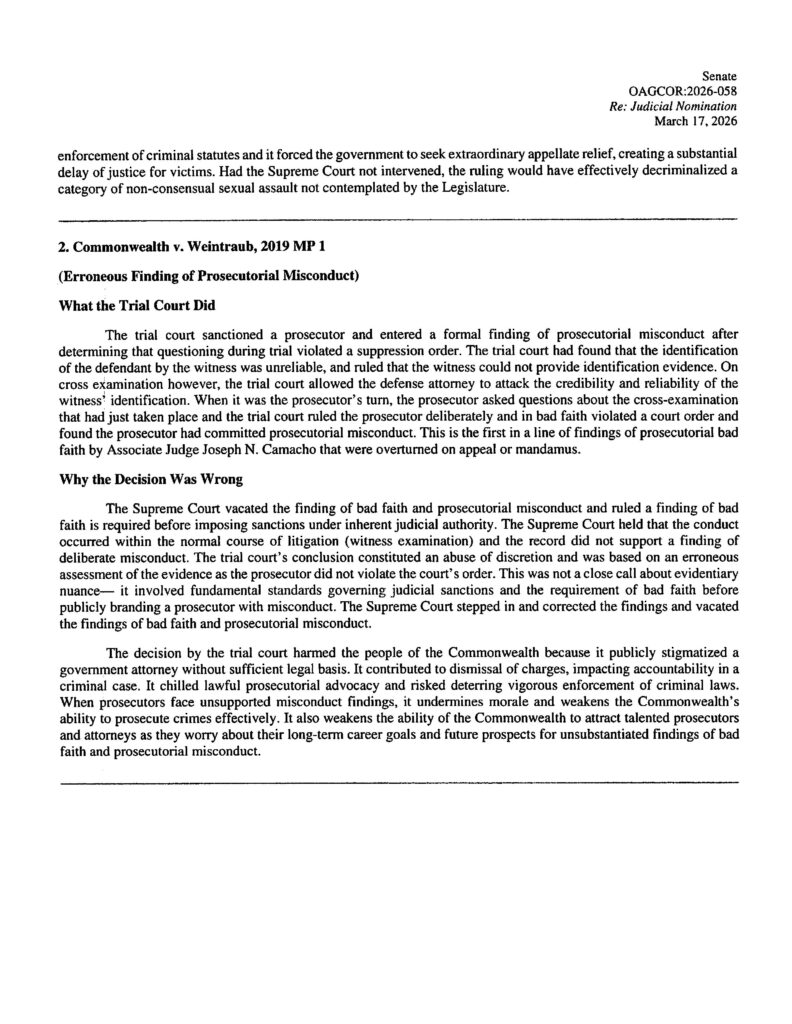
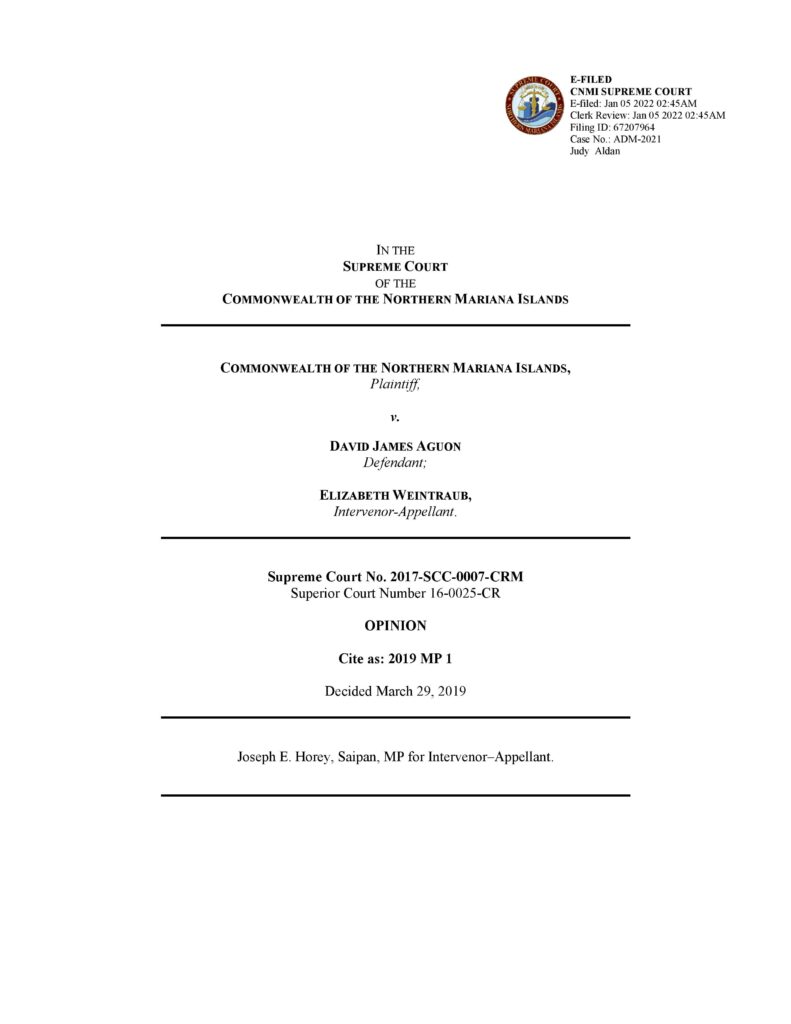
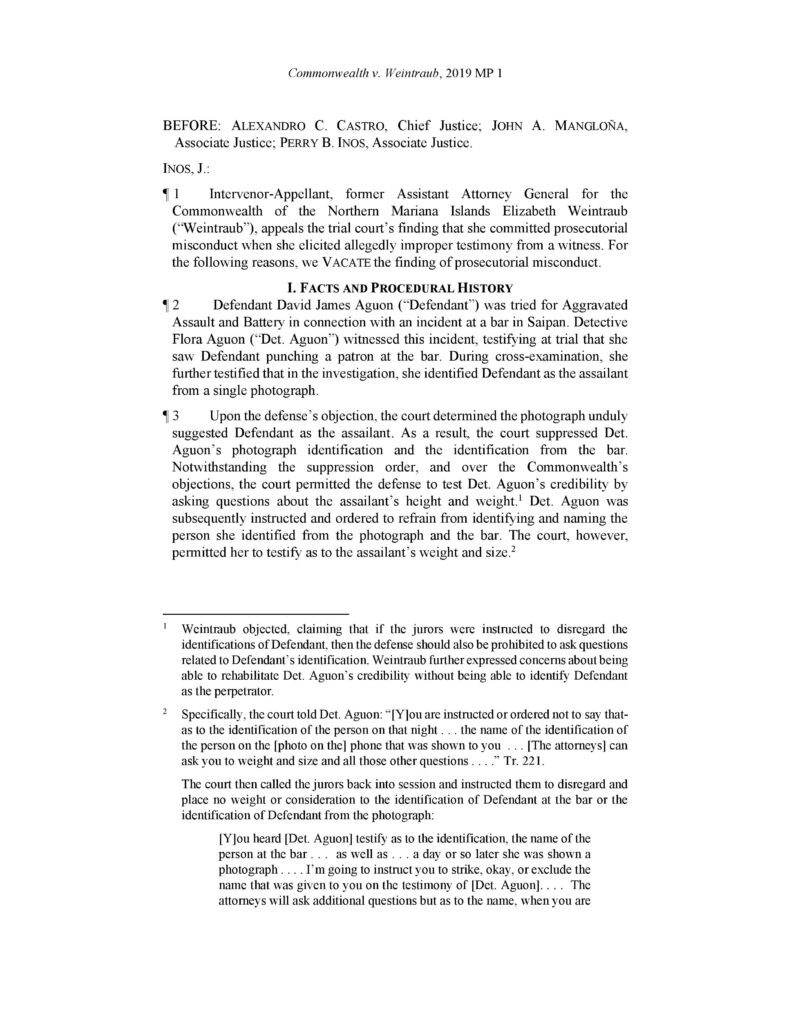
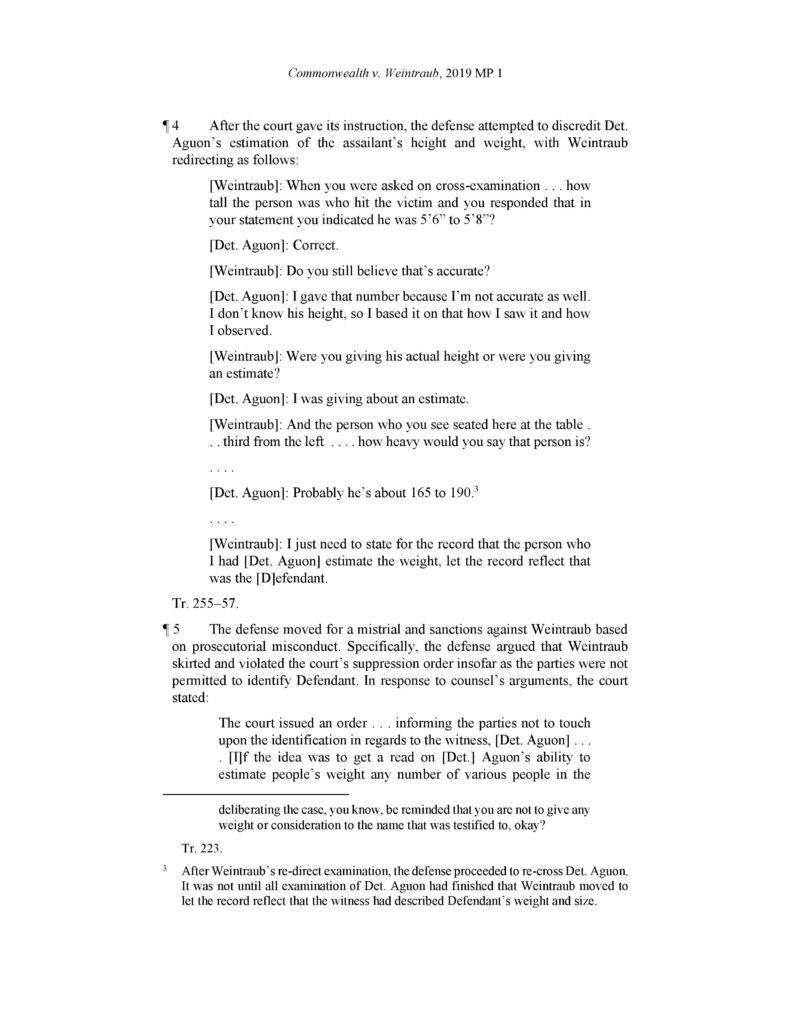
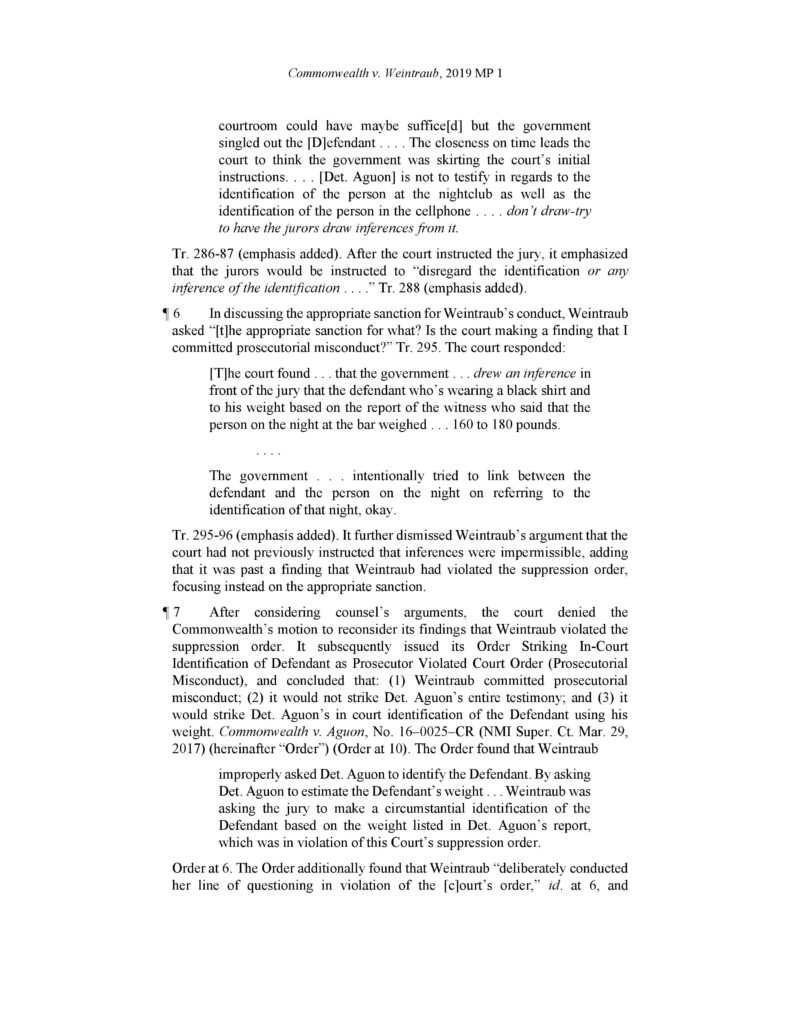
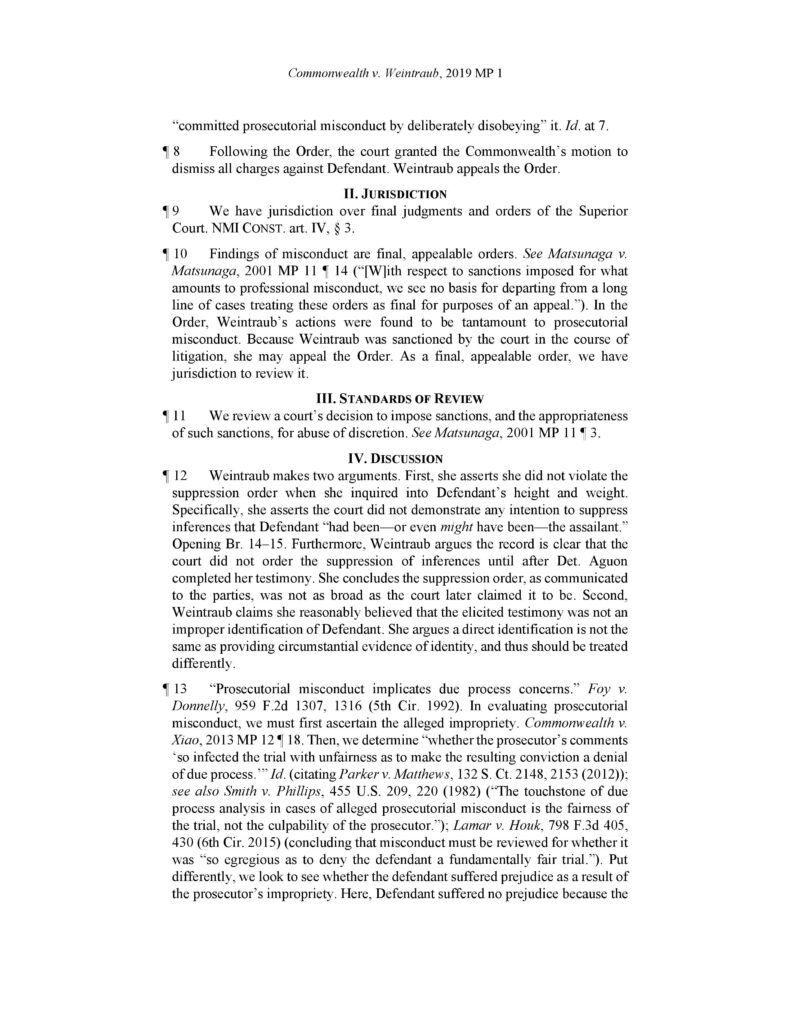
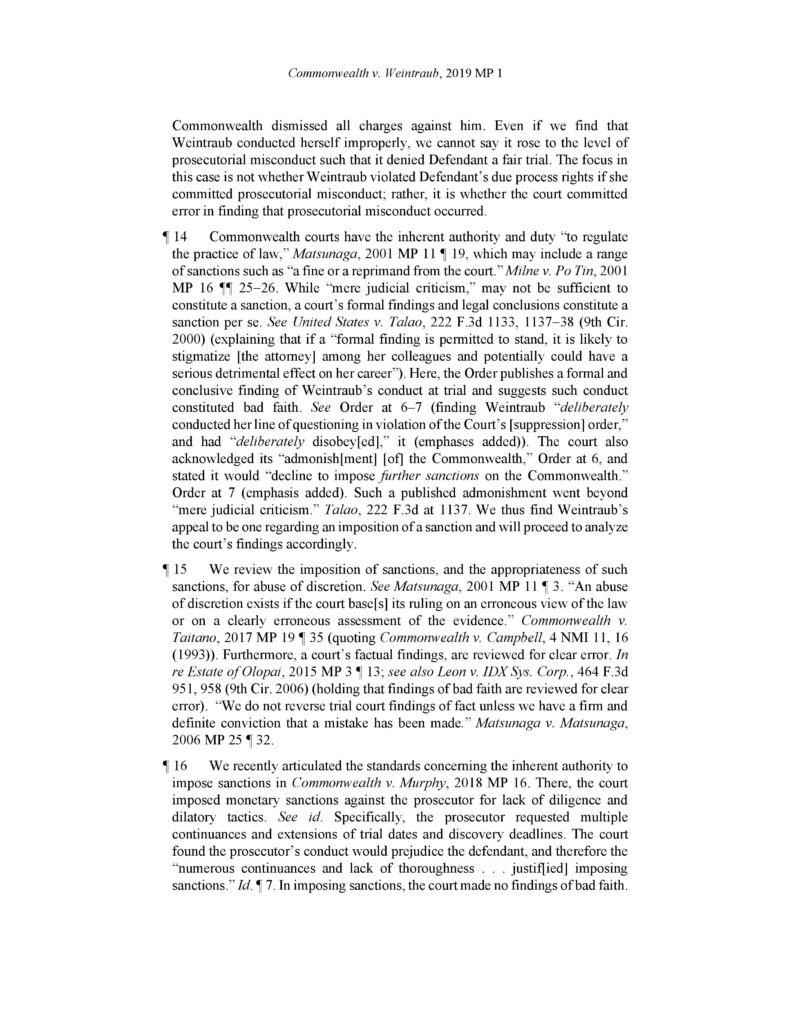
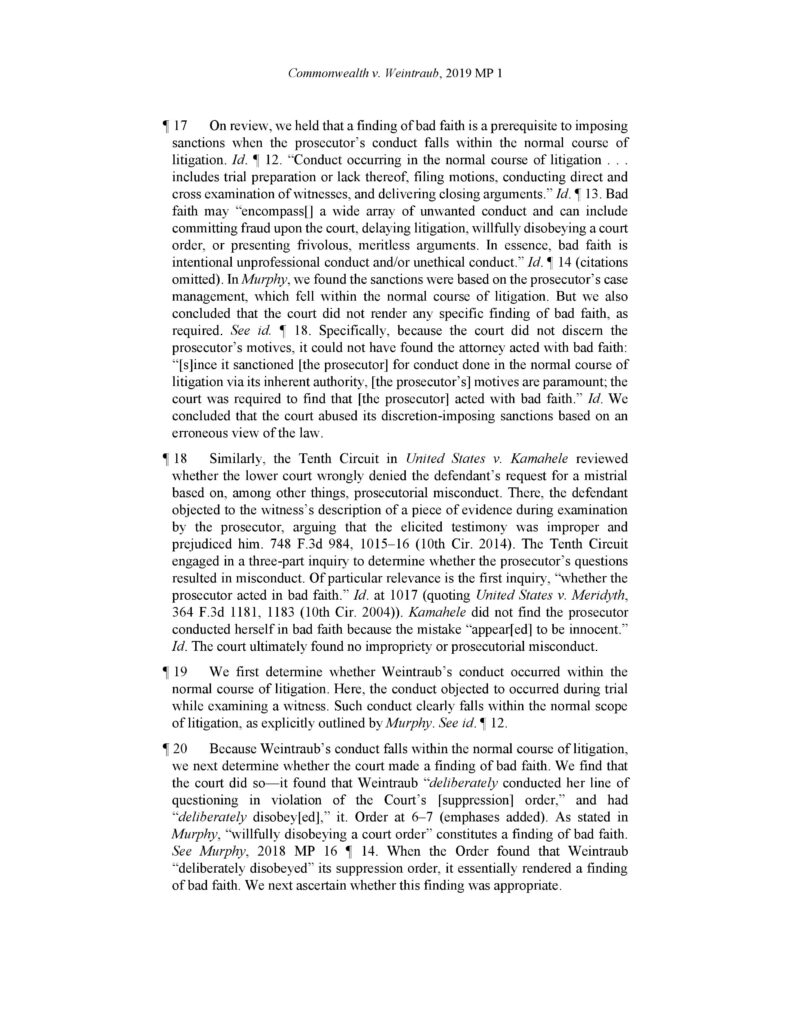
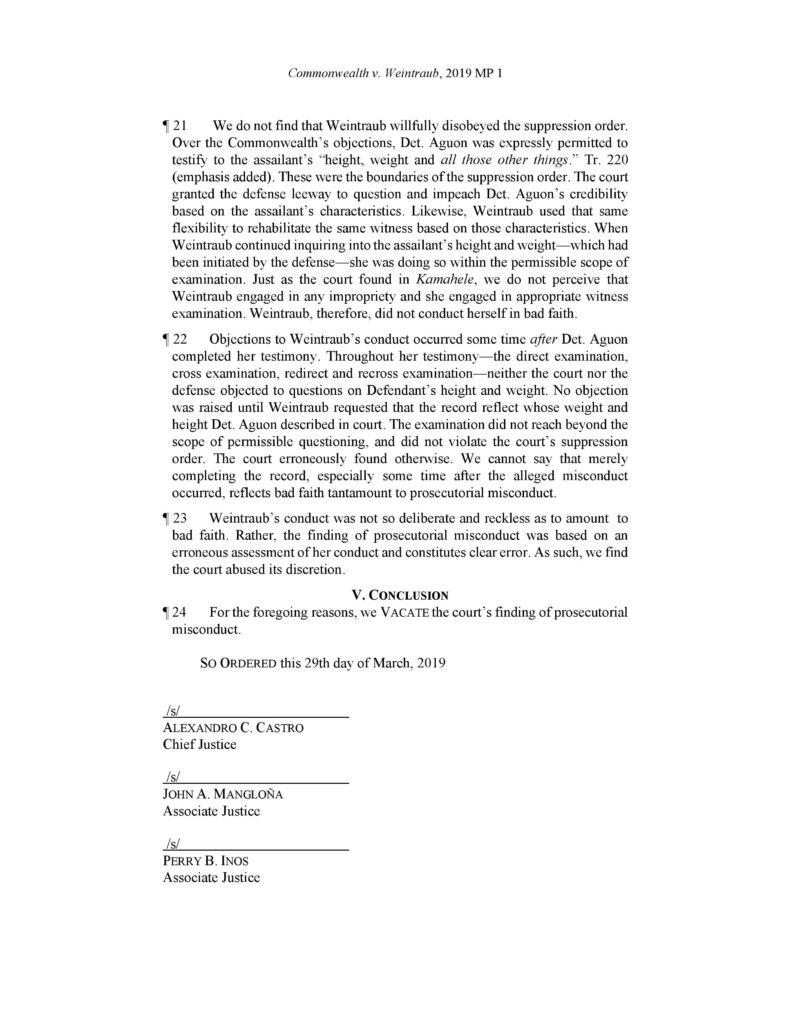
In the second case, Commonwealth v. Weintraub, 2019 MP 1, Judge Camacho sanctioned a prosecutor and entered a formal finding of prosecutorial misconduct after concluding she deliberately violated a suppression order during witness examination. The Supreme Court vacated the finding, holding that the conduct occurred within the normal course of litigation and that the record did not support a finding of deliberate misconduct. Manibusan said the ruling stigmatized a government attorney without sufficient legal basis, chilled prosecutorial advocacy and created ongoing recruitment problems for the Office of the Attorney General.
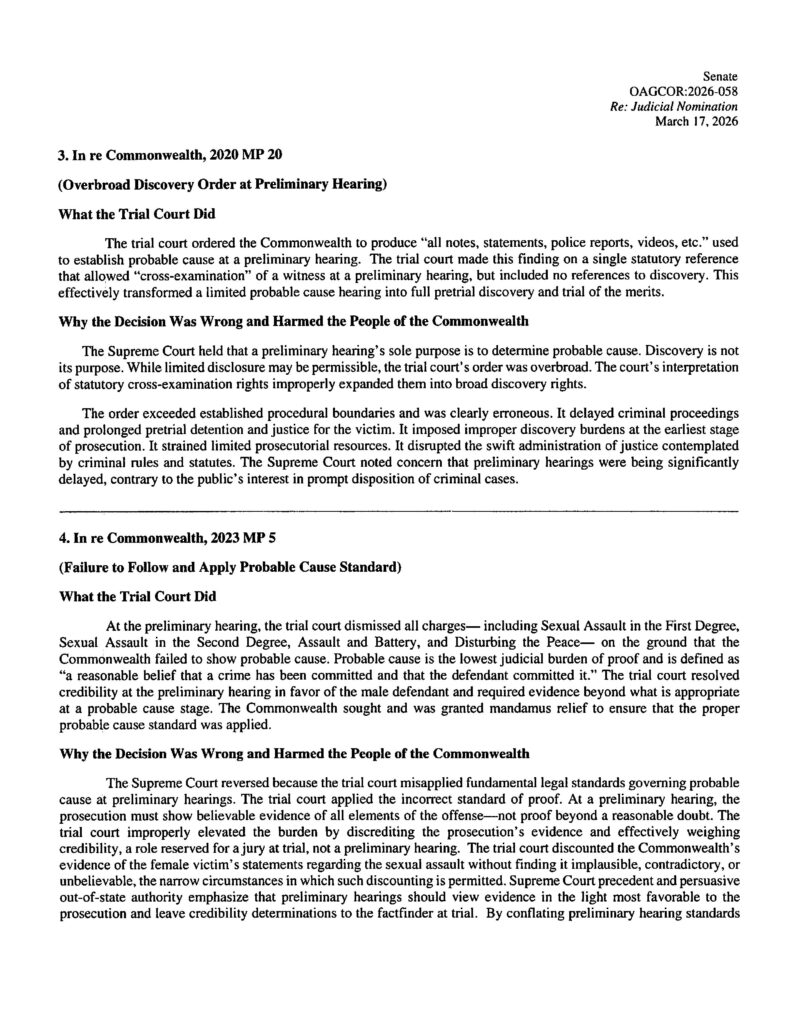
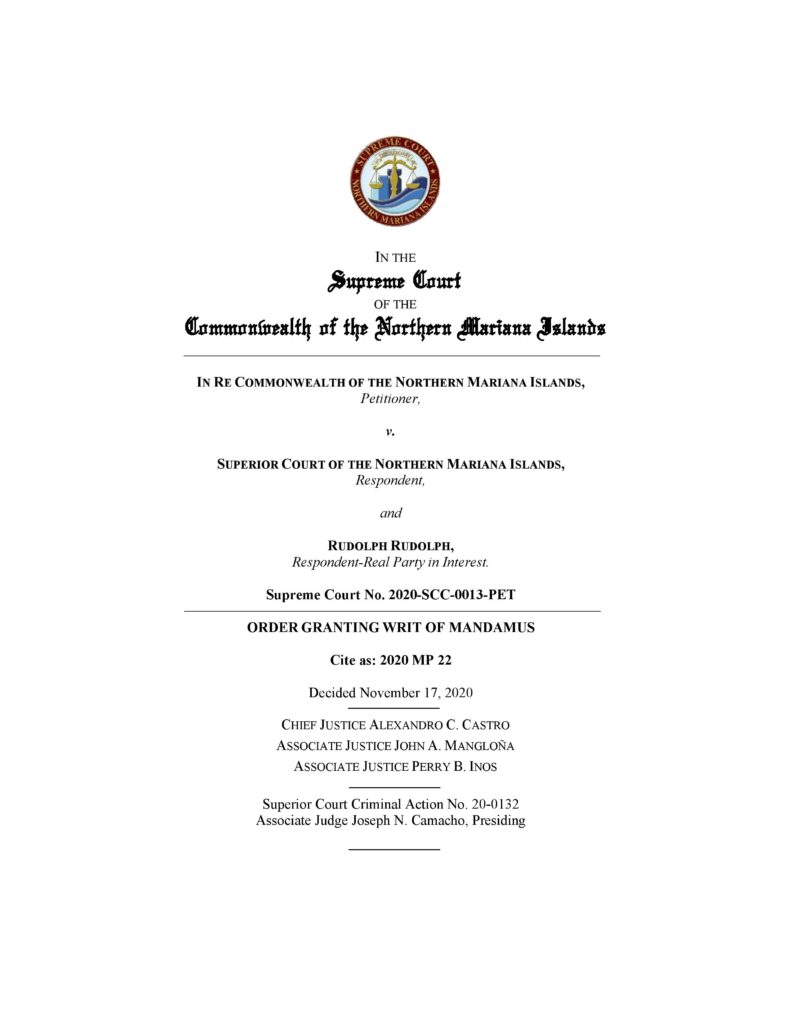
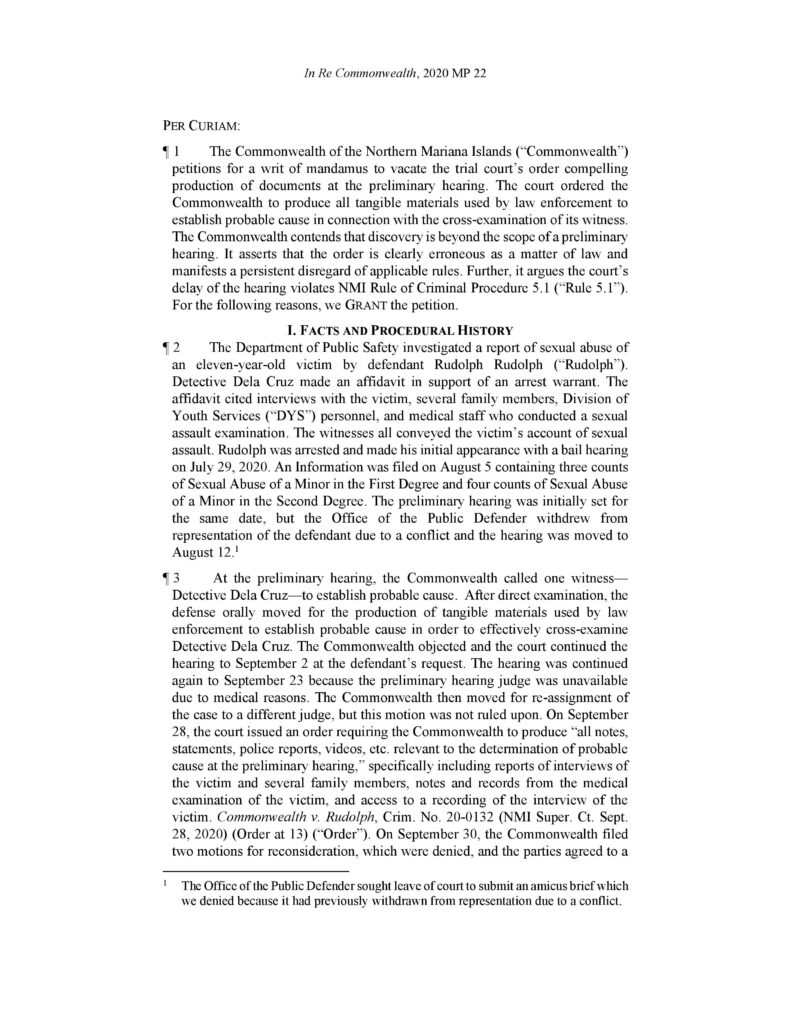
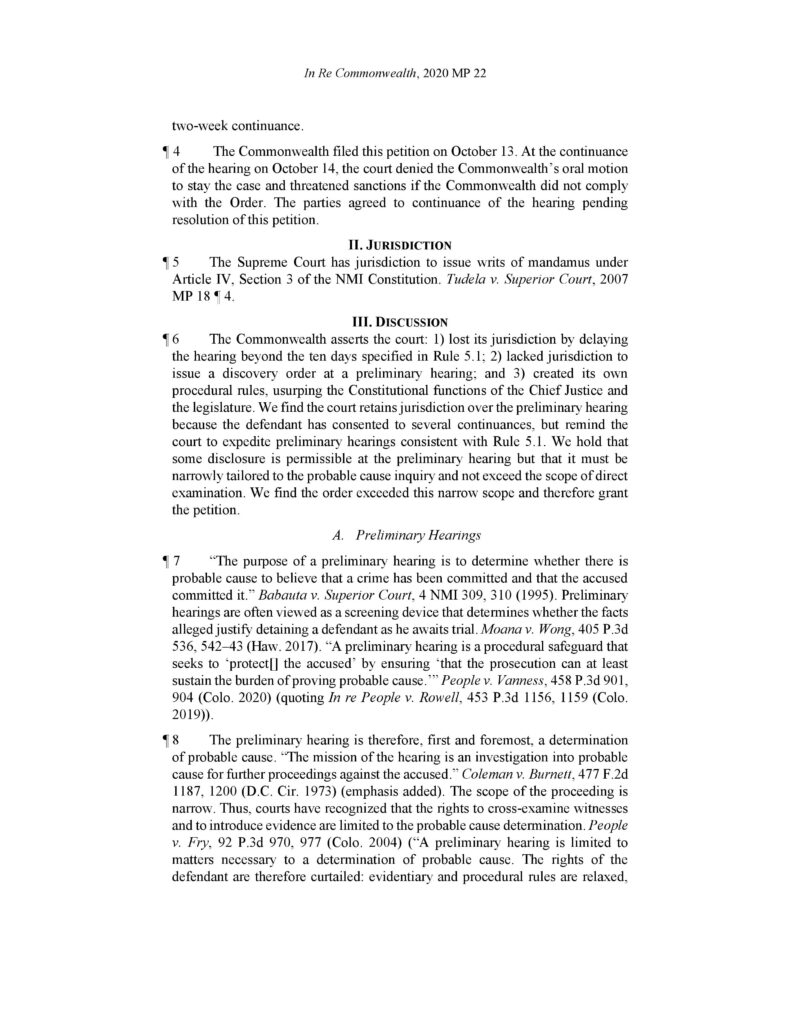
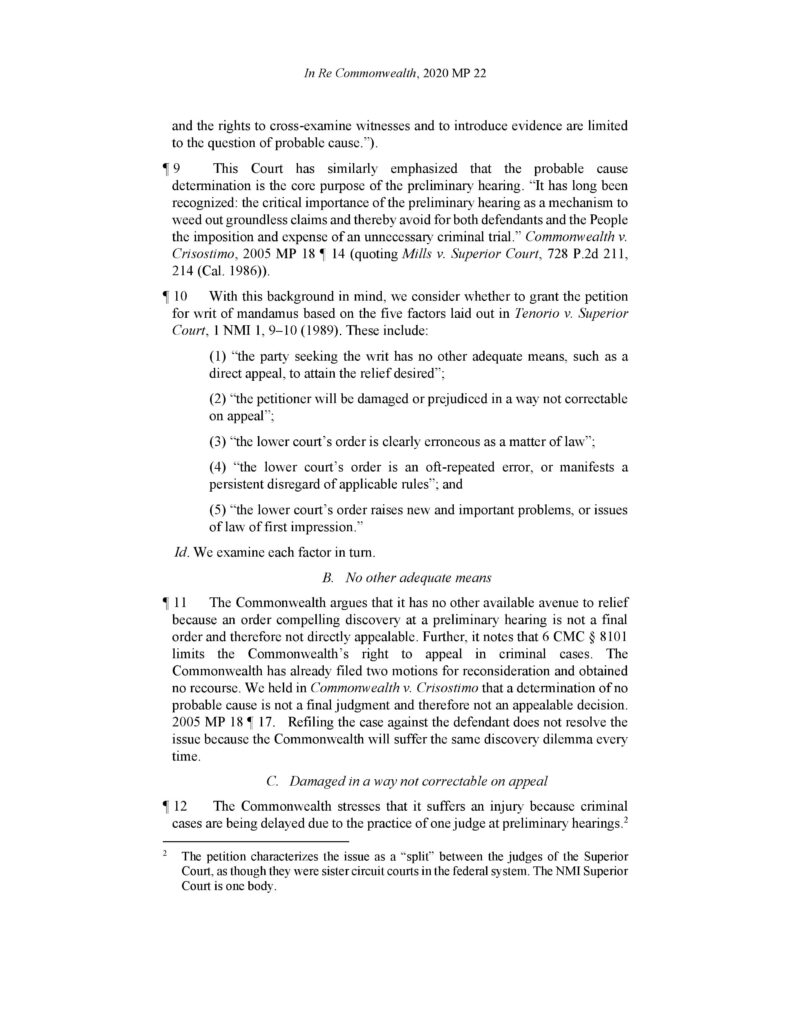
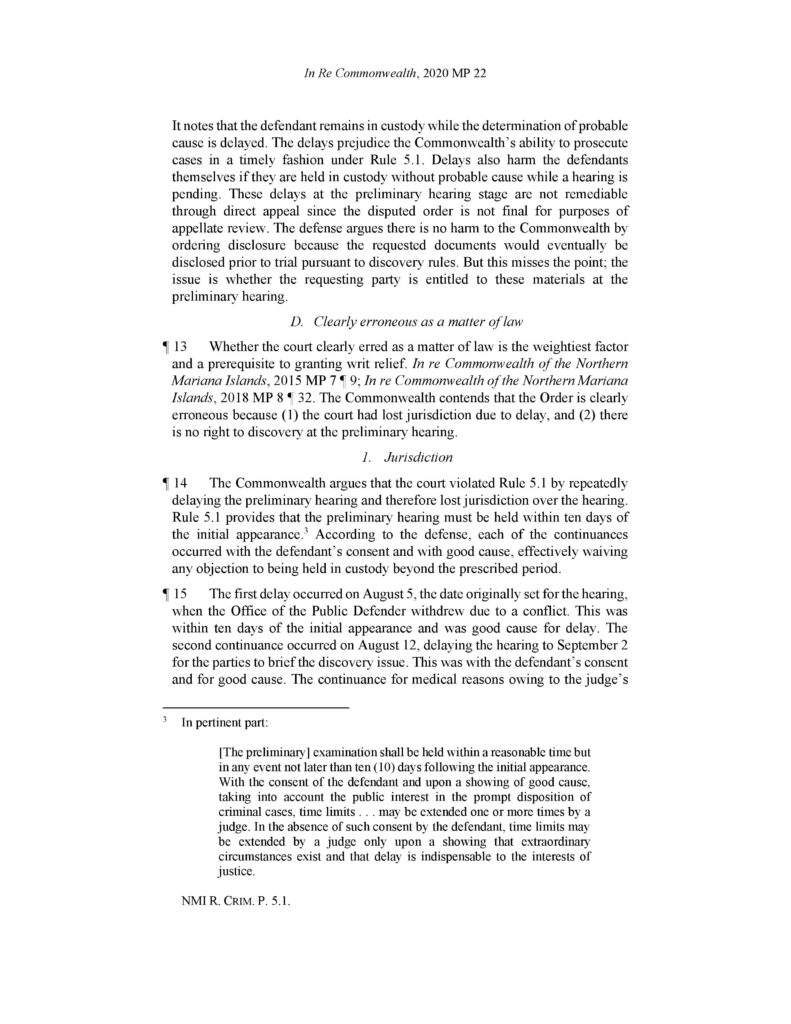
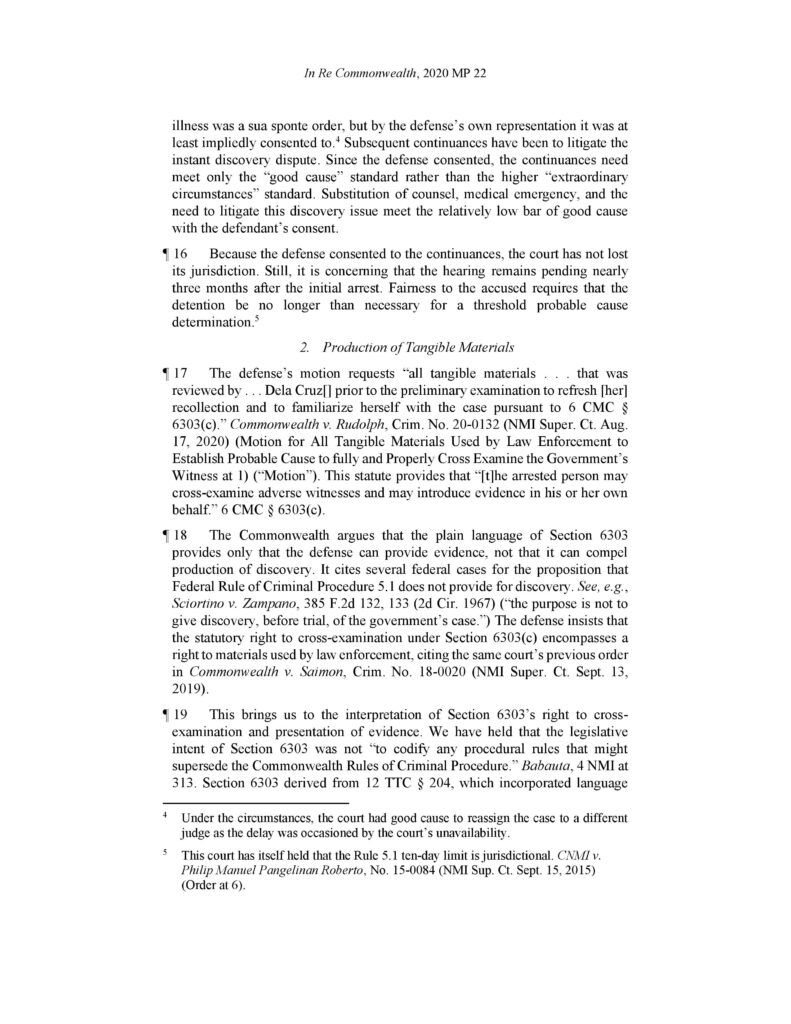
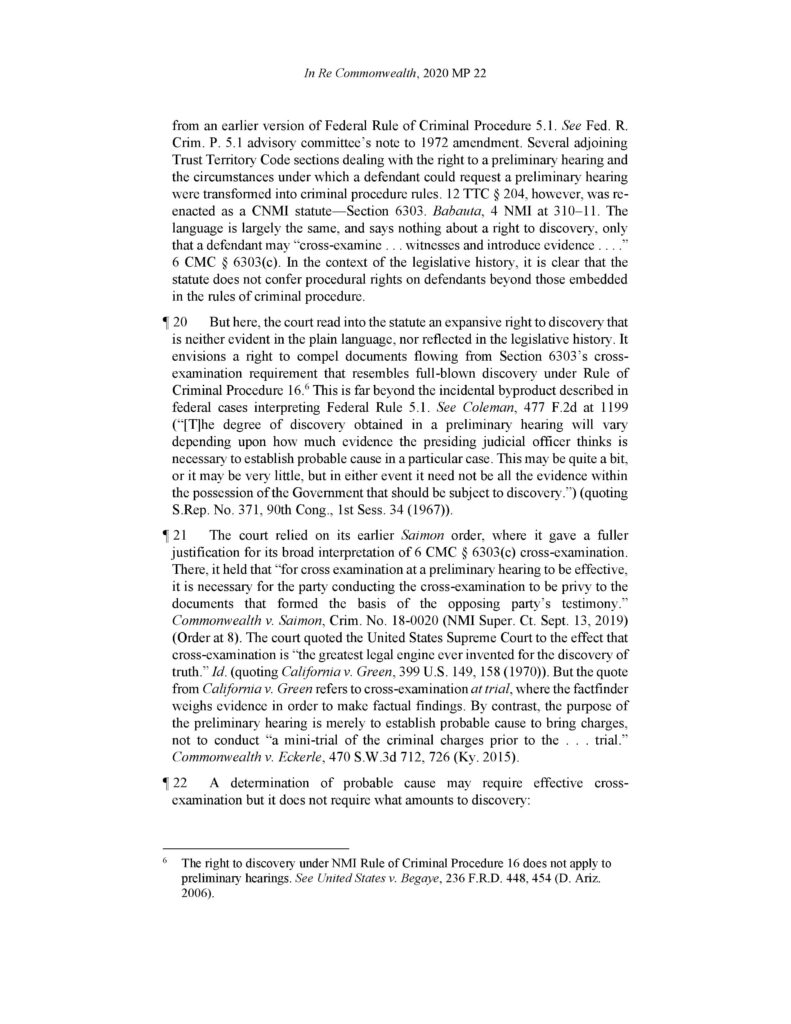
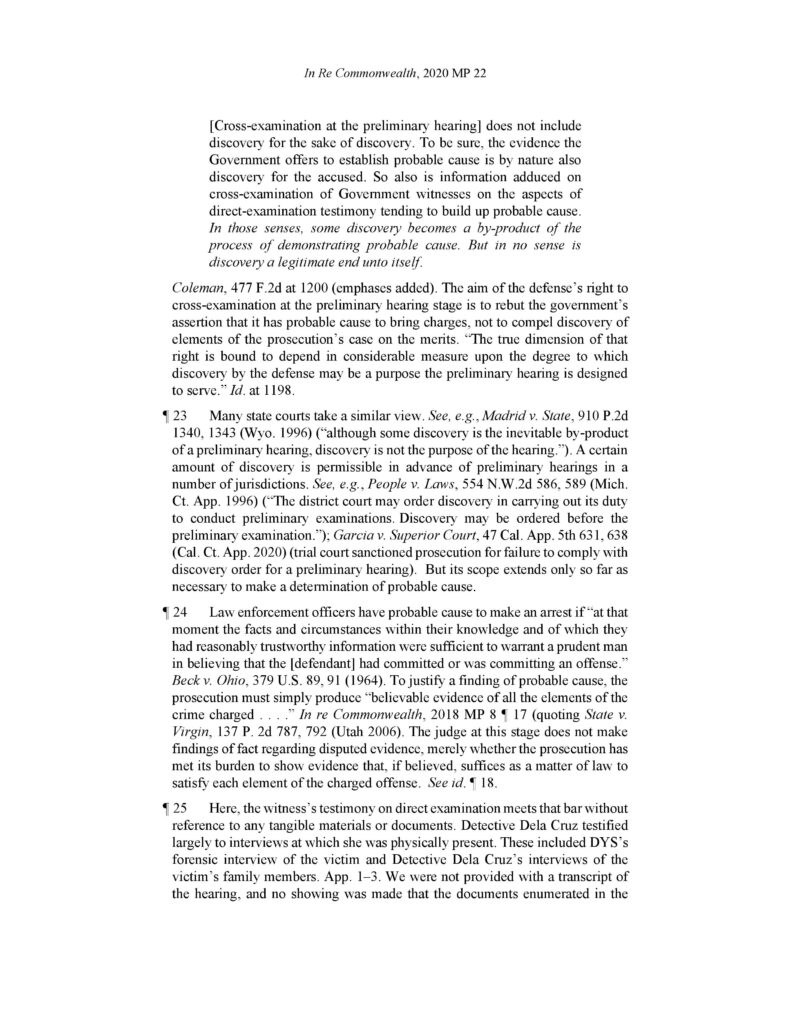
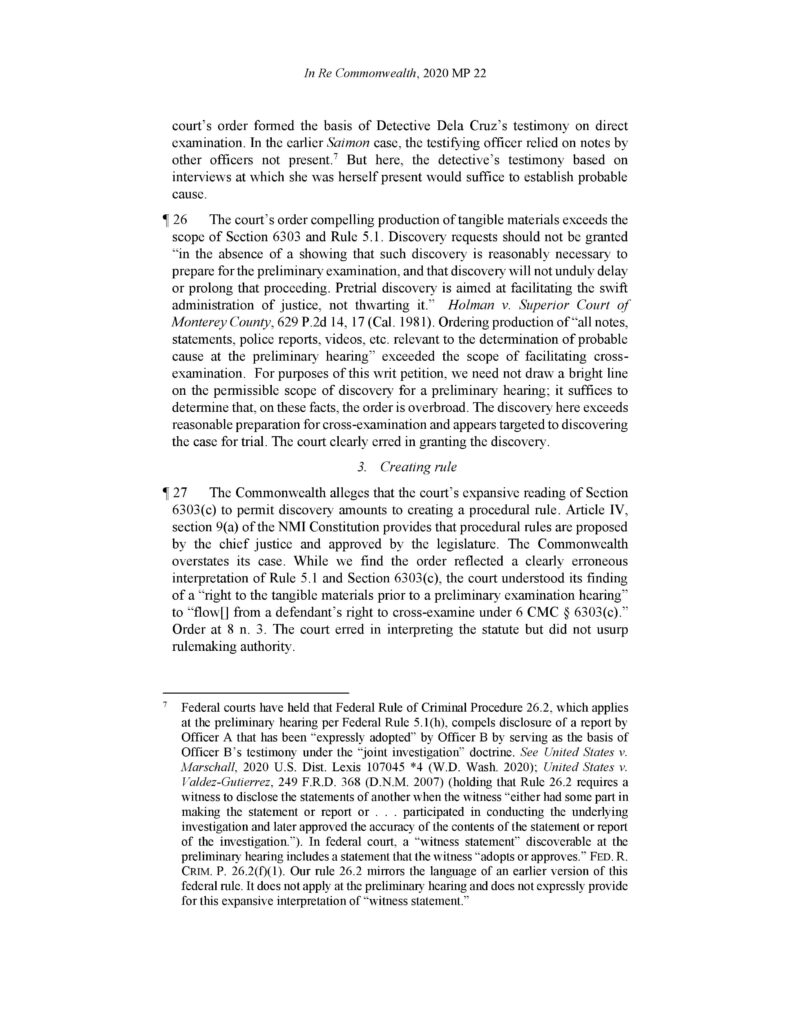
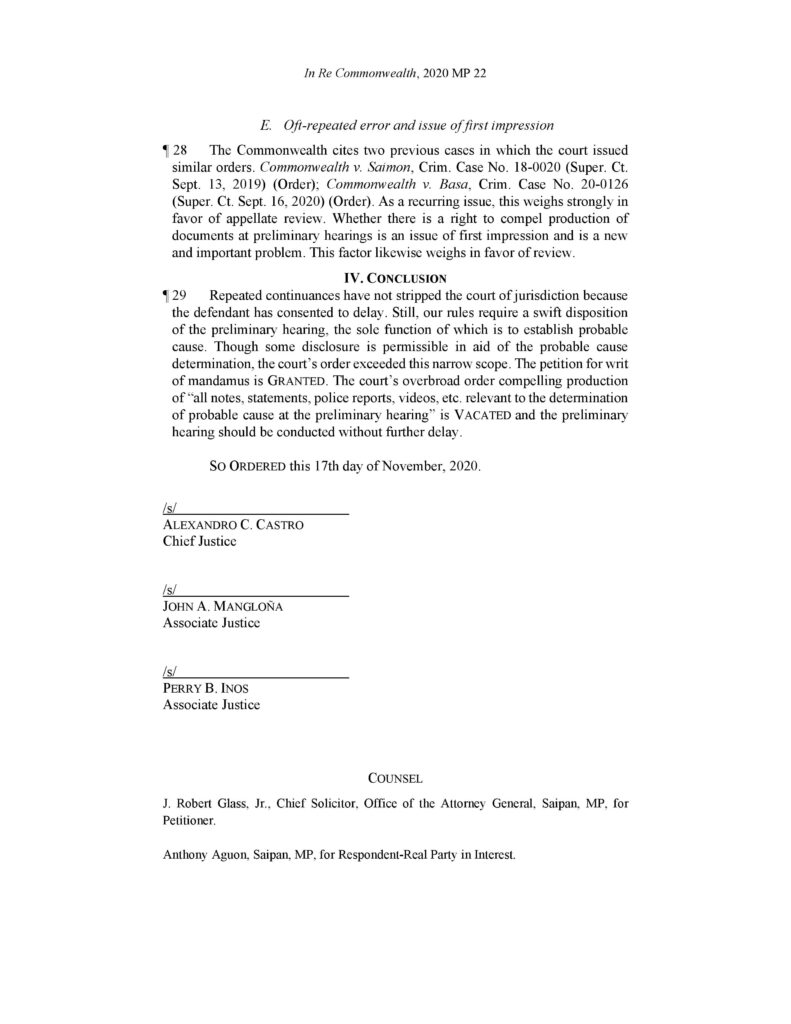
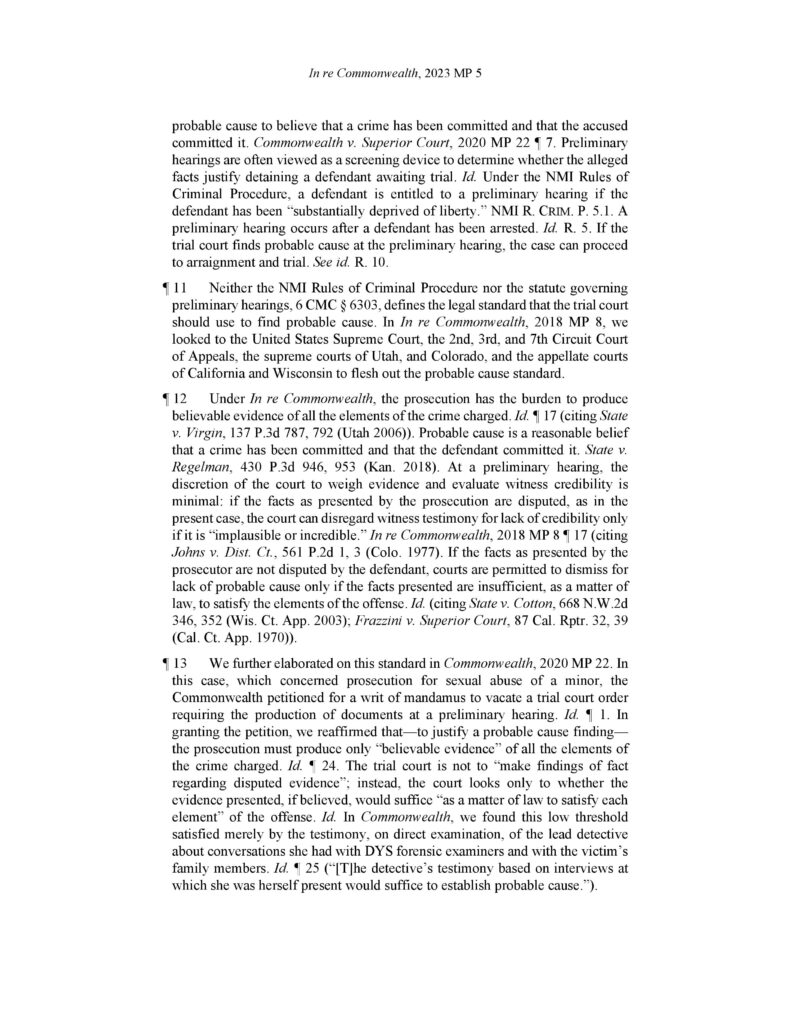
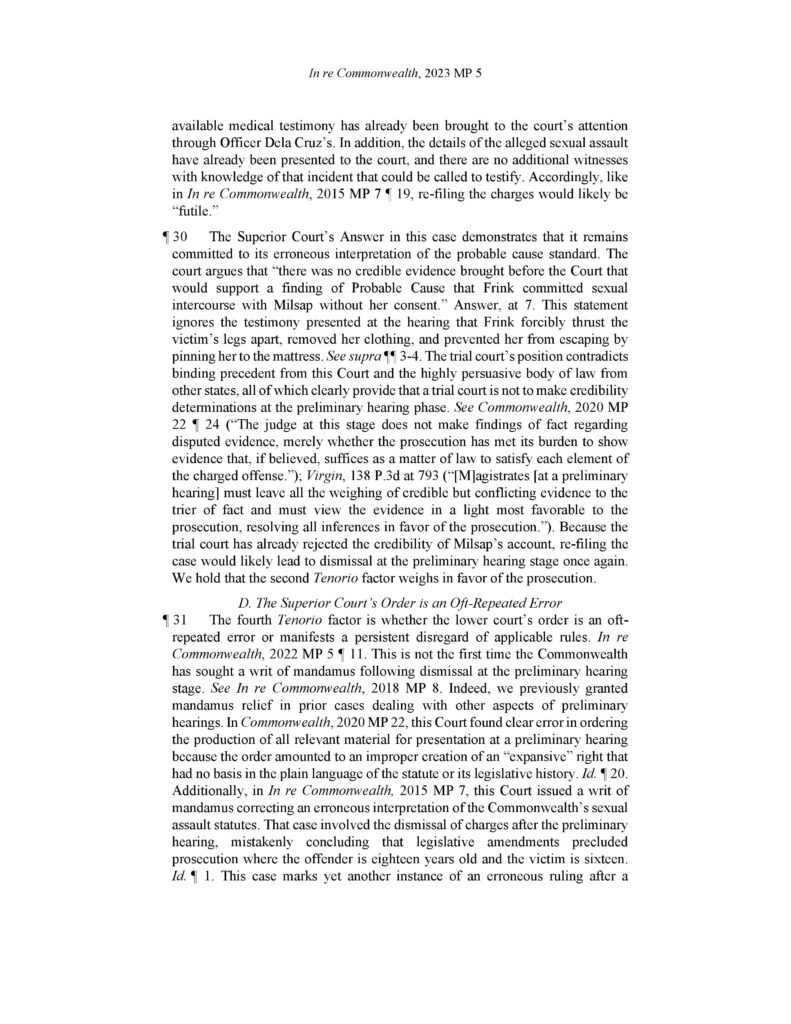
In the third case, In re Commonwealth, 2020 MP 22, Judge Camacho ordered the Commonwealth to produce all notes, statements, police reports and videos used to establish probable cause at a preliminary hearing in a child sexual abuse case, effectively transforming a probable cause hearing into full pretrial discovery. The Supreme Court granted mandamus relief, ruling the order was overbroad and exceeded the narrow scope of a preliminary hearing, whose sole purpose is to determine probable cause.
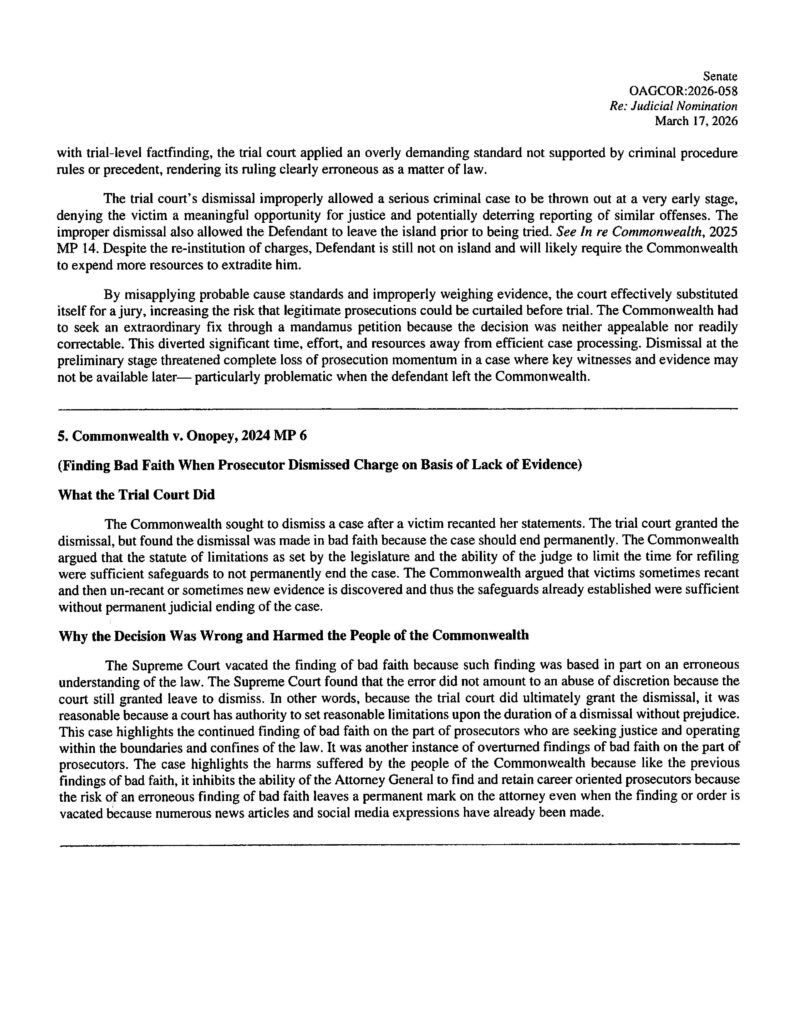
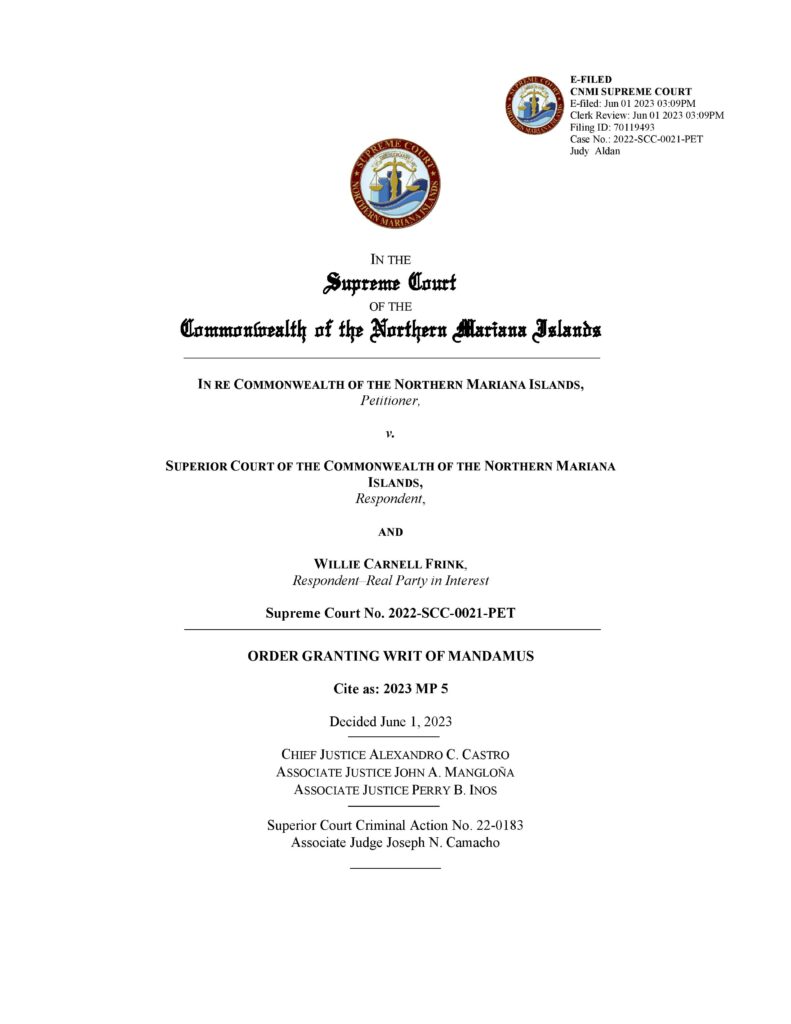
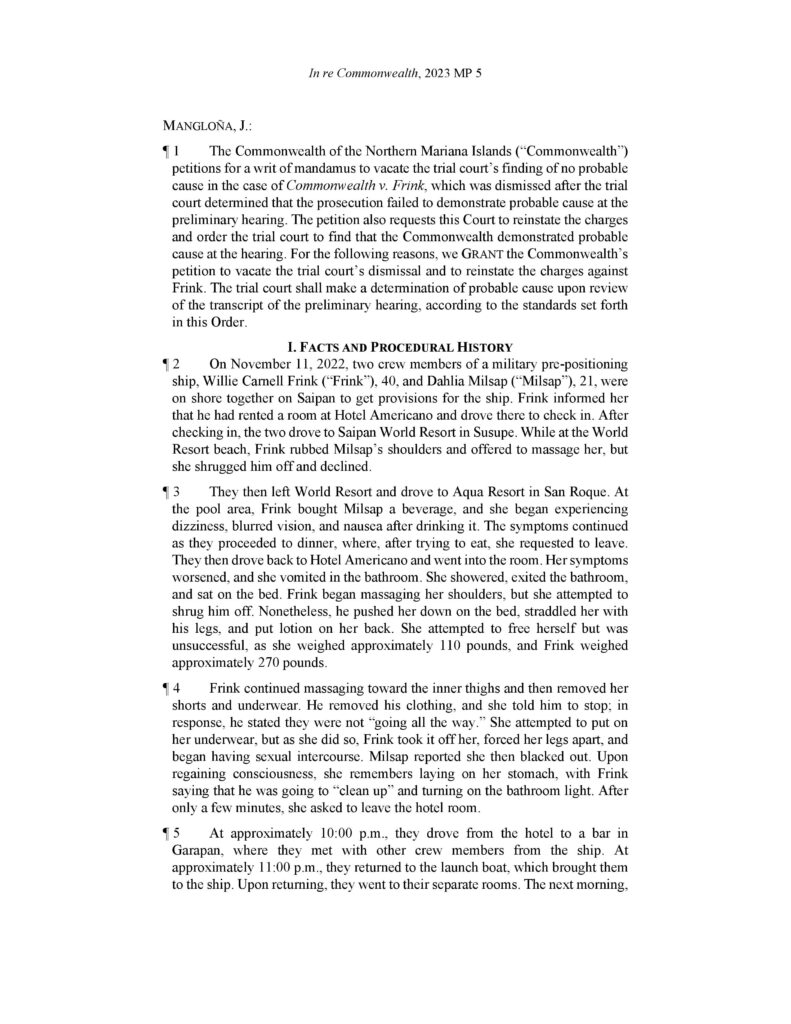
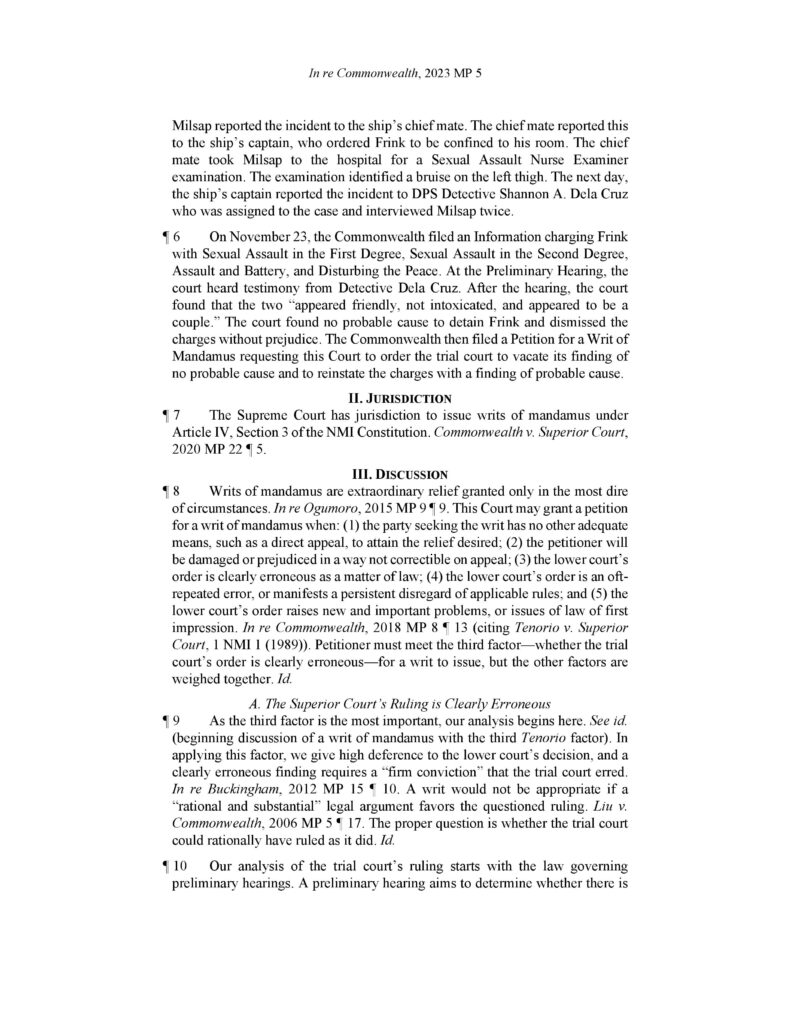
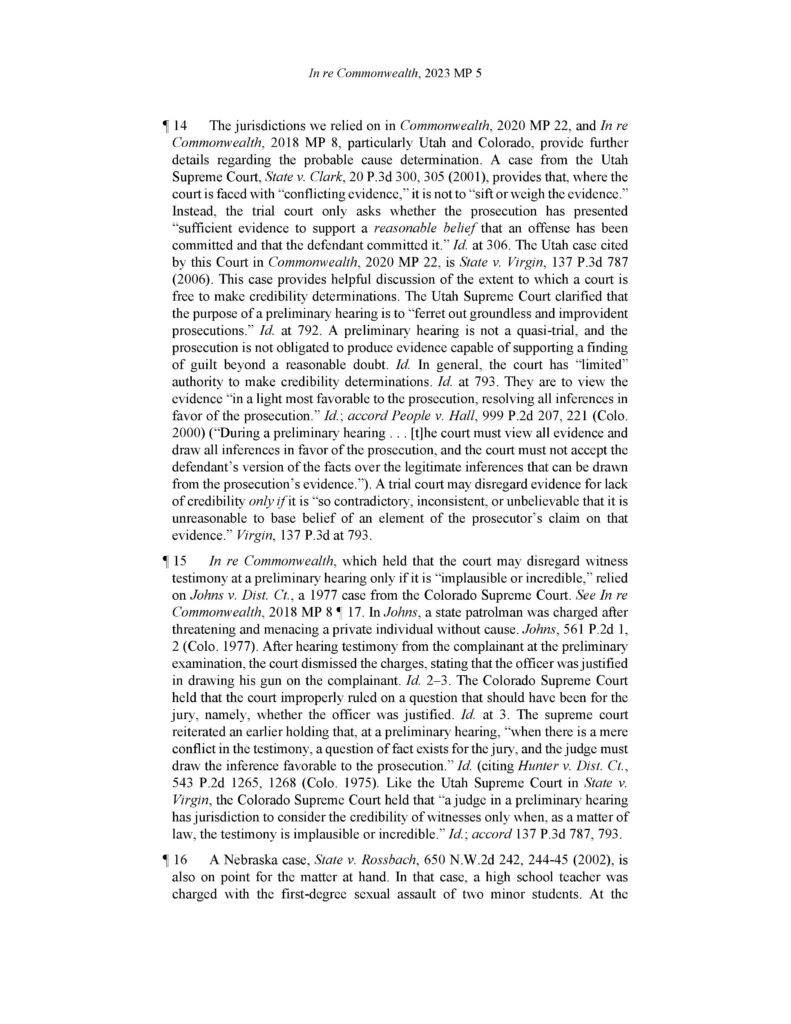
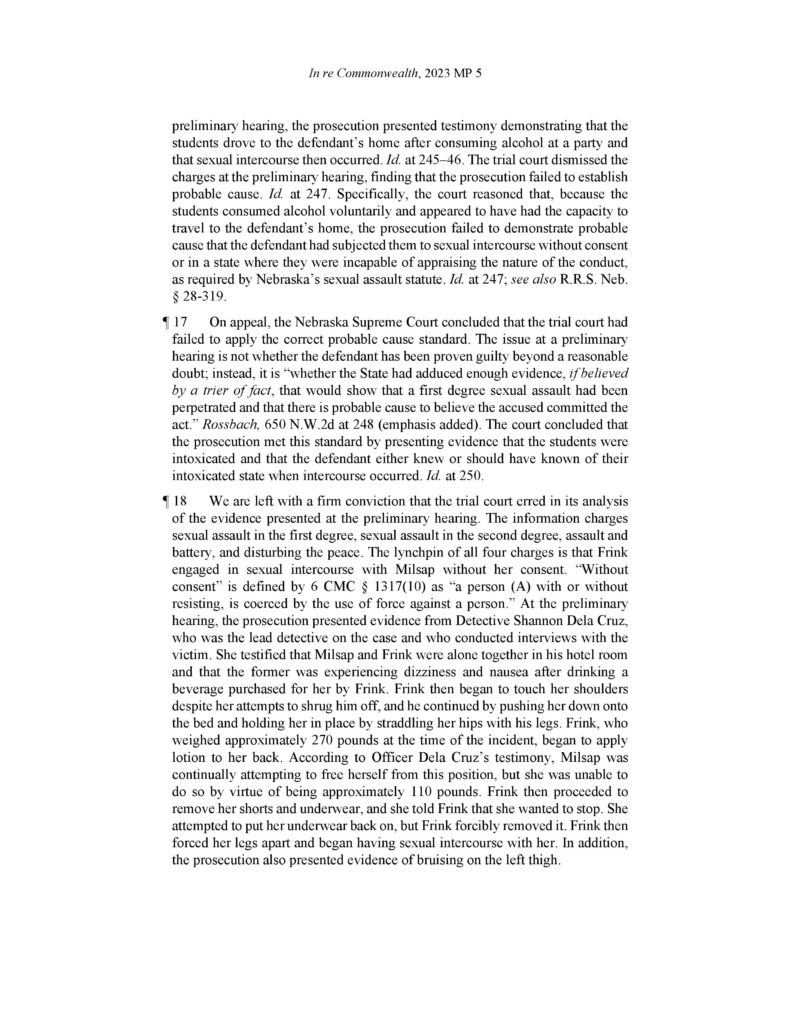
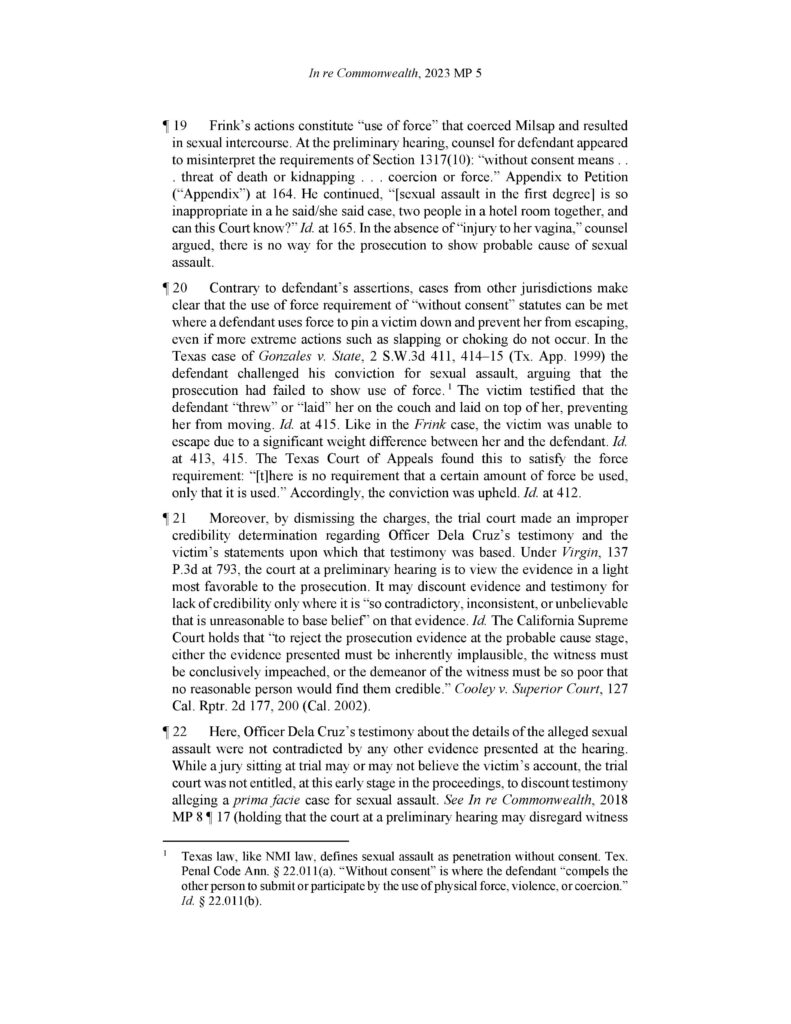
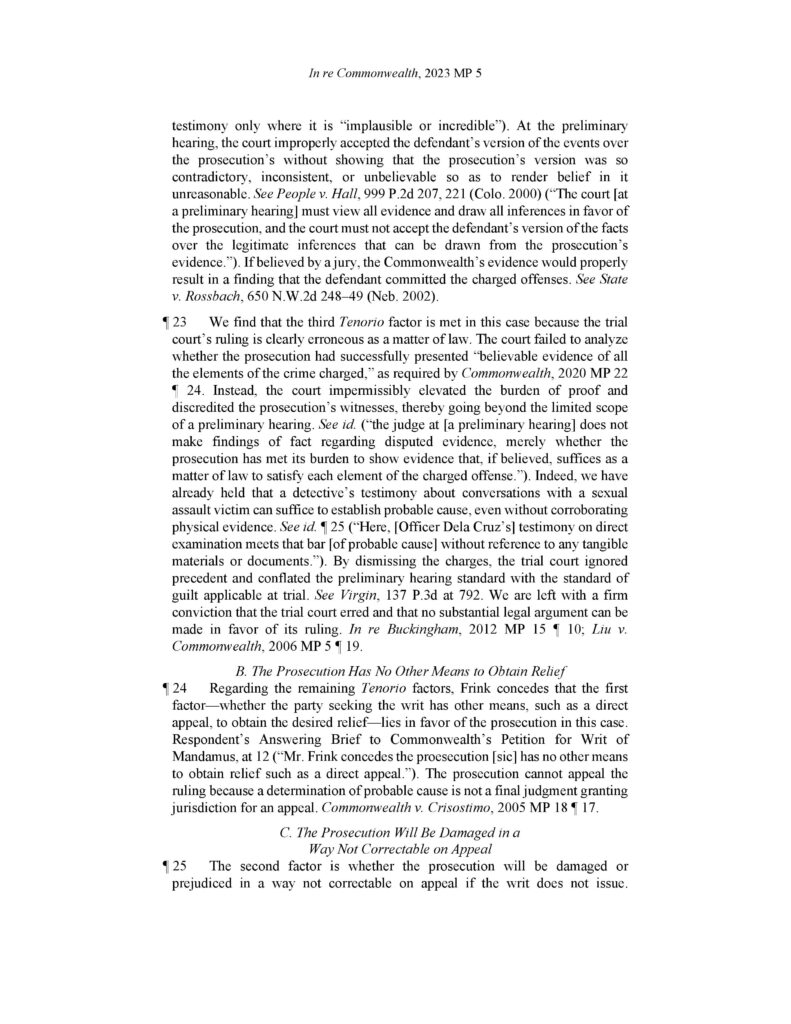
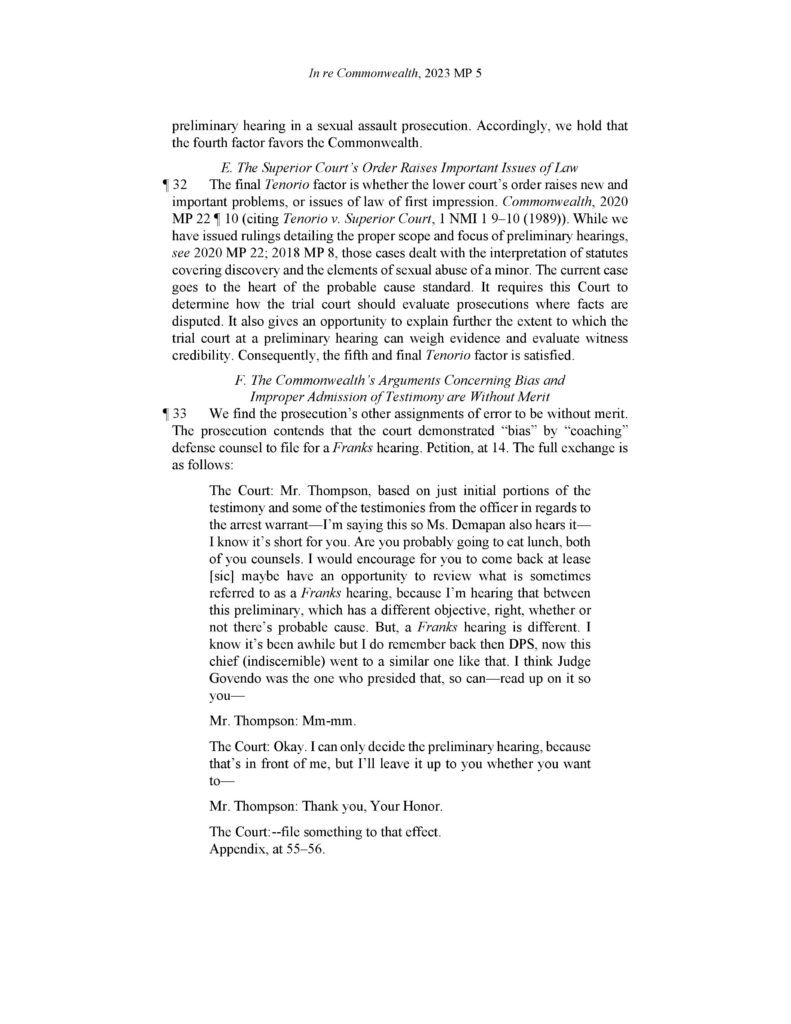
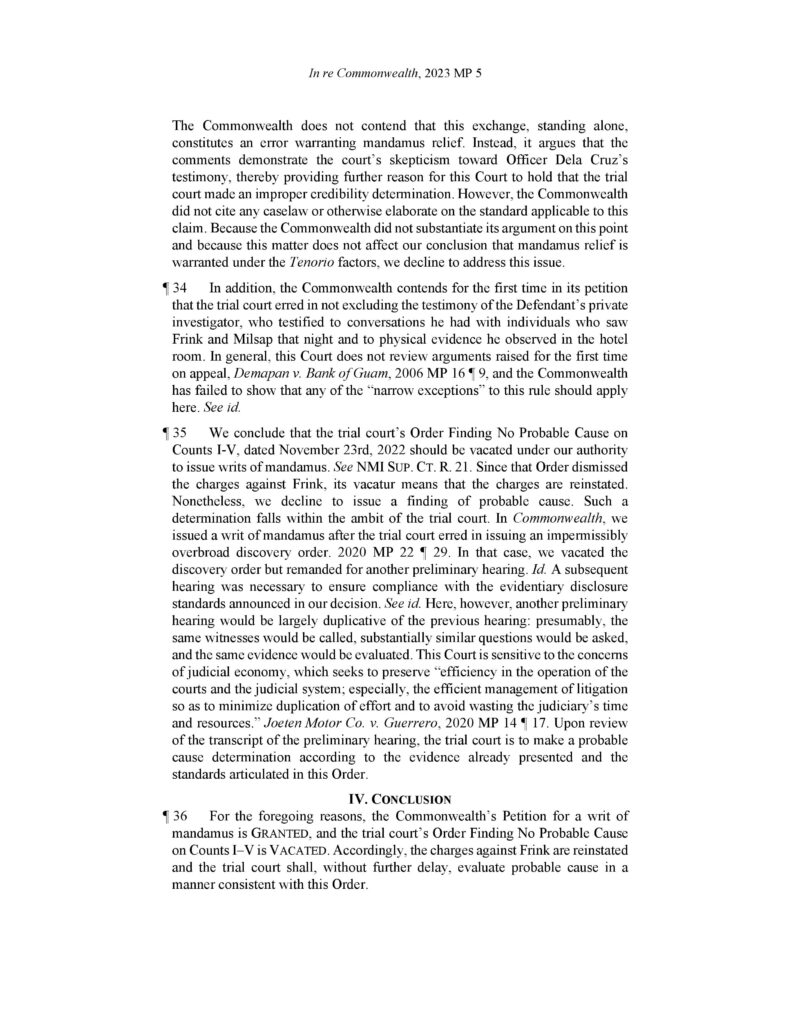
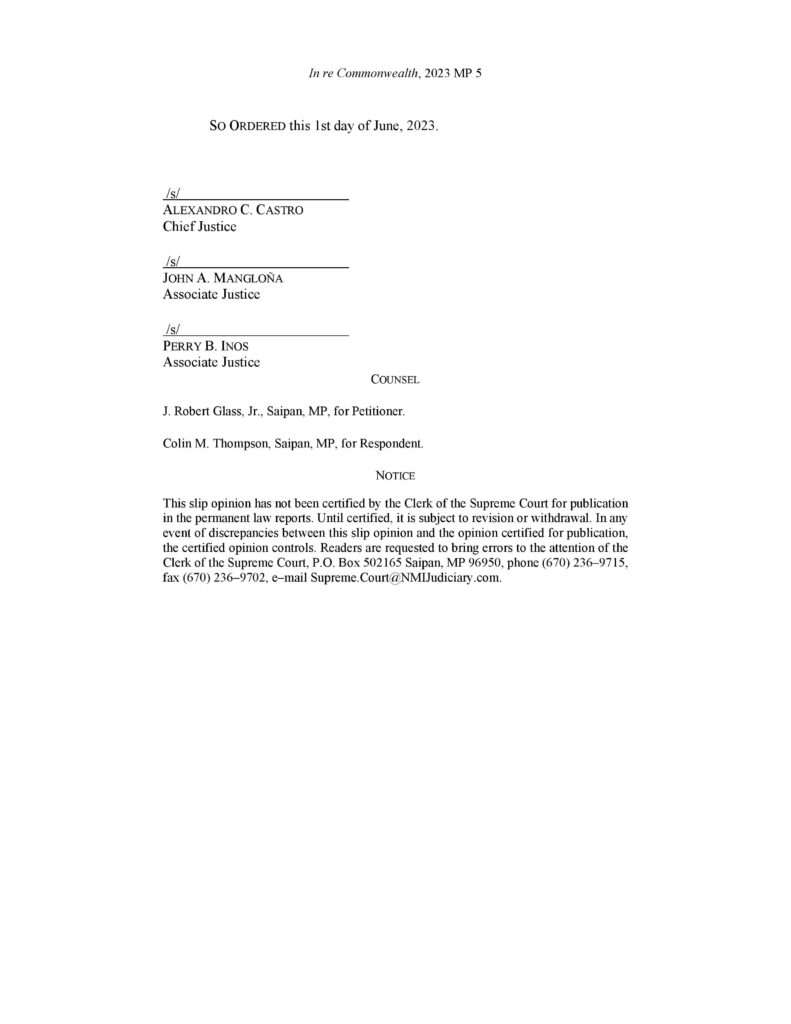
In the fourth case, In re Commonwealth, 2023 MP 5, Judge Camacho dismissed all charges including first-degree sexual assault at a preliminary hearing involving a military crew member accused of raping a shipmate on Saipan. The Supreme Court found that Judge Camacho had improperly elevated the burden of proof and made credibility determinations reserved for trial juries, not preliminary hearings. The improper dismissal allowed the defendant to leave the Commonwealth, Manibusan noted, likely requiring extradition if the case is ultimately pursued.
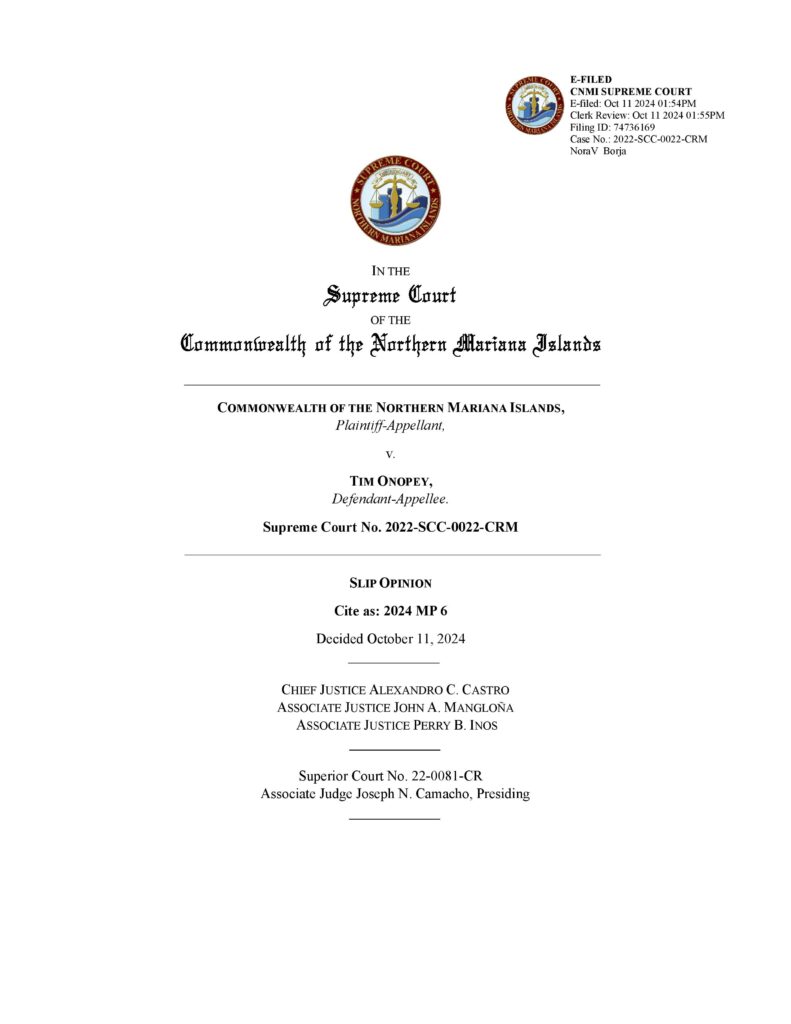
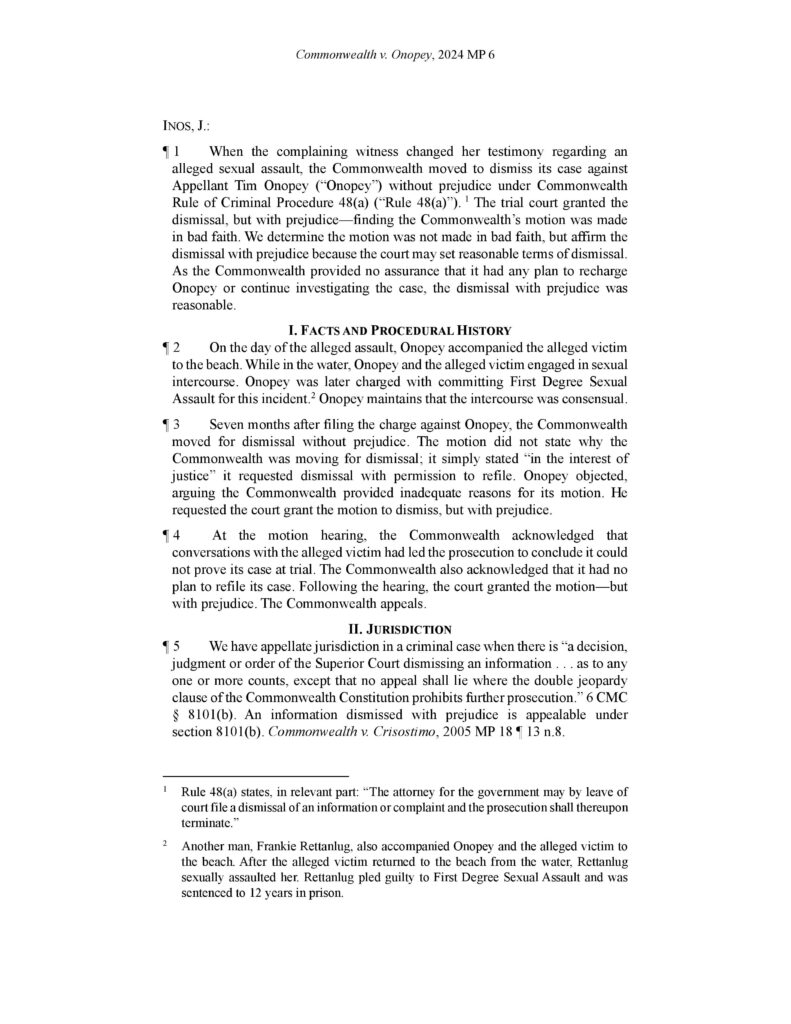
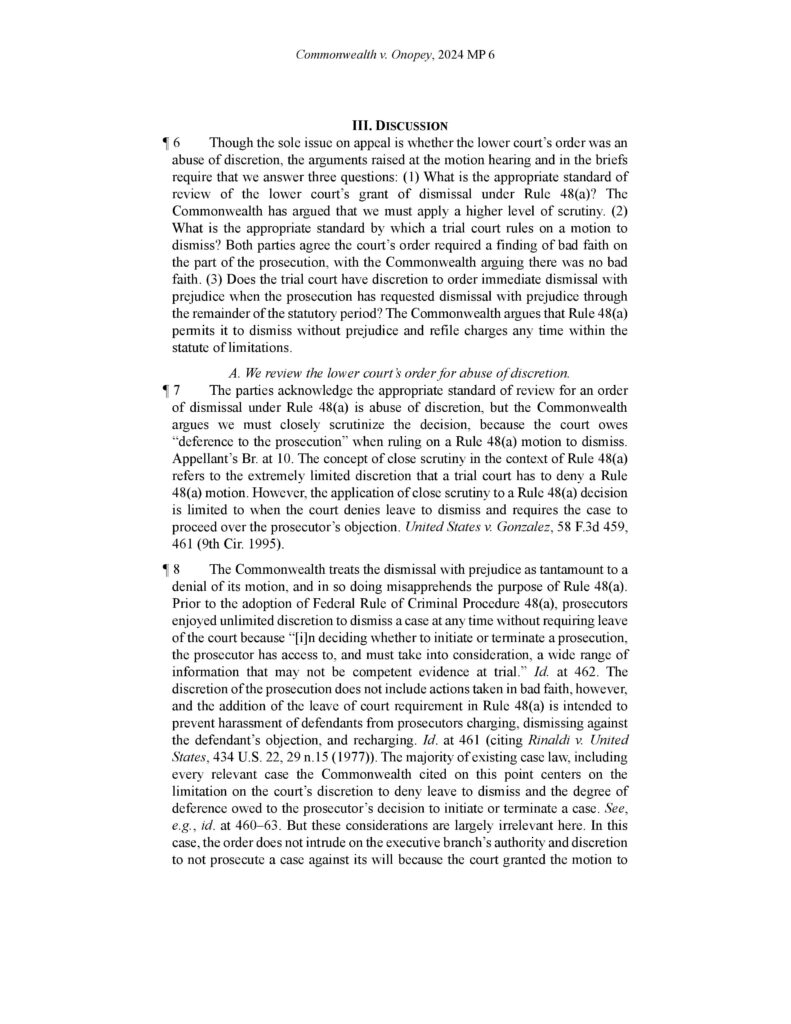
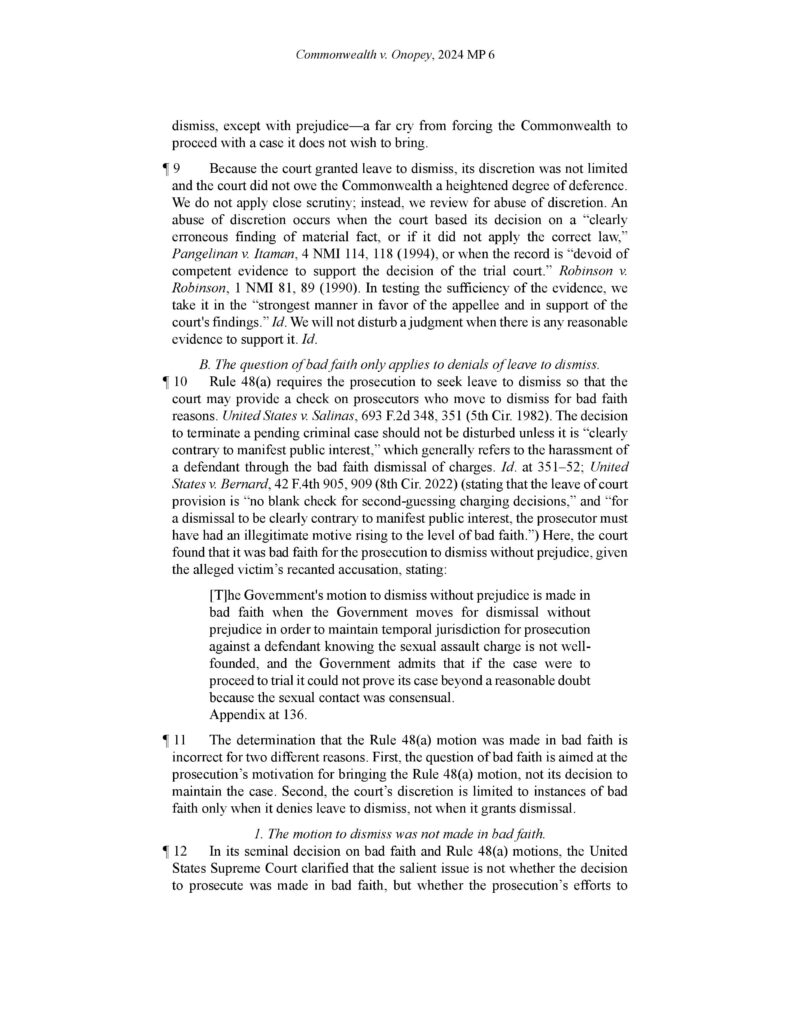
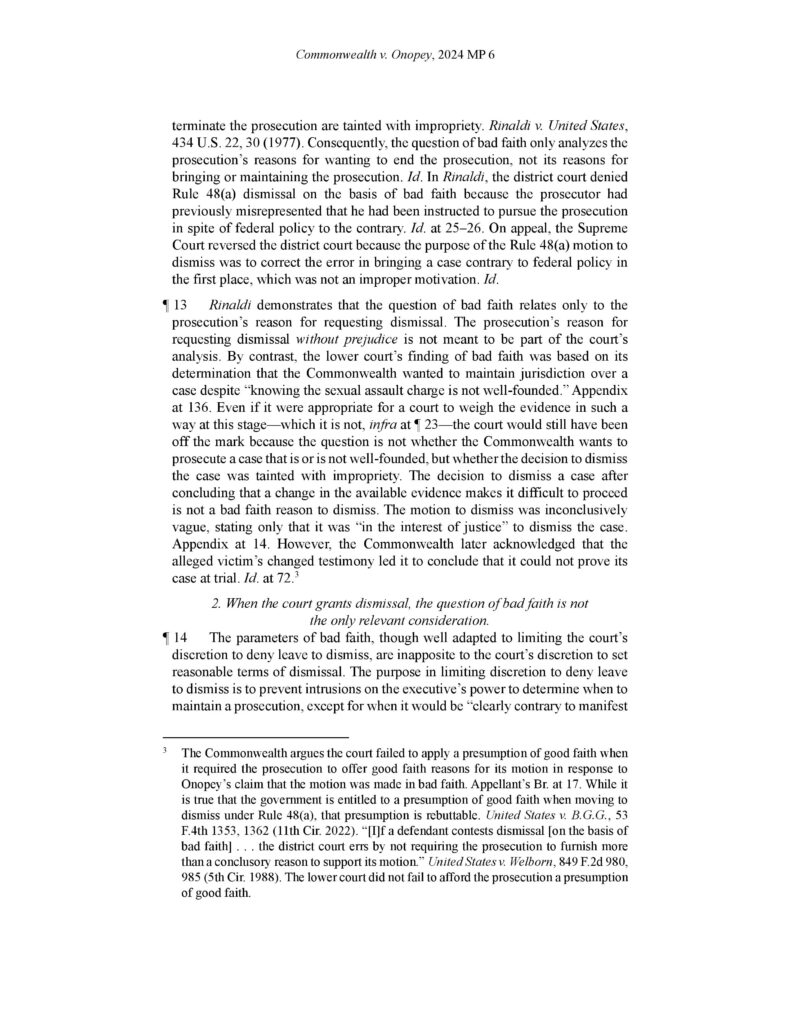
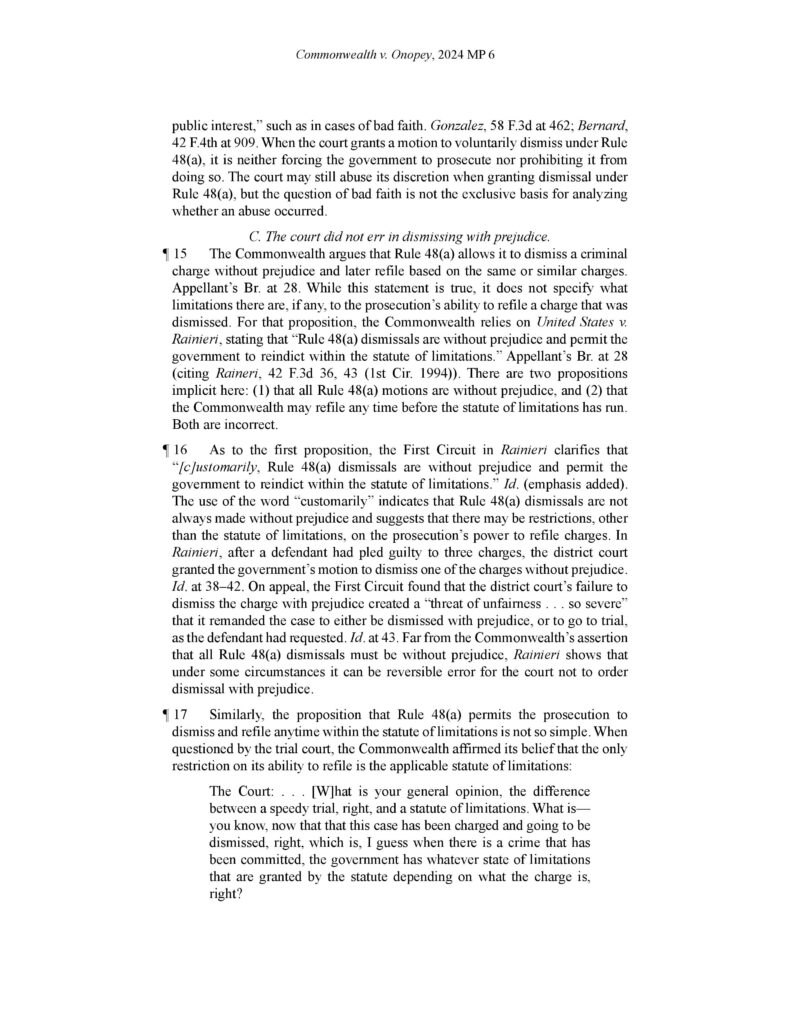
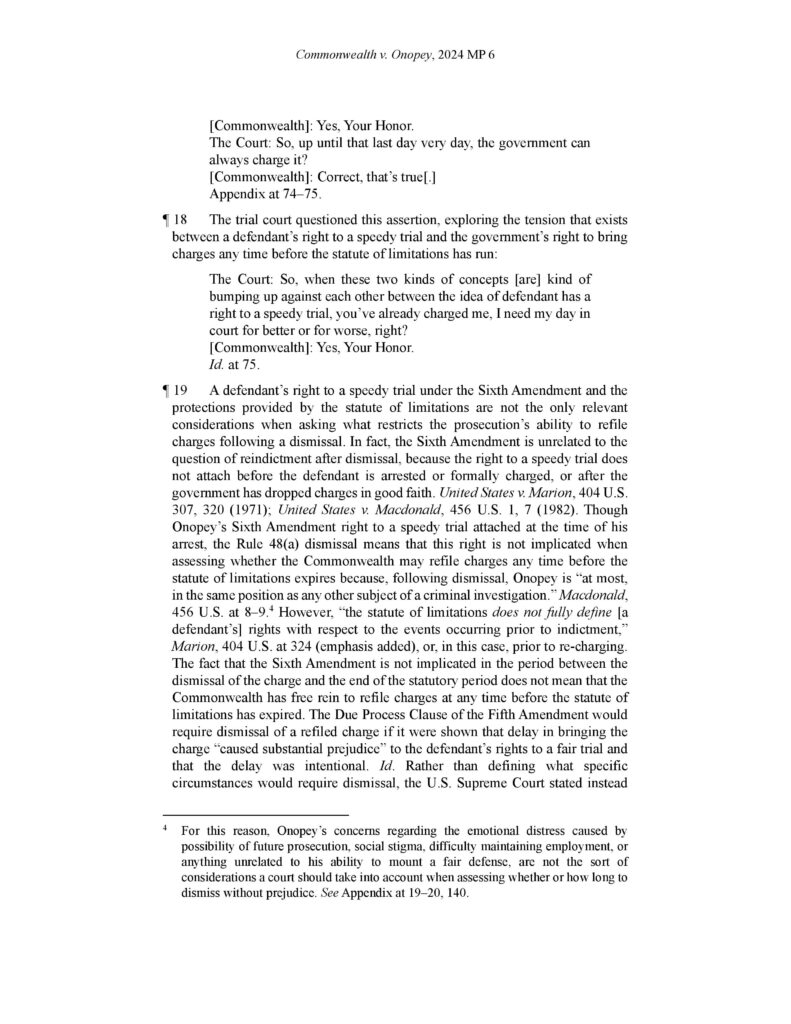
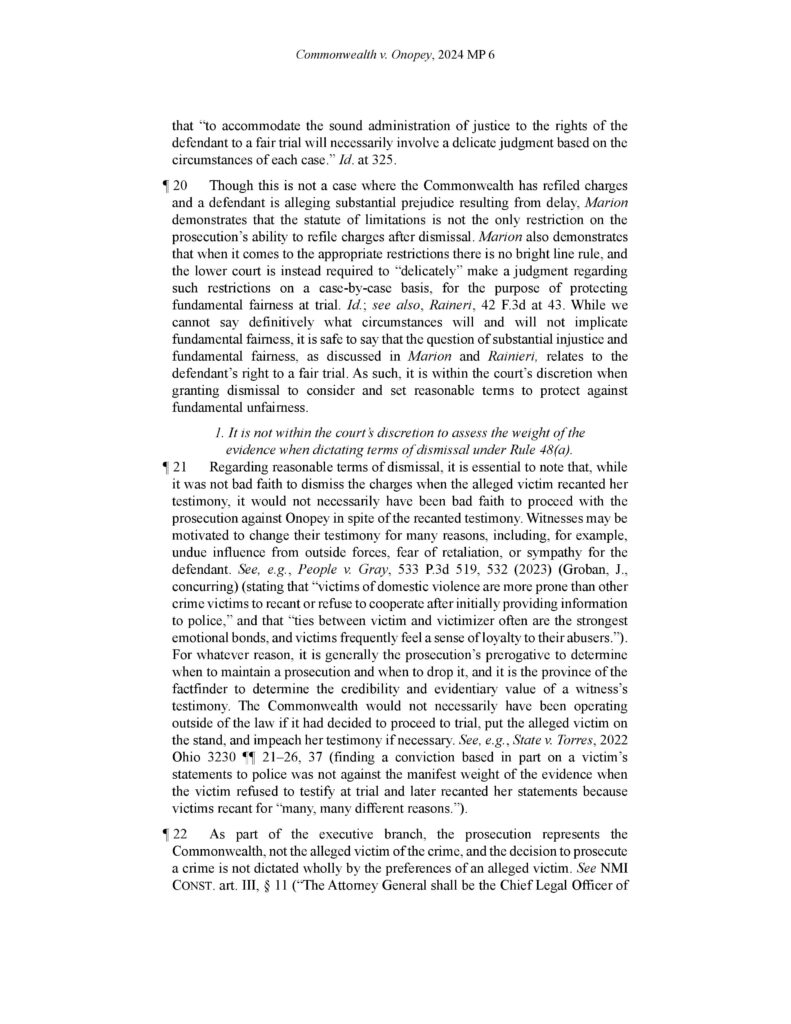
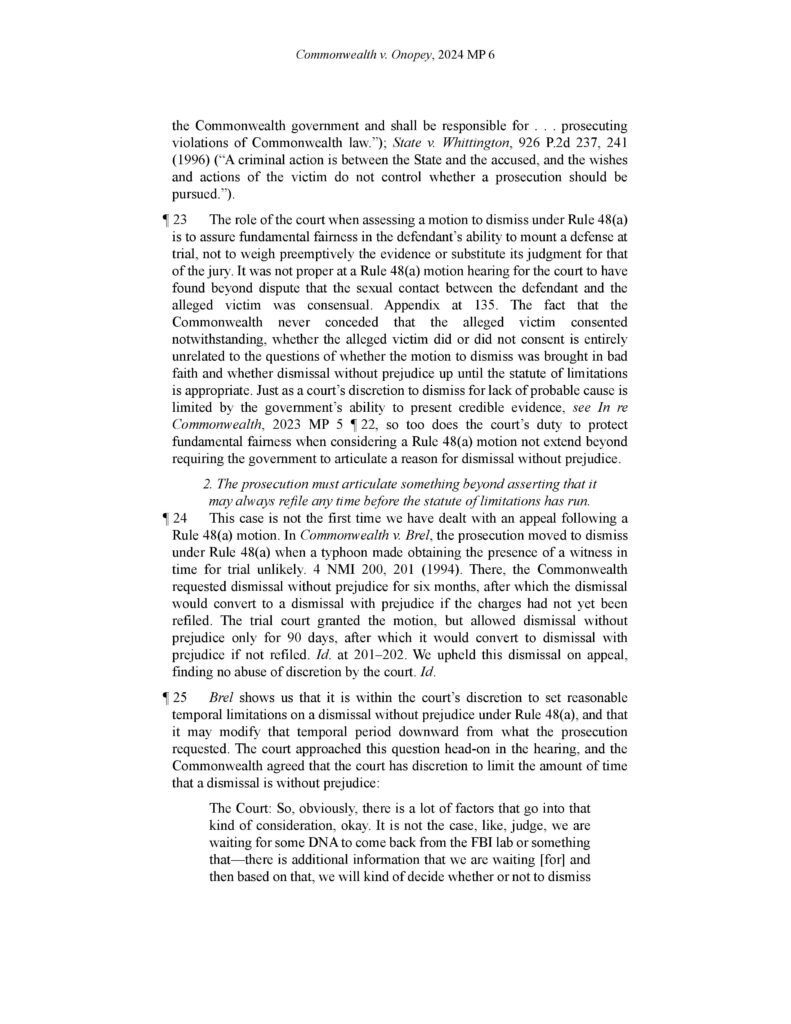
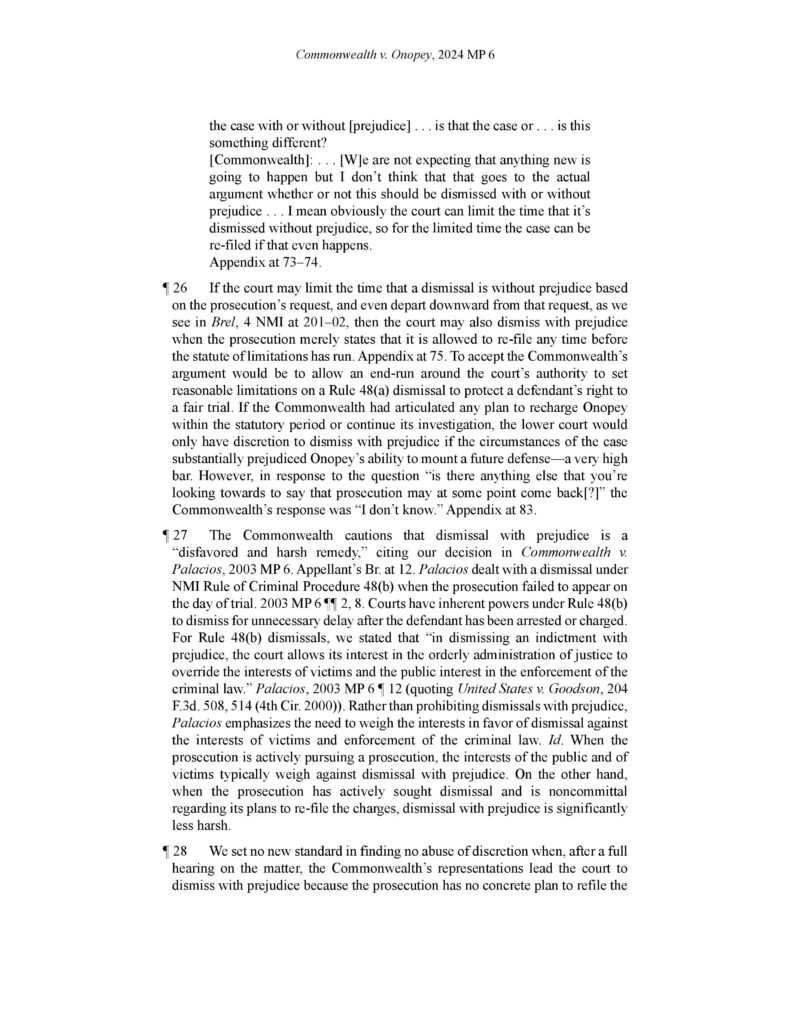
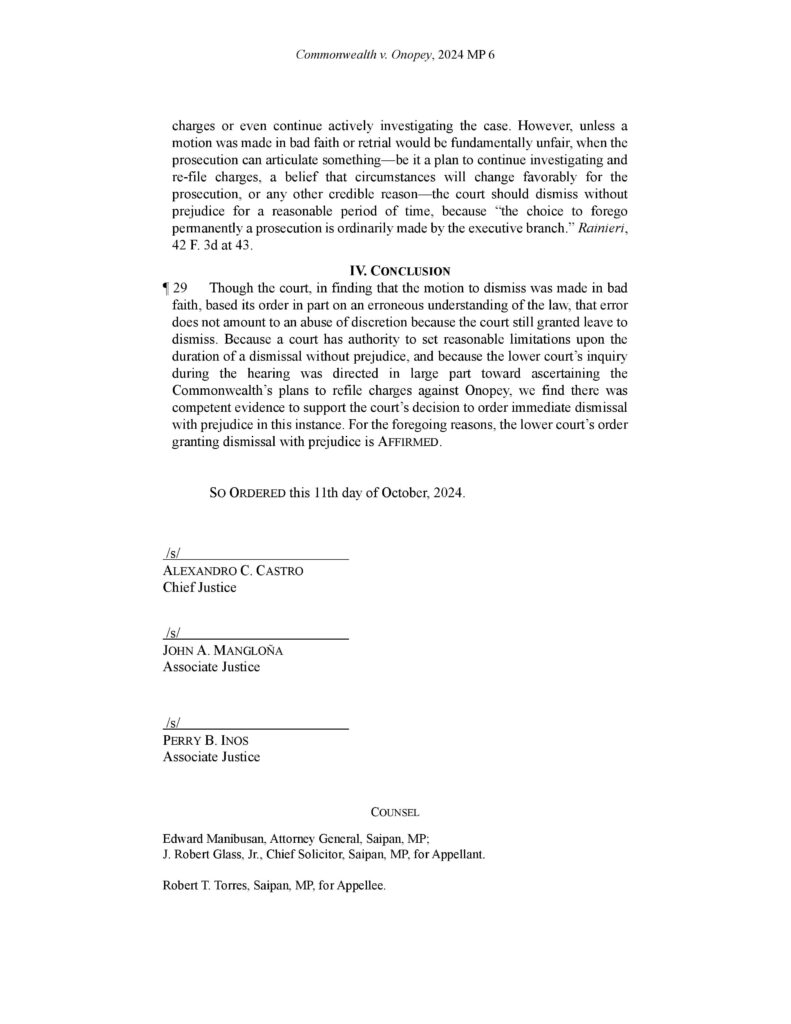
In the fifth case, Commonwealth v. Onopey, 2024 MP 6, Judge Camacho found that the Commonwealth acted in bad faith when it moved to dismiss a sexual assault case after the alleged victim recanted her testimony. The Supreme Court vacated the bad faith finding, holding that the relevant question in a dismissal motion is the prosecution’s reason for seeking dismissal, not whether the underlying case was well-founded. Manibusan said the pattern of bad faith findings against prosecutors operating within the law has compounded the office’s difficulties in retaining experienced attorneys.
The attorney general acknowledged that appellate reversals are a normal part of judicial review. But he argued that repeated findings of clear legal error specifically in foundational areas of criminal law, statutory interpretation, probable cause standards, preliminary hearing scope and requirements for judicial sanctions, and in the most serious categories of criminal cases, raise concerns that go beyond ordinary judicial error correction.
“The rule of law depends on courts faithfully applying statutes as written and adhering to basic procedural principles,” Manibusan wrote. “The people of the Commonwealth deserve a judicial system that functions predictably, consistently, and in accordance with settled law.”