Rep. Vincent Aldan says Middle East conflict threatens island’s supply chain; higher power, freight and grocery costs likely to follow
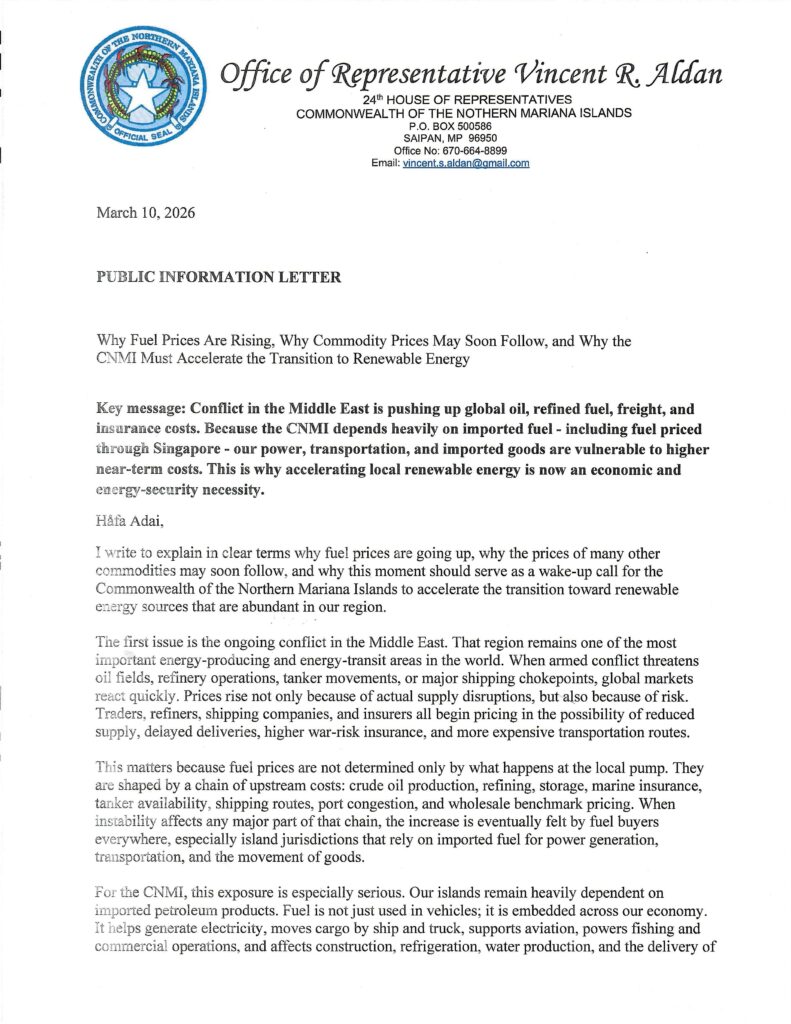
SAIPAN — A Commonwealth lawmaker is warning that ongoing conflict in the Middle East will drive up fuel prices across the CNMI and that higher costs for power, freight and everyday goods are likely to follow.
Rep. Vincent R. Seman Aldan, Precinct 1 Representative and Chairman of the House Transportation and Infrastructure Committee, issued a public information letter Monday laying out how geopolitical instability thousands of miles away translates directly into higher prices at the pump, on utility bills and at the grocery store.
“What happens in the Middle East does not stay in the Middle East,” Aldan wrote. “It reaches global oil markets, Asian fuel hubs, international shipping networks, and ultimately the CNMI.”
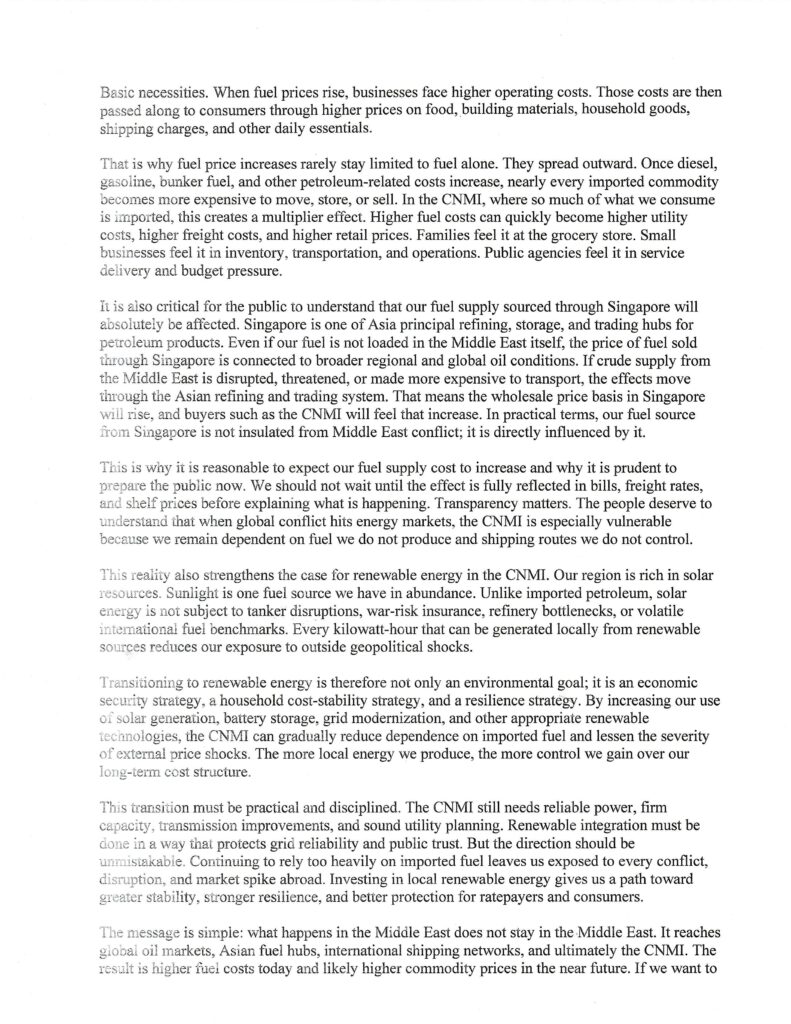
Aldan said the CNMI’s exposure is compounded by the fact that its fuel supply runs through Singapore, one of Asia’s principal petroleum refining, storage and trading hubs. Even though fuel is not loaded directly from the Middle East, he said, its price is closely tied to regional and global oil market conditions. Any disruption to crude supply, refinery operations or tanker movements ripples through the Asian trading system and raises the wholesale price basis in Singapore.
“Our fuel source from Singapore is not insulated from Middle East conflict,” Aldan wrote. “It is directly influenced by it.”
Because the CNMI imports the vast majority of what it consumes, Aldan said the effects of a fuel price increase do not stay limited to the pump. Higher diesel, gasoline and bunker fuel costs raise the price of moving, storing and selling nearly every imported commodity. Families absorb it at the grocery store, he said, while small businesses face higher inventory, transportation and operating costs and public agencies face tighter budgets for service delivery.
Aldan argued the only durable protection against that cycle is to reduce dependence on imported fuel altogether. The CNMI, he noted, has an abundance of solar resources, and every kilowatt-hour generated locally from renewable sources reduces the islands’ vulnerability to outside price shocks. He described the renewable transition not as an environmental aspiration but as an economic security strategy and a household cost-stability measure.
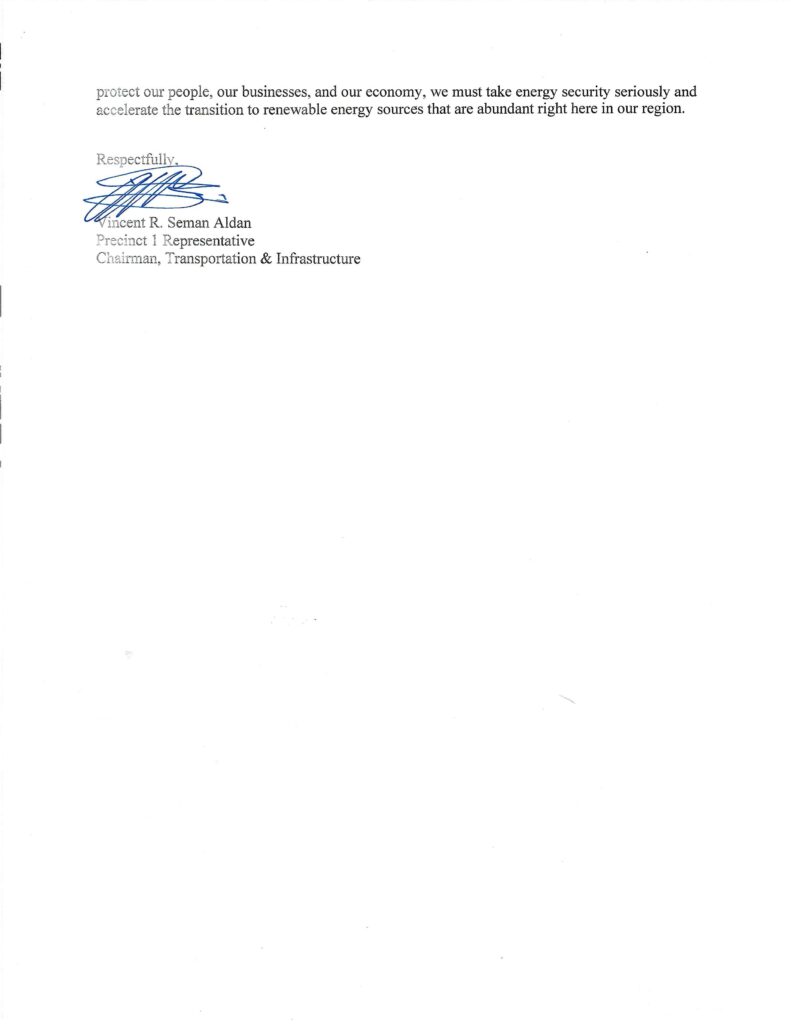
“Continuing to rely too heavily on imported fuel leaves us exposed to every conflict, disruption, and market spike abroad,” he wrote.
He was careful to add that the transition must be disciplined. The CNMI still requires reliable power, firm generating capacity, transmission improvements and sound utility planning, he said, and renewable integration must be managed in a way that protects grid reliability and public trust.
Aldan said he was issuing the letter to get ahead of the price increases rather than wait for residents to feel them first. “We should not wait until the effect is fully reflected in bills, freight rates, and shelf prices before explaining what is happening,” he wrote. “Transparency matters.”