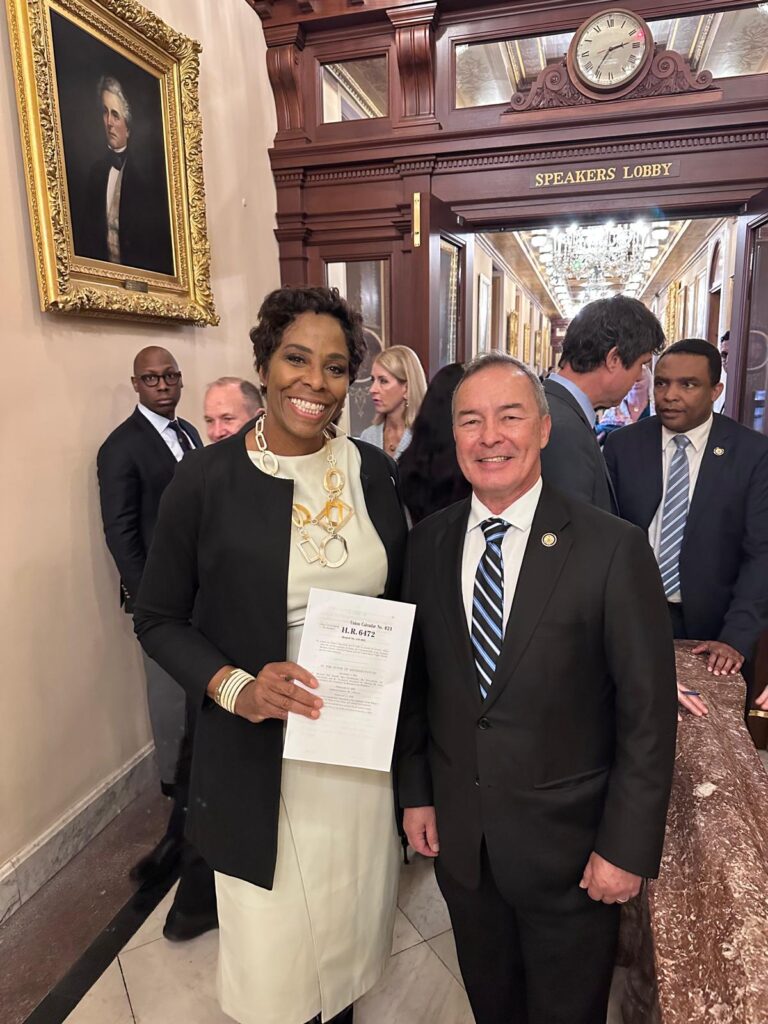
WASHINGTON — The U.S. House of Representatives has passed legislation that would allow students from Guam, the Northern Mariana Islands and other U.S. territories to qualify for in-state tuition at public colleges and universities nationwide.
H.R. 6472, the Territorial Student Access to Higher Education Act, was introduced by Congressman James Moylan of Guam and drew cosponsors from across the territories, including Congresswoman Kimberlyn King-Hinds of the CNMI, Congresswoman Aumua Amata Coleman Radewagen of American Samoa, Congresswoman Stacey Plaskett of the U.S. Virgin Islands and Resident Commissioner Pablo José Hernández of Puerto Rico. Rep. Salud Carbajal of California also signed on.
Students from U.S. territories are American citizens but are classified as out-of-state students at mainland public universities, a designation that can add tens of thousands of dollars per year in tuition costs. The bill would eliminate that disparity.
King-Hinds said the legislation addresses a real burden on CNMI families.
“Students from the Northern Mariana Islands bring talent, dedication, and a strong commitment to their education when they pursue opportunities across the United States,” King-Hinds said. “For many CNMI families, higher education requires significant sacrifice, and this bipartisan legislation helps open more doors for our students while strengthening pathways to build the skilled workforce our islands and our nation need.”
Moylan said the financial barrier has long pushed opportunity out of reach.
“Too many of our students leave home to pursue degrees that simply aren’t available locally, and too often the financial burden places that opportunity further out of reach for hardworking families,” Moylan said. “It’s about empowering our youth to pursue their dreams without being priced out of them.”
Moylan credited House Education and Workforce Committee Chairman Tim Walberg with helping advance the bill through committee. He also placed the legislation in the context of broader work in the 119th Congress, including more than $60 million in Community Project Funding for fiscal year 2025 and over $1.2 billion in defense investments for Guam through the National Defense Authorization Act.
Supporters of the bill argue that lower tuition rates will draw more territorial students into fields not currently offered at home, including healthcare, engineering, technology and advanced sciences, and increase the likelihood graduates return to strengthen local workforces.
With House passage secured, the bill now moves to the U.S. Senate. Plaskett, a longtime advocate for the measure, urged the Senate to act quickly.
“Our students deserve the same educational opportunities and pathways to success as their peers in the states,” Plaskett said.