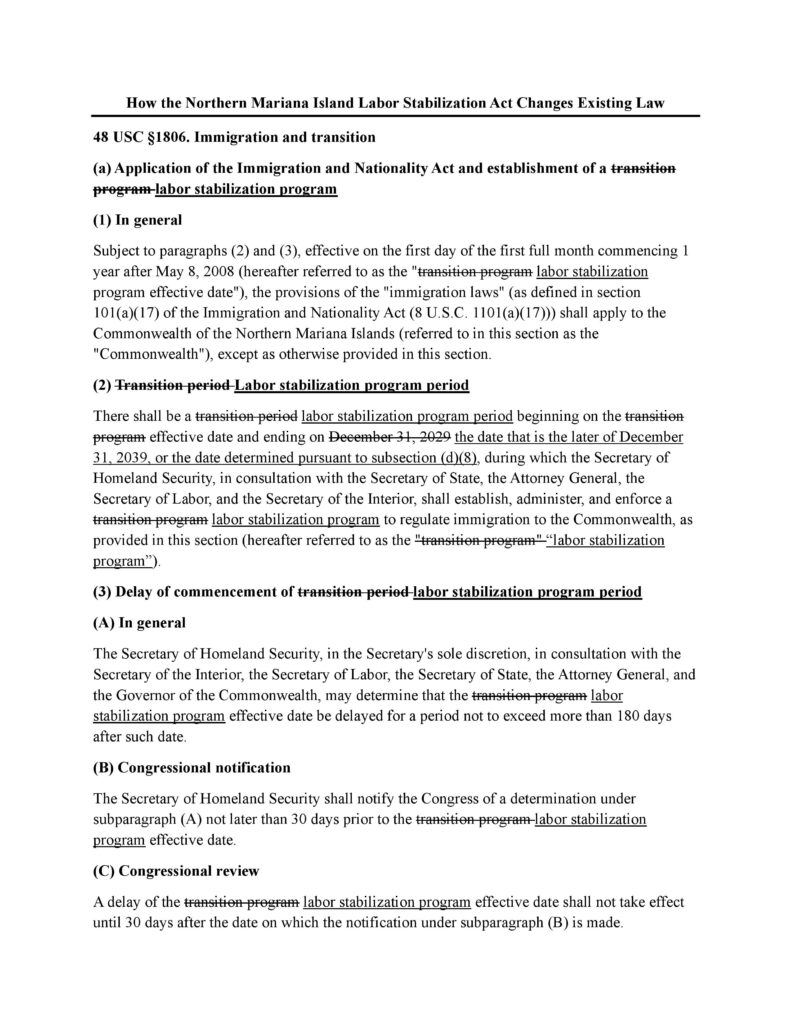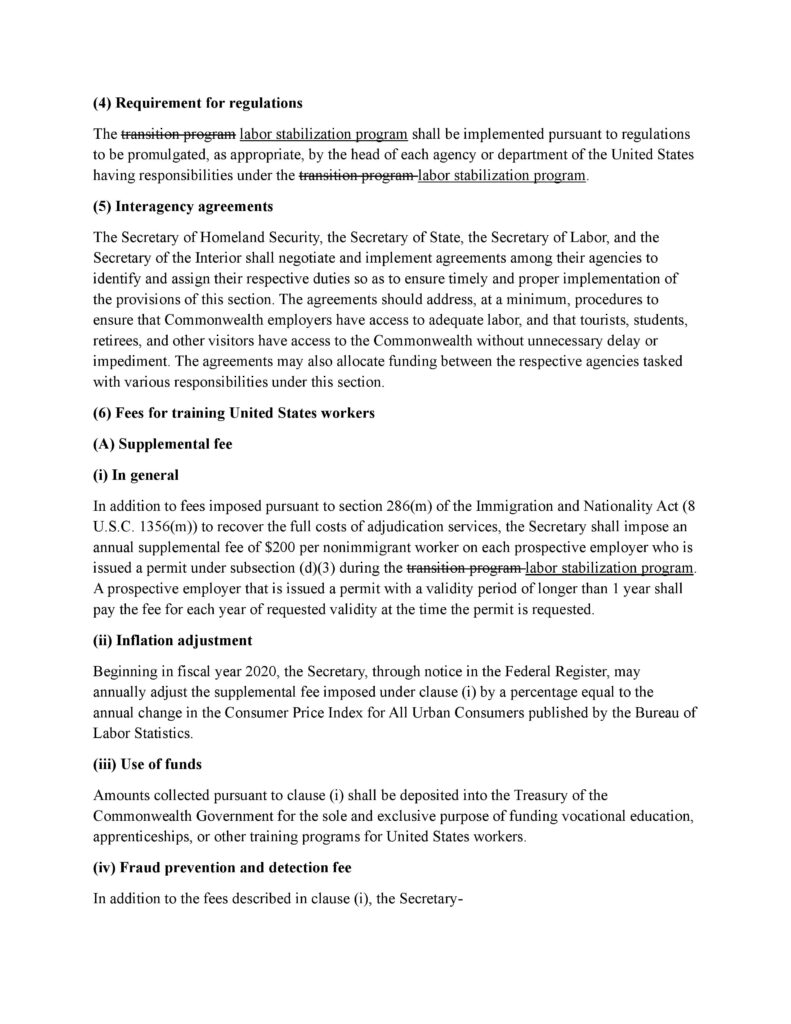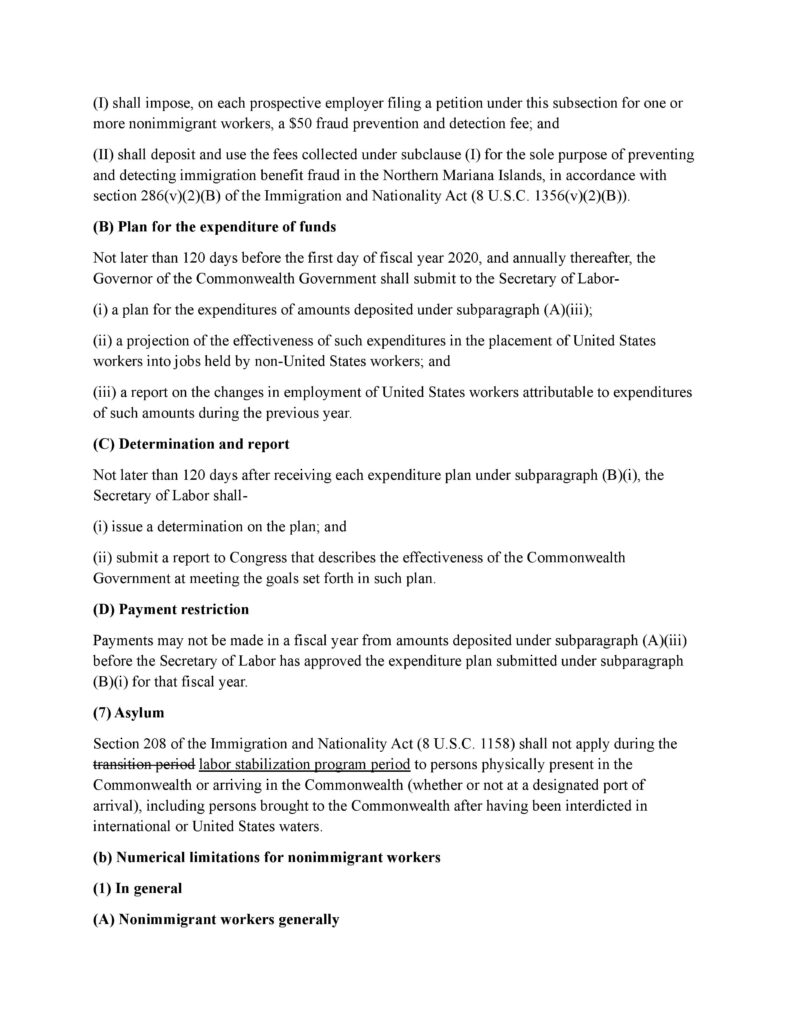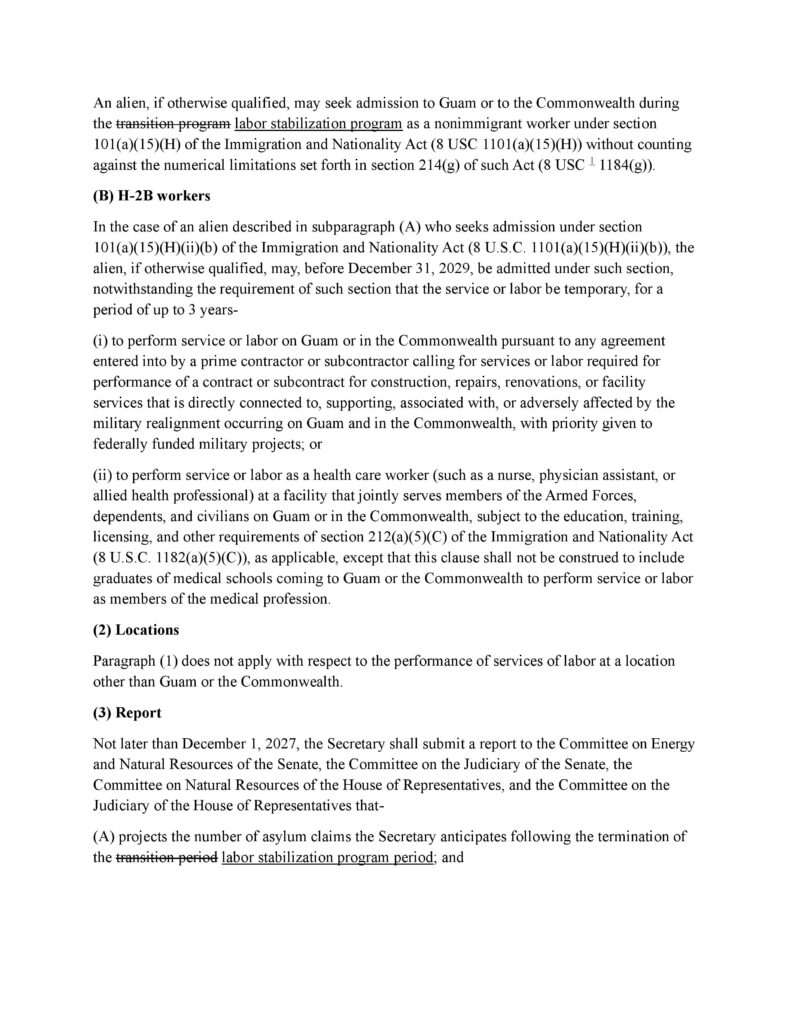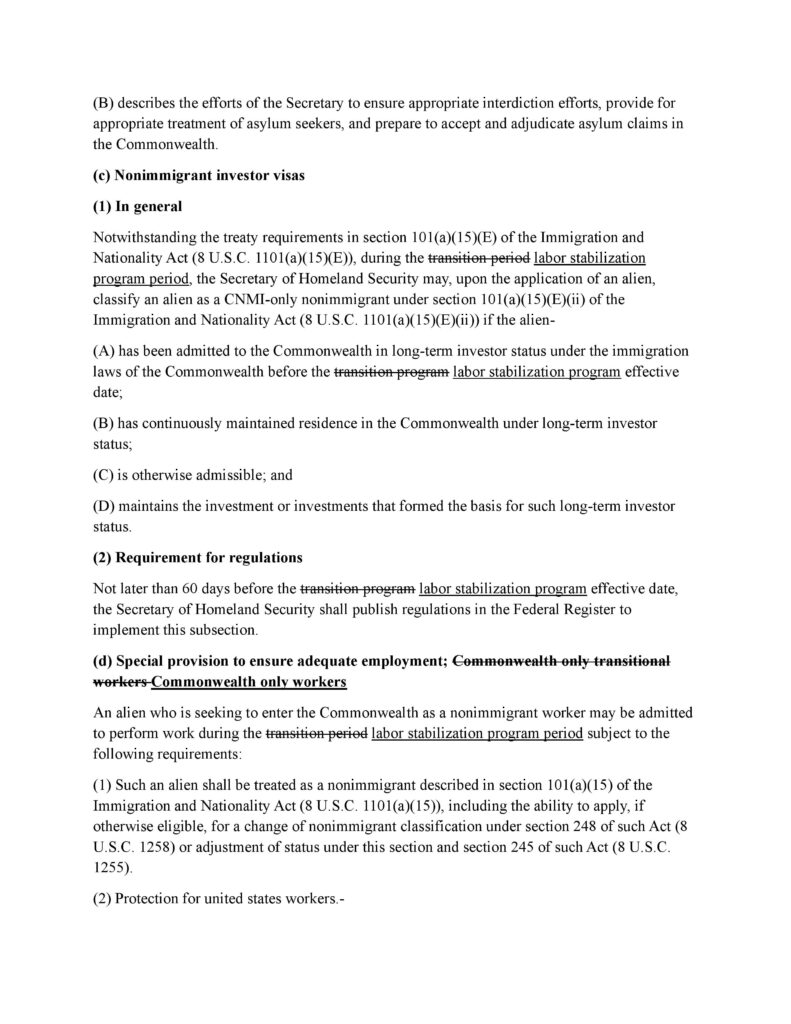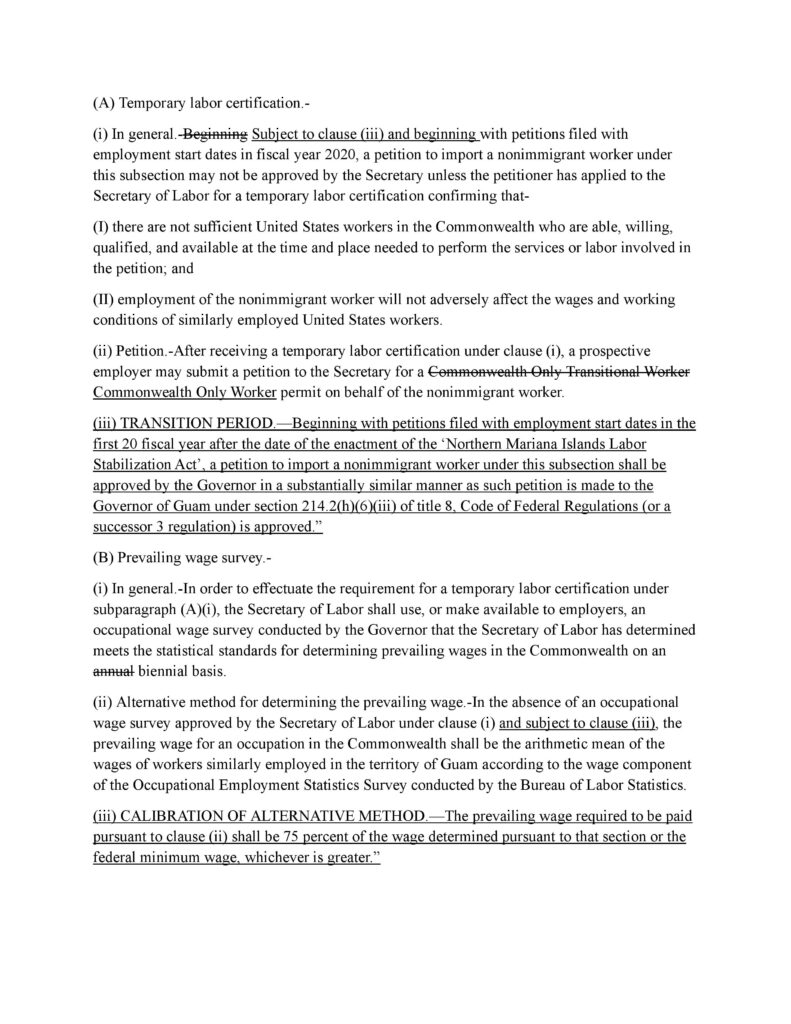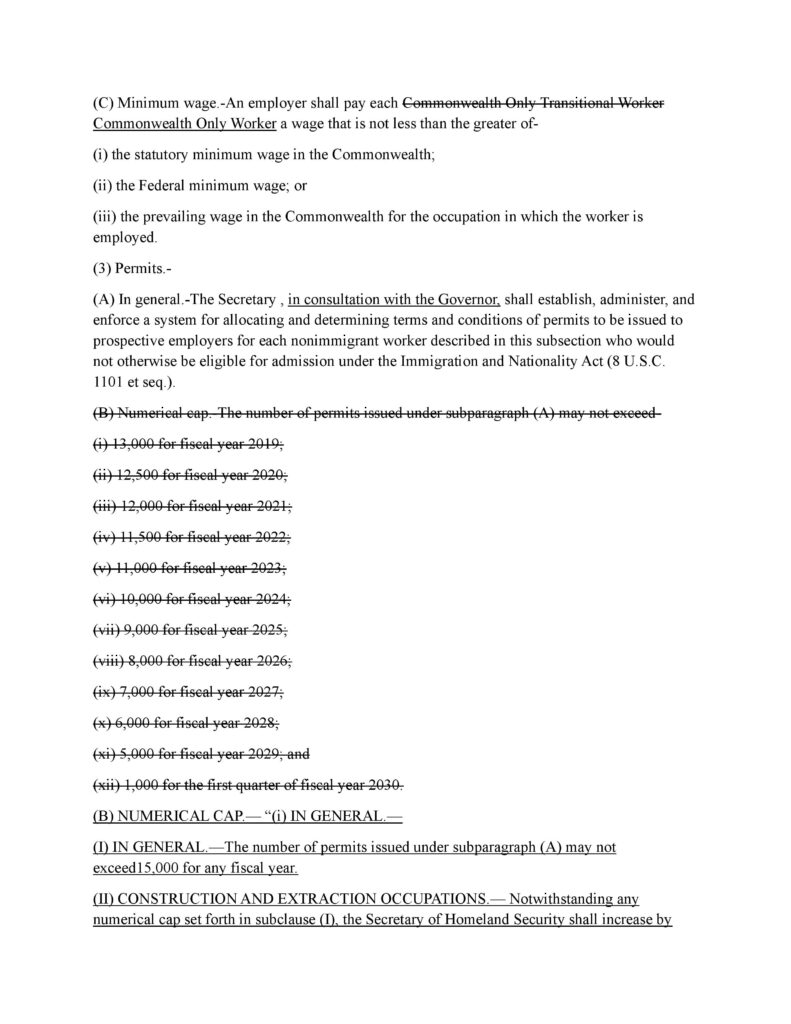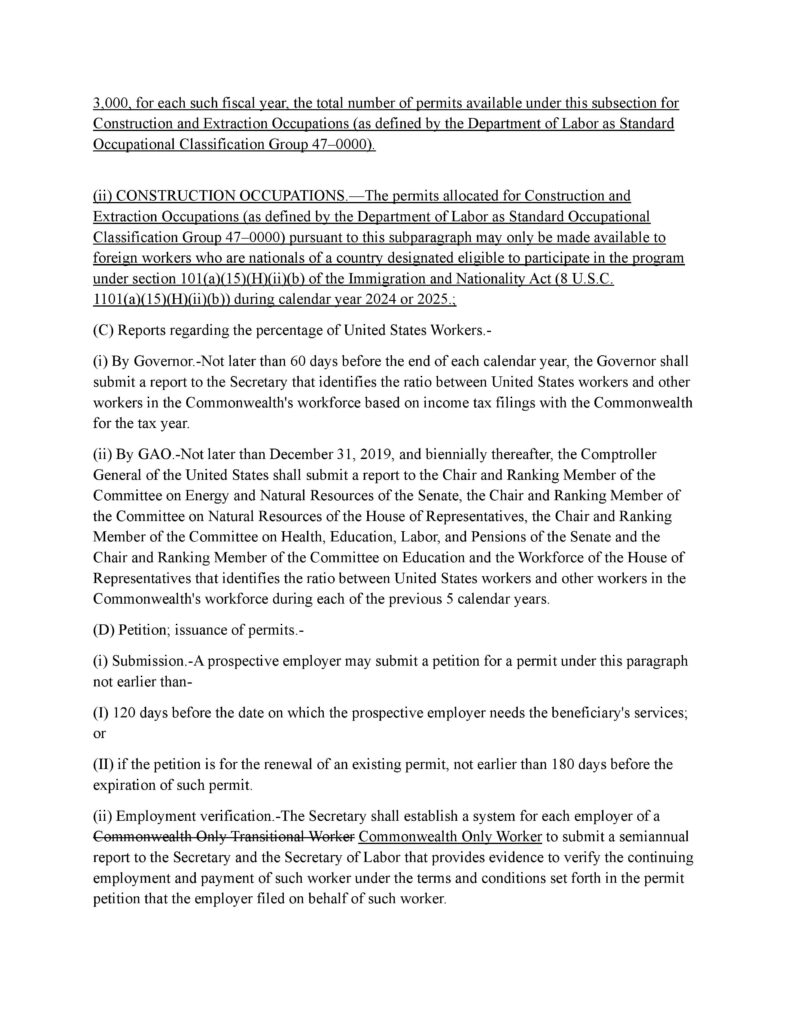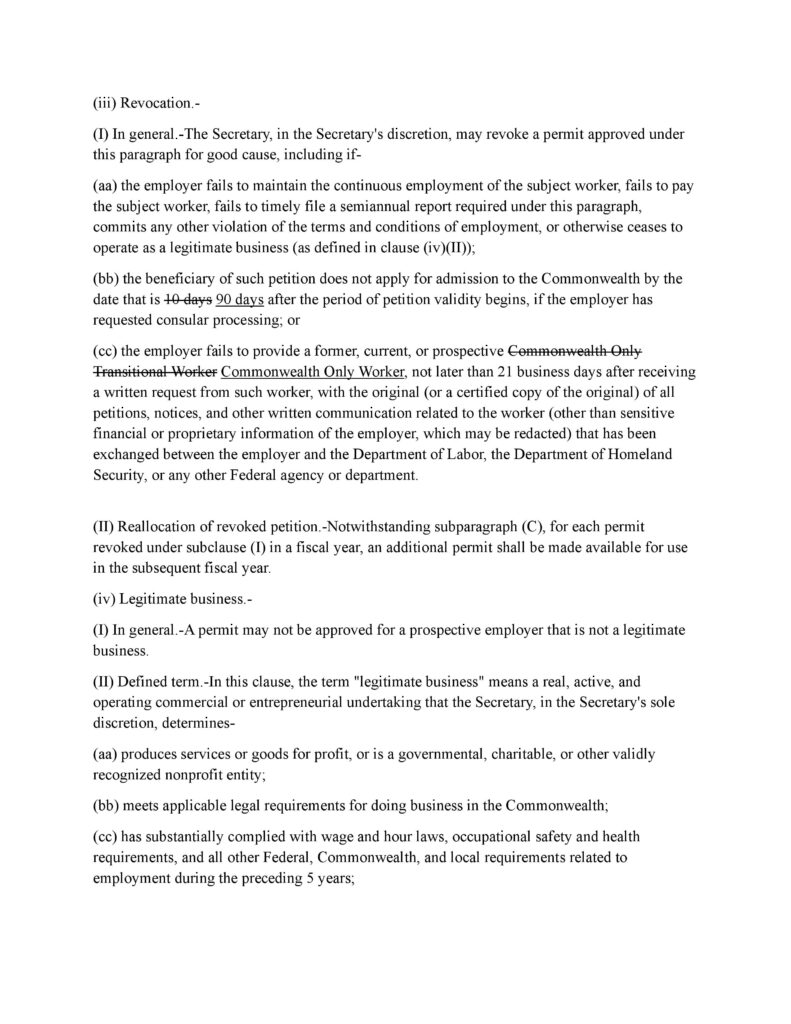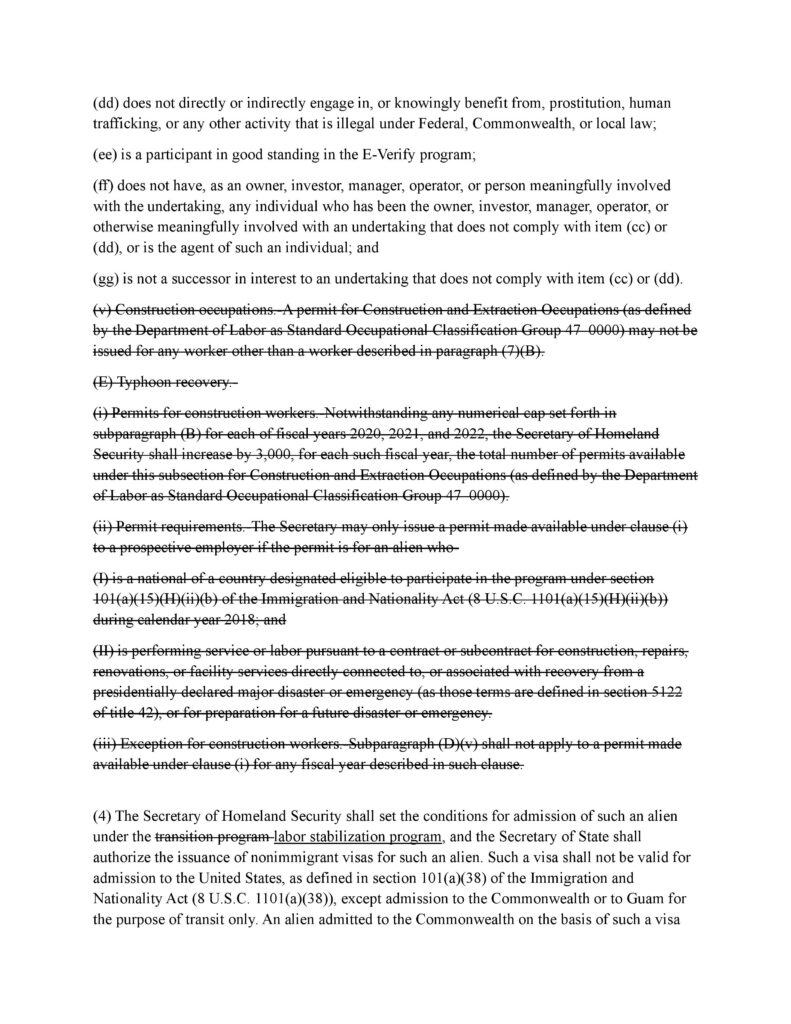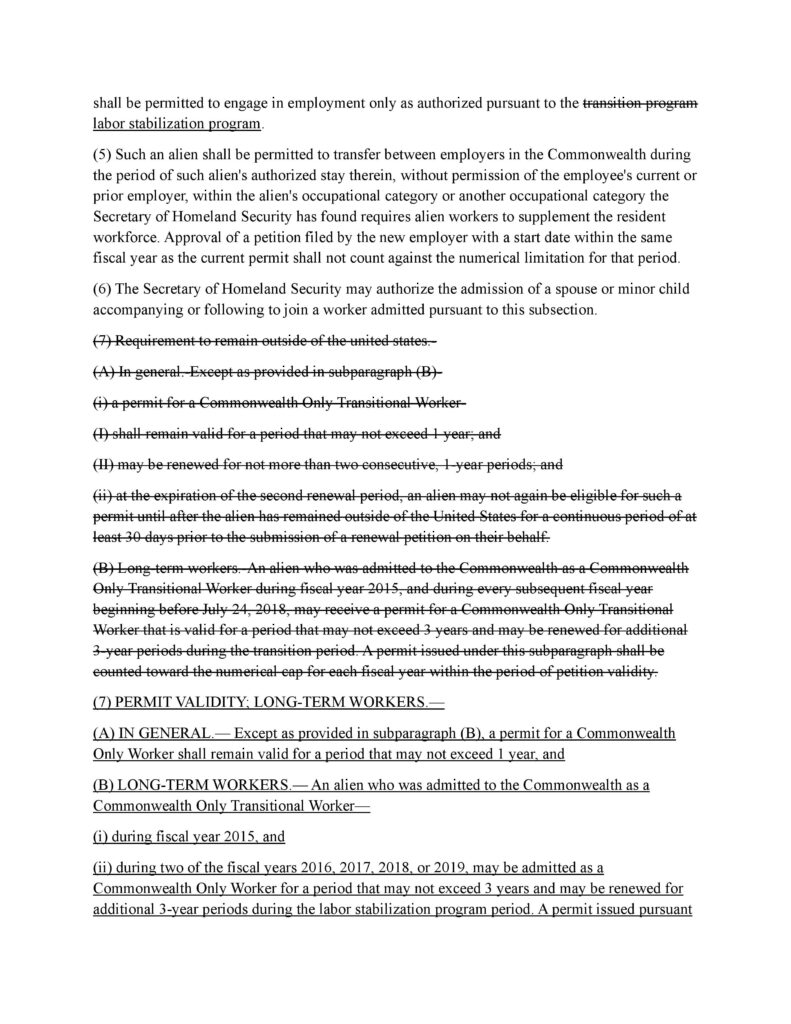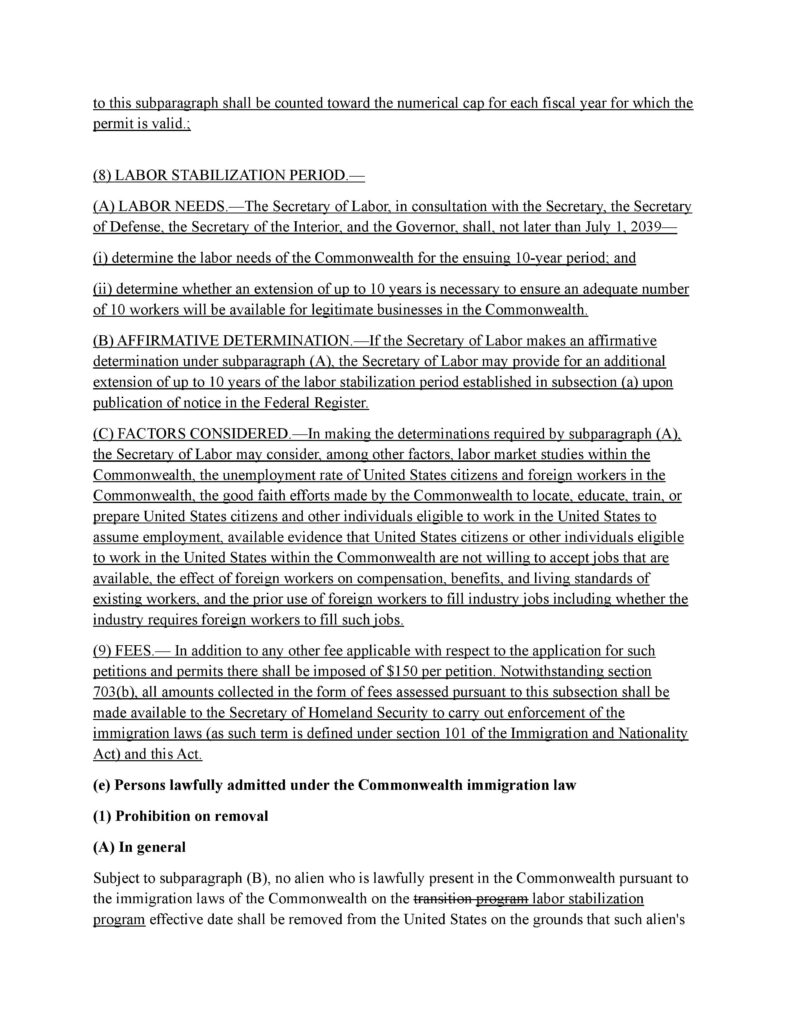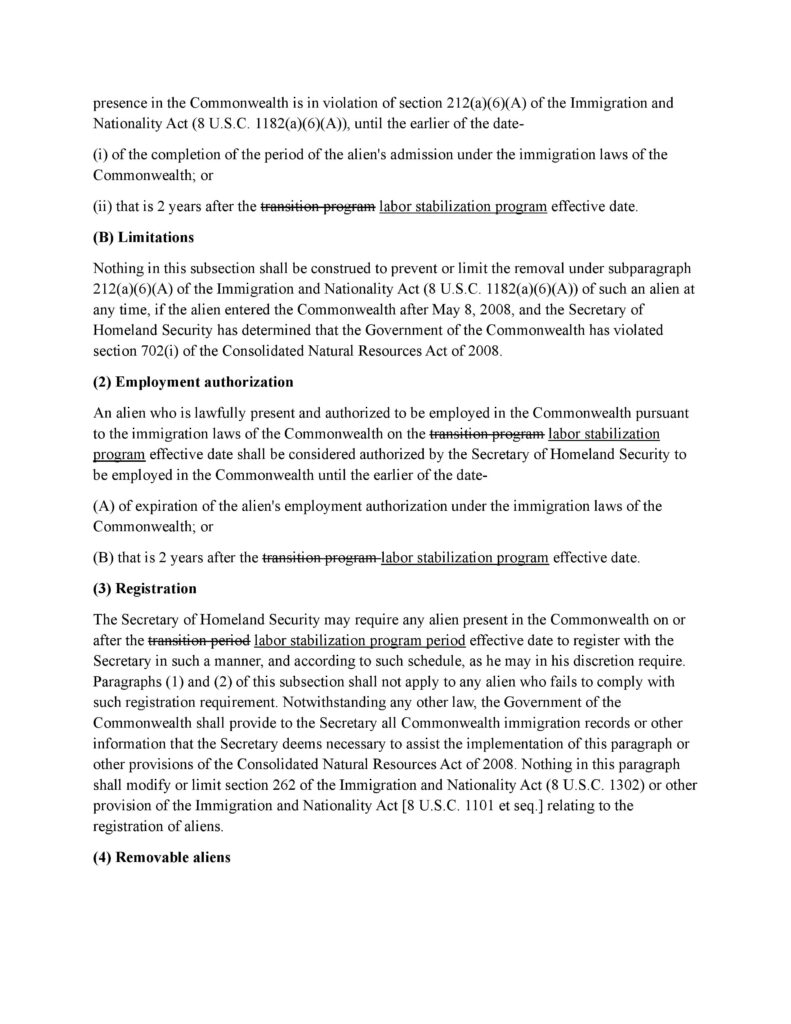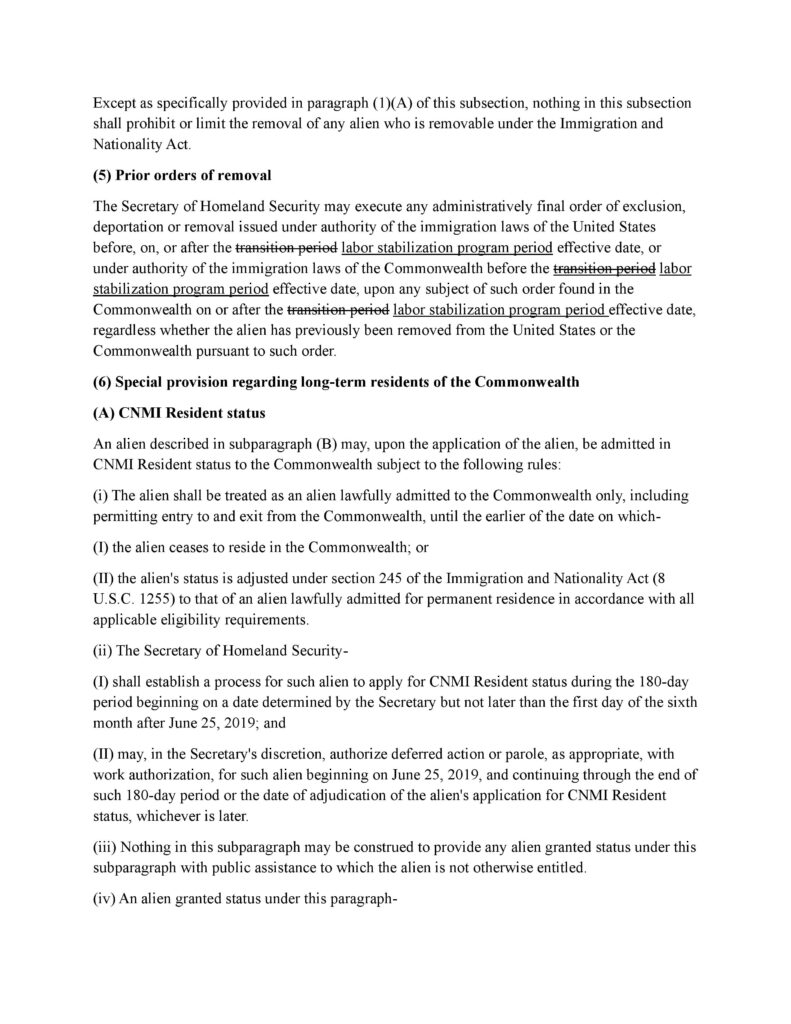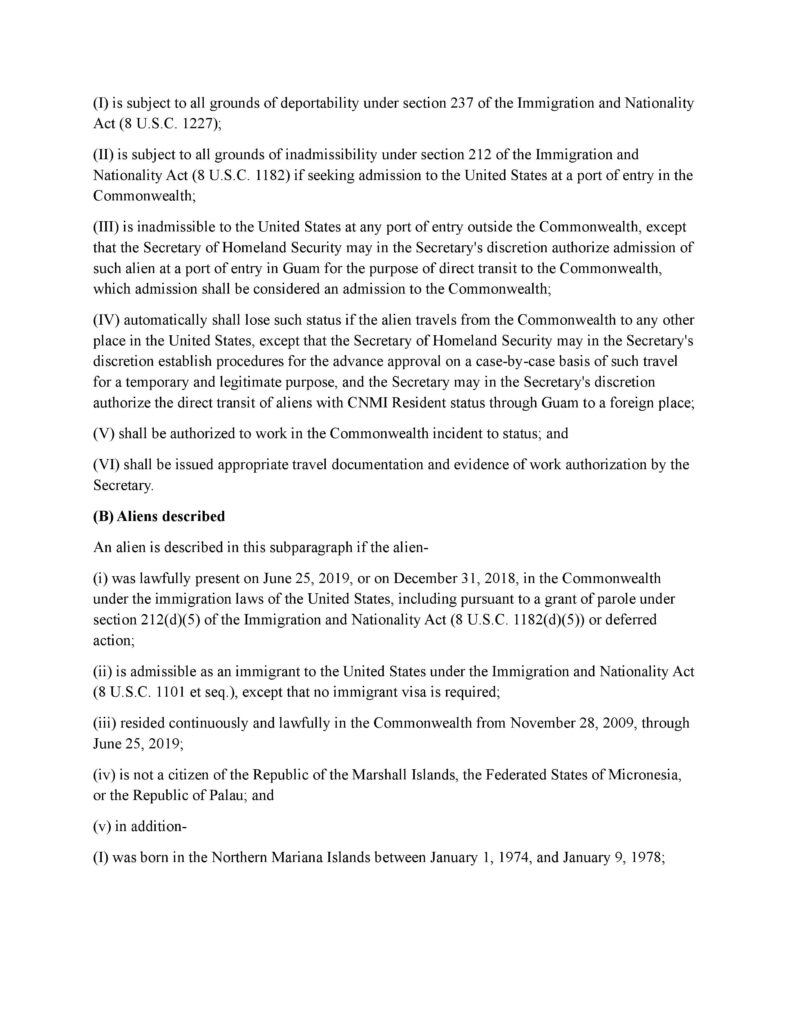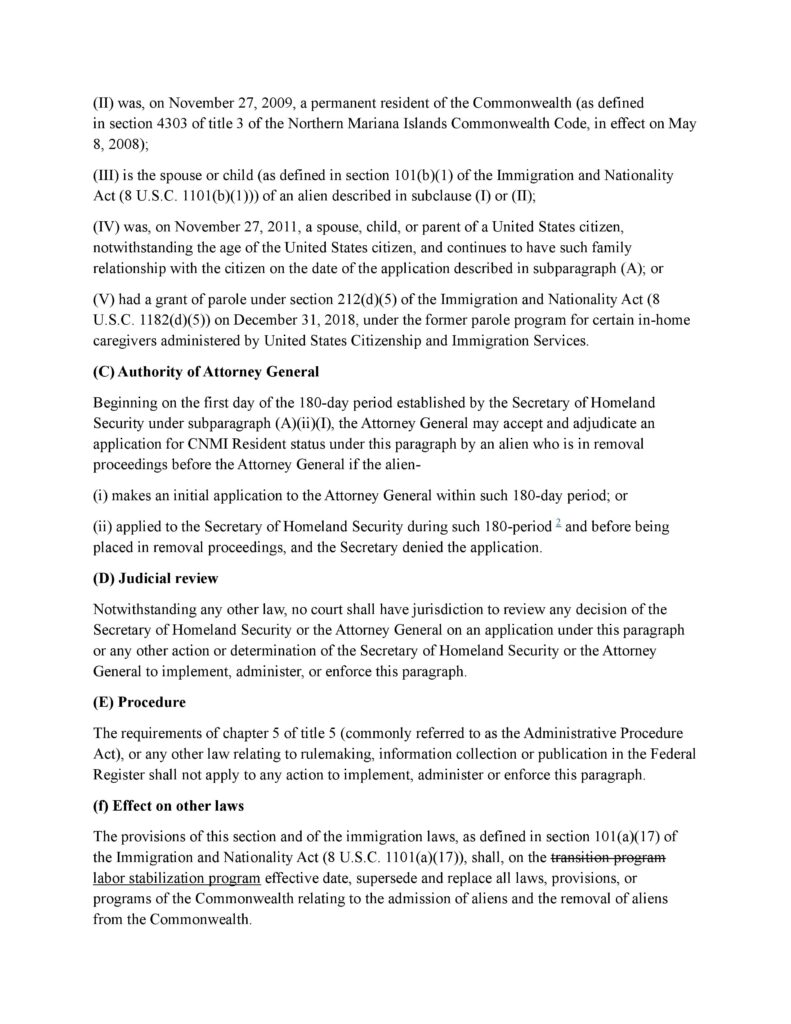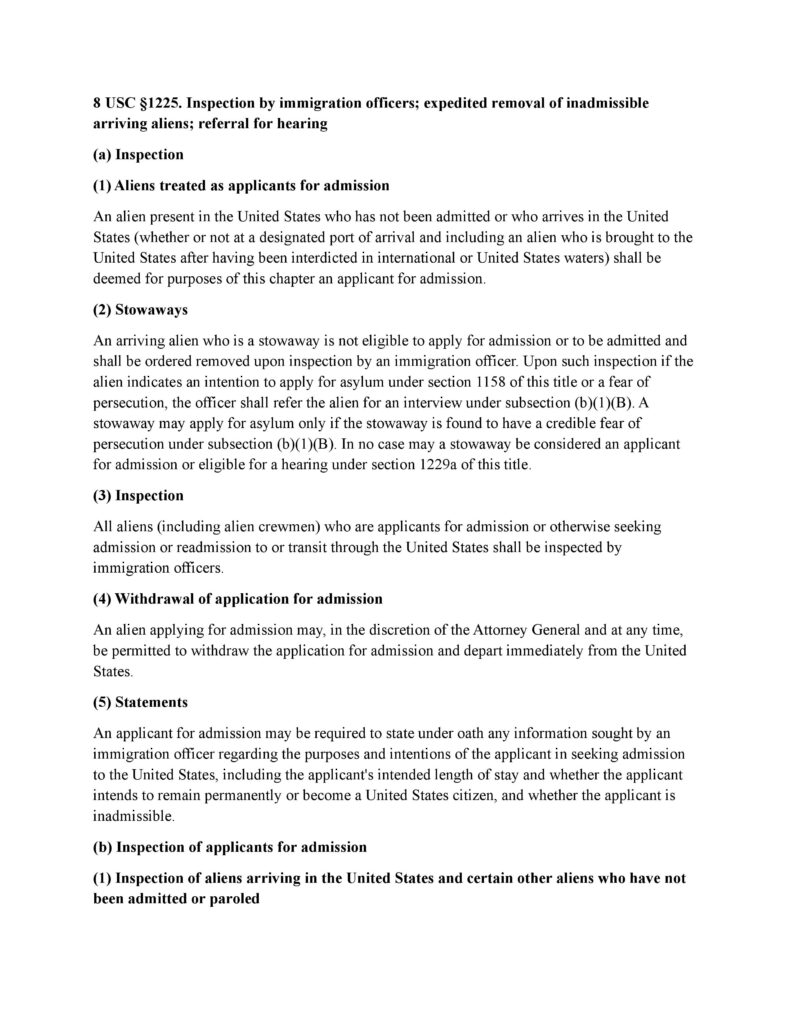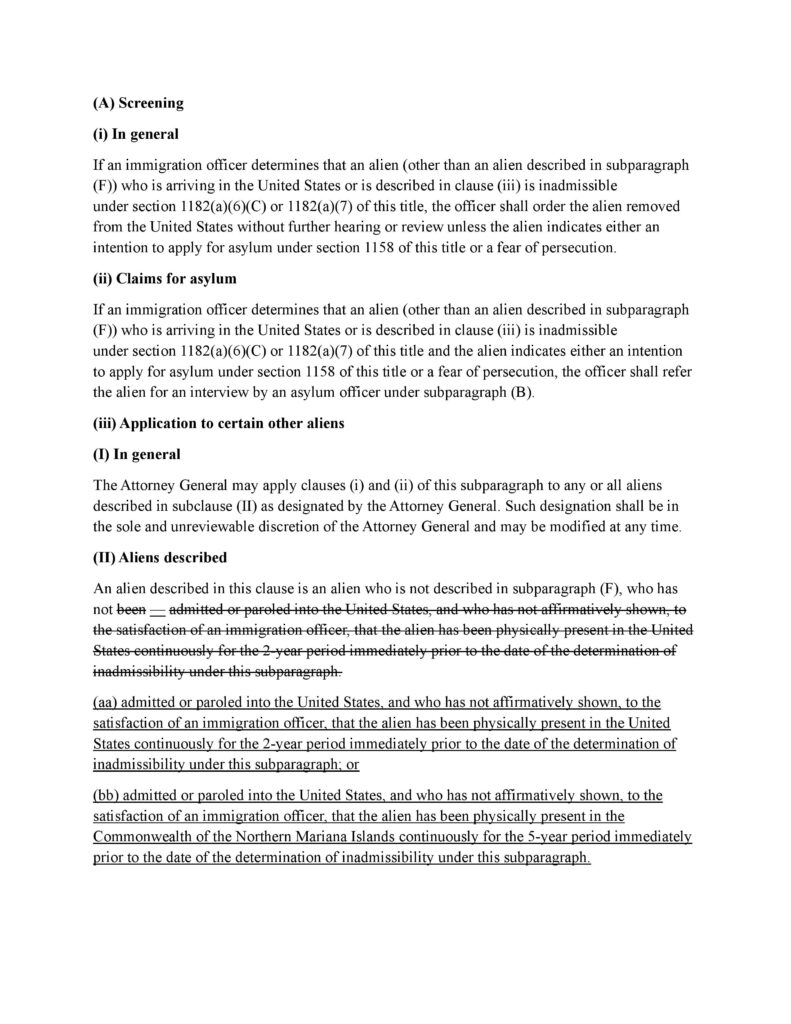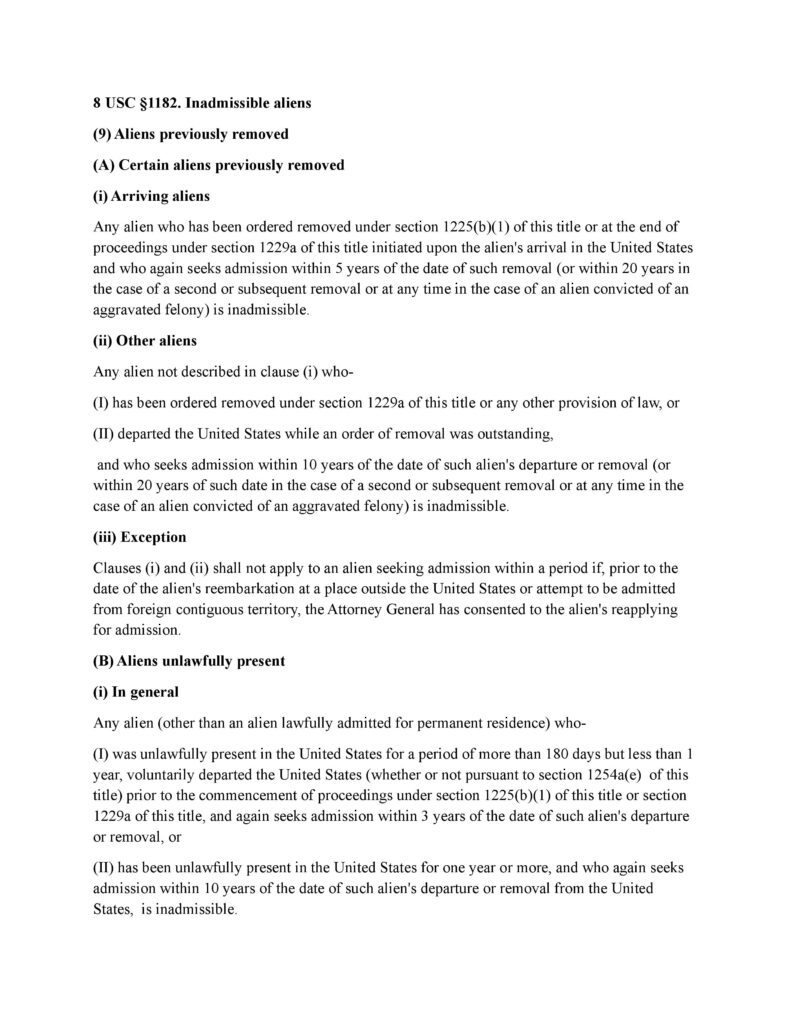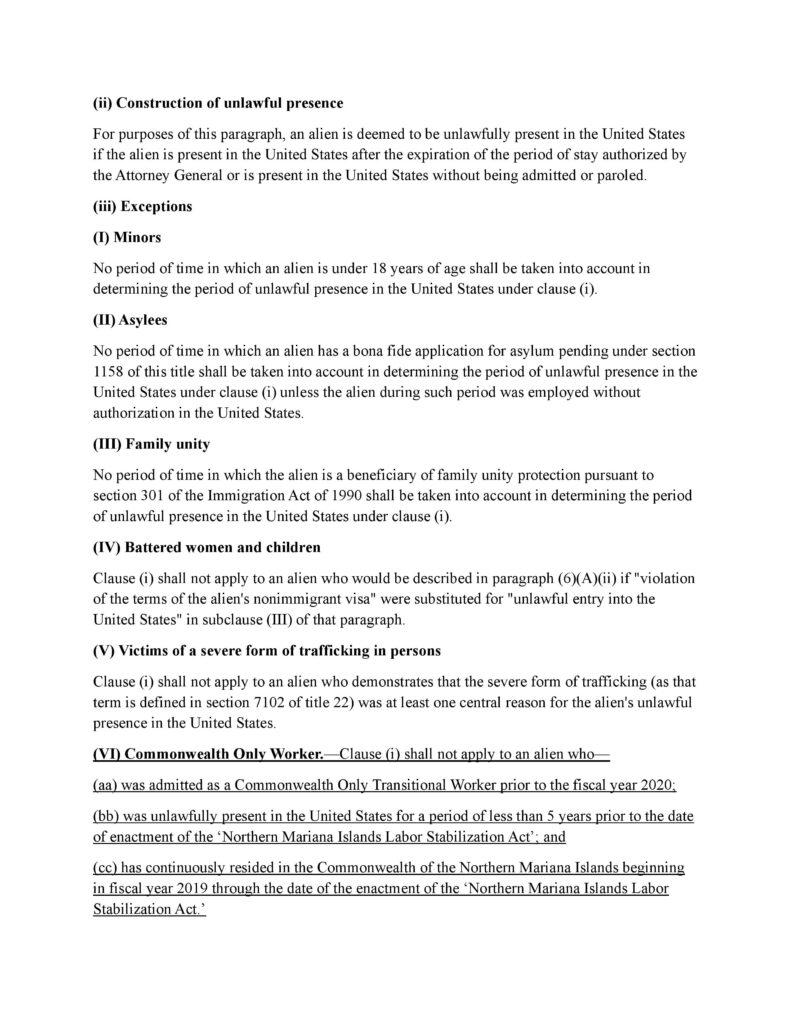
WASHINGTON, D.C. — A new comparison document circulated with CNMI Delegate Kimberlyn King-Hinds’ draft Northern Mariana Islands Labor Stabilization Act lays out how the proposal would change existing federal law governing the CNMI’s immigration transition program, including extending the program timeline and creating a new process for possible future extensions.
In the section of federal law that currently sets the CNMI transition period to end on December 31, 2029, the draft language replaces that end date with “the later of December 31, 2039, or the date determined” under a new labor stabilization extension subsection.
That proposed extension subsection directs the U.S. Secretary of Labor, in consultation with multiple federal agencies and the Governor, to determine the Commonwealth’s labor needs for the ensuing 10-year period no later than July 1, 2039, and to decide whether an additional extension of up to 10 years is necessary to ensure an adequate number of workers for legitimate businesses.
If the Secretary of Labor makes an affirmative determination, the draft language would allow an additional extension of up to 10 years through publication of notice in the Federal Register, and it lists factors that may be considered, including labor market studies, unemployment rates, good-faith efforts to train U.S.-eligible workers, and the effect of foreign workers on compensation and living standards.
On worker permits, the comparison document shows draft language that would replace the current stepped-down cap schedule with a new numerical cap of 15,000 permits per fiscal year, and add a separate increase of 3,000 permits for “Construction and Extraction Occupations,” with eligibility limited to nationals of countries designated eligible for the H-2B program during calendar year 2024 or 2025.
The draft also adds language stating that, beginning with petitions filed with employment start dates in the first 20 fiscal years after enactment, petitions to import a nonimmigrant worker would be approved by the Governor in a substantially similar manner to the Governor of Guam’s process referenced in federal regulations.
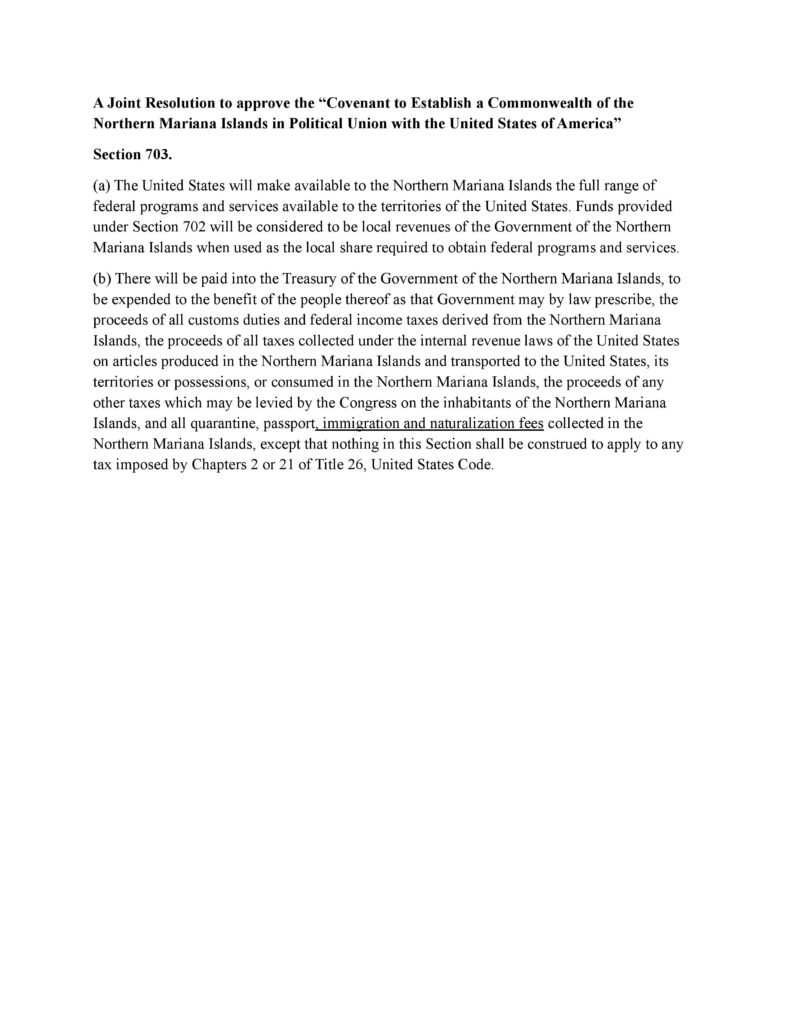
Another change shown in the comparison document is a proposed $150 fee per petition, with language stating that, notwithstanding Section 703(b), amounts collected through that fee would be made available to the U.S. Department of Homeland Security to carry out enforcement of immigration laws and the Act.
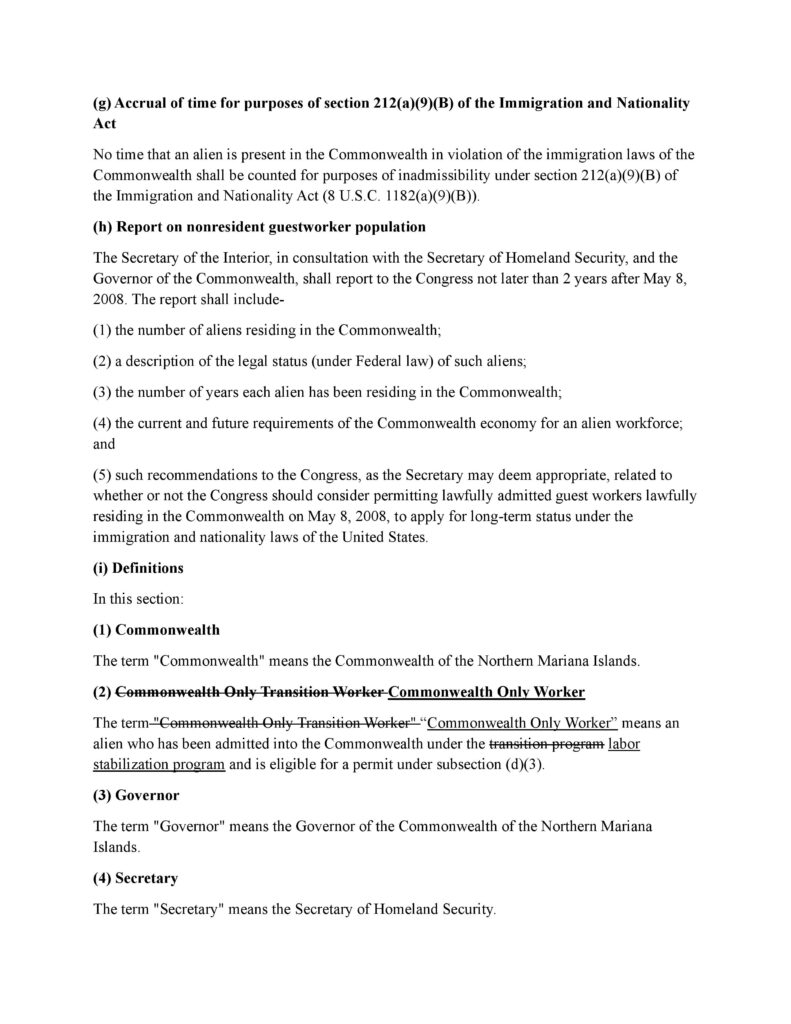
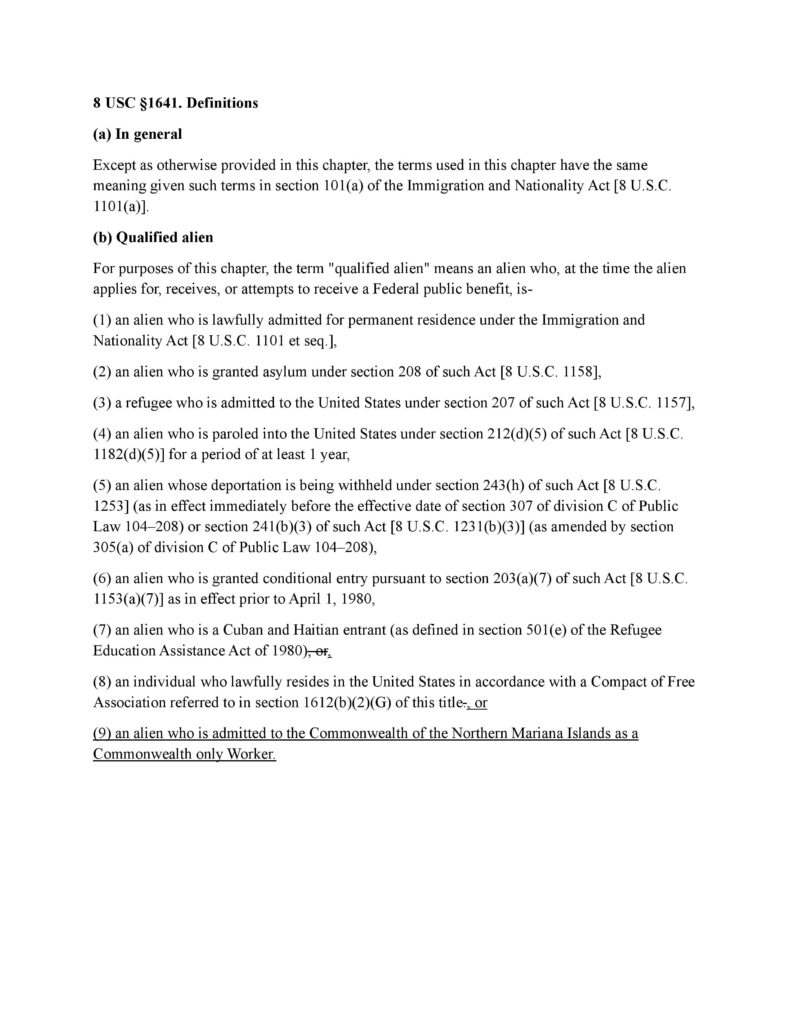
The document also includes draft language updating terminology from “Commonwealth Only Transitional Worker” to “Commonwealth Only Worker,” and it shows a revised long-term worker provision that would allow certain workers with specified prior admission years to receive permits valid for up to three years and renewals during the labor stabilization program period.
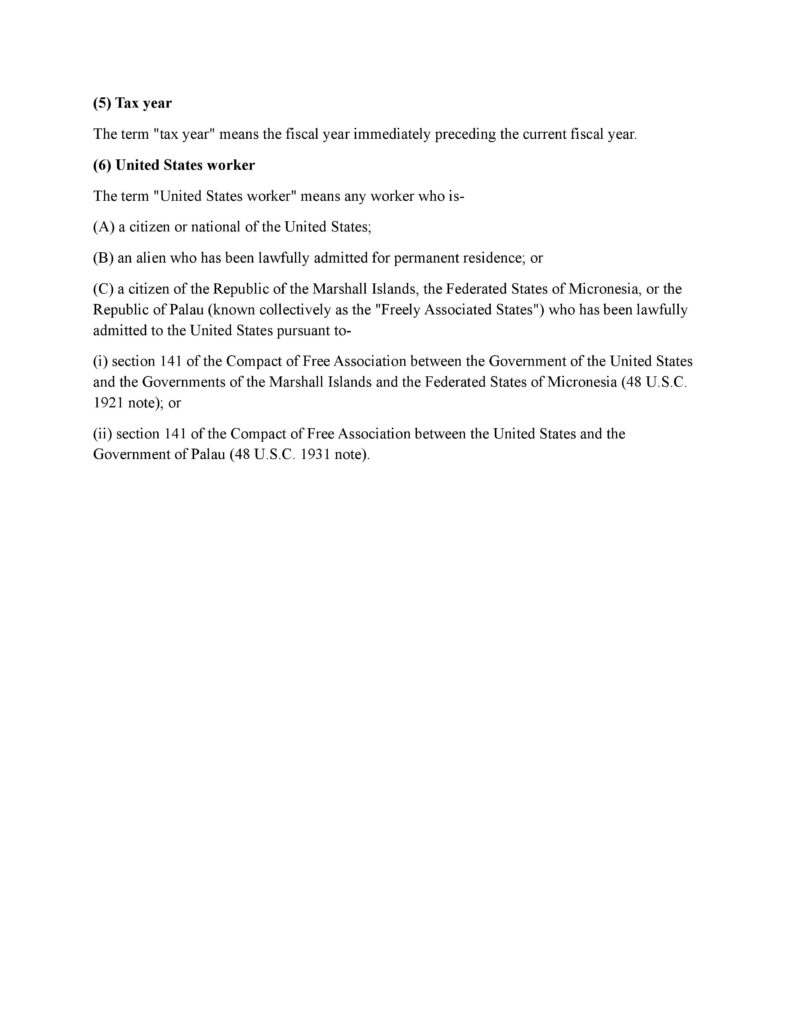
Read the complete document below: