First responder unions urge Senate to pass HB 24-15
SAIPAN — Leaders from local first responder unions urged the CNMI Senate to pass House Bill 24-15, arguing the bill would formalize collective bargaining and create a clearer framework for public sector labor-management relations across key first responder agencies.
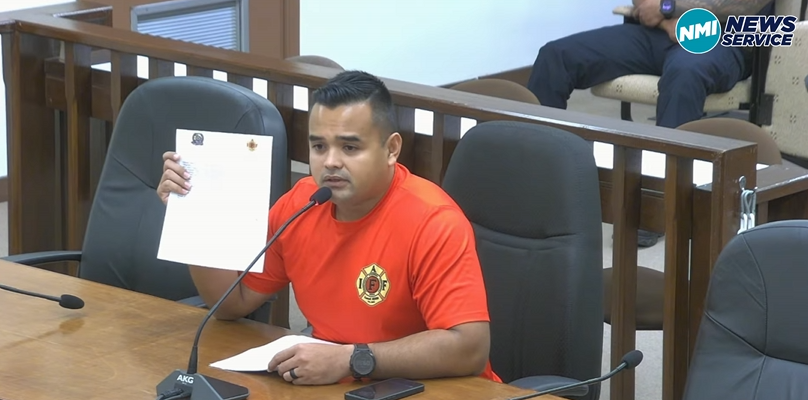
Edward S. Dela Cruz Jr., a Commonwealth Ports Authority aircraft rescue firefighter and fire lieutenant, told senators that “collective bargaining is not a privilege, it’s a lifeline,” describing it as a practical necessity for worker safety and operational readiness. Dela Cruz said collective bargaining would provide employees “a seat at the table” so management hears directly what first responders say they need “to do our job safely, effectively, and efficiently.”
Dela Cruz argued that safety should not be treated as a negotiable cost. “I cannot put a cost on safety. No one should be able to put a cost on my life” or the lives of those serving with him, he said. He described the bill as a way to make commitments concrete through a bargaining process that results in enforceable agreements, rather than informal promises.
He also gave a specific example from aircraft rescue firefighting, saying collective bargaining could help secure basic workplace needs like “a washer and dryer” so firefighters do not have to take home contaminated protective gear, and could help ensure “minimum safety equipment” standards for firefighters.
Dela Cruz urged leaders to treat first responders as partners rather than obstacles, arguing that a more formal process improves communication and accountability on both sides. He also said workers want to be heard “without repercussions” or retaliation.
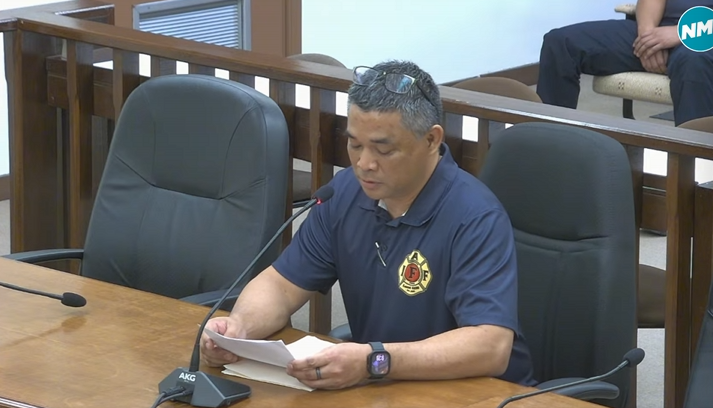
Paul Sasamoto, president of the Northern Marianas Islands Professional Firefighters Union (IAFF Local 5335), told senators that the firefighters union and the CNMI Order of Professional Policing have “joined forces” to support HB 24-15. Sasamoto said the two unions represent first responders across fire, EMS, ports aircraft rescue firefighting, and law enforcement for the safety, security, health, and well-being of the community.
Sasamoto said the bill is intended to help labor and employee relations by working with management to improve the workforce, including provisions that address needs for resources such as training and equipment. He also pointed to protections he said would strengthen fairness in hiring and promotions and allow employees to have representation in disciplinary matters. Sasamoto asked the committee and Senate to pass the bill and send it to Gov. David M. Apatang for signature.
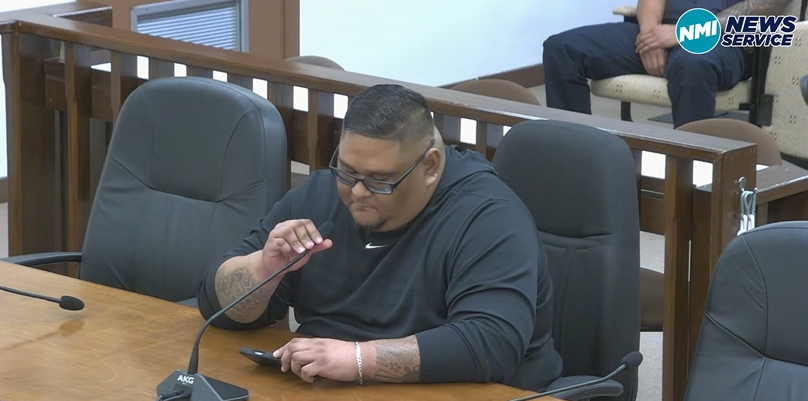
Chris John Rios Deleon Guerrero, a Department of Public Safety police officer and elected president of the CNMI Order of Professional Policing, told senators he was speaking to raise awareness of what he described as poor and degrading working conditions, and said officers remain silent out of fear of reprimands, retaliation, and intimidation.
He said DPS is experiencing an “exodus” of officers leaving for better opportunities, often involving families relocating to the mainland, and urged passage of HB 24-15 as a way to bring management and rank-and-file employees to the table to negotiate better terms and support for officers. Delon Guerrero said the bill would help officers advocate for the proper support and equipment needed to safeguard lives and property, and argued it would improve morale by showing officers their voices are being heard.