
SAIPAN – The U.S. Government Accountability Office is recommending the Department of the Interior conduct a study, in collaboration with the Departments of Labor and Homeland Security and the CNMI government, to identify and analyze the workforce and economic risks the Commonwealth faces when the CW-1 nonimmigrant visa program ends after Dec. 31, 2029.
The federal watchdog released its findings in a report titled “Commonwealth of the Northern Mariana Islands: Agencies Should Assess Risk of Ending Foreign Worker Program,” report number GAO-26-108239. GAO Director of International Affairs and Trade Latesha Love-Grayer shared the report by direct outreach to NMI News Service this week.
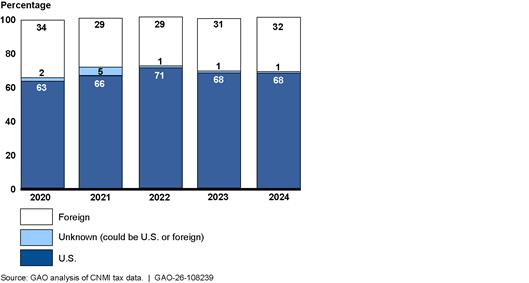
GAO found that foreign workers remain a major segment of the territory’s employed workers, accounting for approximately one in three workers on average from 2020 through 2024. The CNMI economy is struggling to rebound after a major decline in tourism following a 2018 typhoon and the COVID-19 pandemic. According to CNMI officials, if the CNMI is not able to hire foreign workers through the CW-1 program or other visa programs, its economy will experience adverse effects from severe labor shortages.
The CW-1 program is a temporary foreign worker permit program the CNMI uses to employ foreign workers in occupations that lack a sufficient U.S. workforce. The program was created under the Consolidated Natural Resources Act of 2008 and extended through Dec. 31, 2029, by the Northern Mariana Islands U.S. Workforce Act of 2018.
GAO said the Department of the Interior has not conducted a study to assess potential risks to the CNMI workforce and economy associated with the end of the program. Interior officials said they have limited resources to conduct such an assessment, but agreed it would be beneficial to decision-makers.
Citing the 2022 Island Areas Economic Census, the report stated there were approximately 1,500 business establishments in the CNMI. GAO said about 140 of those businesses have closed since 2024, according to officials from the CNMI Department of Commerce, as CW-1 workers departed the Commonwealth.
The report warned that ending the program may reduce economic investment in the CNMI by causing uncertainty about businesses’ ability to secure a skilled workforce.
“Without additional workers from outside of the CNMI, either U.S. or foreign, the CNMI will likely struggle to meet the workforce needs of a recovering economy,” the report stated.
Love-Grayer said the recommendation is intended to provide federal decision-makers with the information they need before the program expires.
“GAO has a longstanding and robust body of work reporting on issues facing the U.S. territories and the Compacts of Free Association nations. For several decades, we have reviewed the economic and workforce challenges facing the CNMI that have left the territory in a precarious fiscal position today,” Love-Grayer said in a statement to NMI News Service. “The CNMI has made strides in economic and workforce development, but much work remains in building a predominantly U.S. workforce. We believe our recommendation to the Department of the Interior, in collaboration with the CNMI government and relevant U.S. agencies, to assess the risks the territory faces in a future absent the CW-1 visa program will result in a more resilient CNMI.”
Governor David M. Apatang wrote to GAO Analyst-in-Charge Jon Fremont on March 16, expressing his wholehearted support for the recommendation. Apatang also expressed strong support for legislation introduced by Delegate Kimberlyn King-Hinds seeking a 10-year extension of the program that would give the CNMI governor a central role in determining the Commonwealth’s workforce needs. Apatang urged consideration of King-Hinds’ legislation, saying it would help stabilize an economy in crisis in a region critical to U.S. national security.
GAO said maintaining economic stability in the CNMI is vital to U.S. interests in the Pacific region. The full report is available on the GAO website.